
At least 68 people killed in train disaster in Spain — ABC News Australia
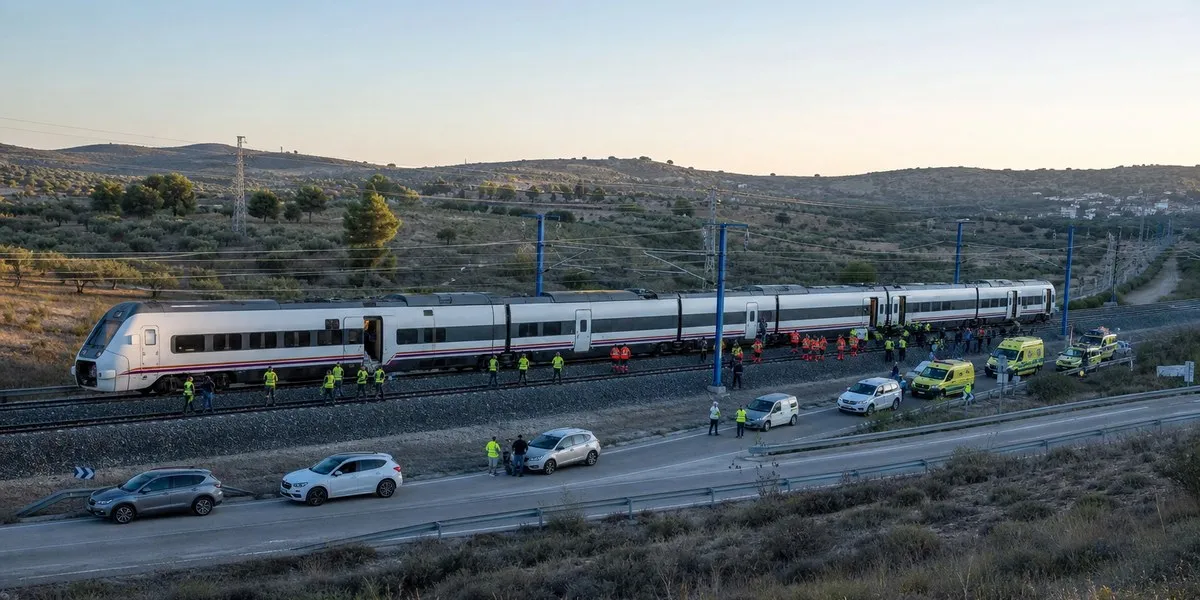
At least 68 people were killed and dozens more injured in Spain’s Toledo region after two high-speed trains collided. A train operated by the state-owned company RENFE crashed into the rear of a train belonging to private operator Iryo that was standing on the tracks, ABC News Australia reports.
Signalling failure and differing accounts
Spain’s Transport Minister Óscar Puente said that at 8:30 a computer malfunction occurred in the signalling system on a 63-kilometre section, causing train traffic to be halted. According to him, some of the six trains that stopped after the failure were instructed to continue moving.
As El Mundo writes, citing Iryo management, the private operator’s train was ordered to reboot its system after the signalling malfunction. This procedure takes several minutes, so the train was not authorised to depart. Iryo says it did not receive an order to resume movement and kept the train stopped.
Meanwhile, the control centre instructed the RENFE train to resume travel at normal speed. It later collided with the Iryo train. The RENFE train can reach speeds of up to 200 km/h, but its speed at the moment of the collision has not yet been established.
Investigation and safety system
Puente said that the RENFE train should not have been given the command to depart because a stop signal was active on that line. According to him, the decision to resume traffic before the system was restored was made by the traffic management centre.
More current news is available on the UA.News Telegram channel Telegram.
The Madrid–Seville line uses the LZB signalling system, which continuously monitors train speeds and can intervene if limits are exceeded. After it failed, eight trains on that section were asked to stop, and control centres switched to manual mode. Under the preliminary understanding of the circumstances, the events after the LZB failure are linked to human error rather than directly to the system malfunction.
The section of track where the crash occurred is being modernised, with LZB being replaced by the European Rail Traffic Management System, ERTMS. Communications between train drivers and dispatchers in Spain are recorded and will become one of the key elements of the investigation.
Authorities’ and union response
The CSIF union called on Puente to resign and demanded that the presumption of innocence be observed with regard to the person responsible for traffic management operations at Adif. Prime Minister Pedro Sánchez announced three days of mourning starting Thursday and said that two high-speed train accidents within several months are unacceptable.
In January, another collision between two high-speed trains near the village of Adamuz on the same Madrid–Seville line claimed the lives of 46 people.




