
Germany passed a resolution calling for an end to aid to Ukraine
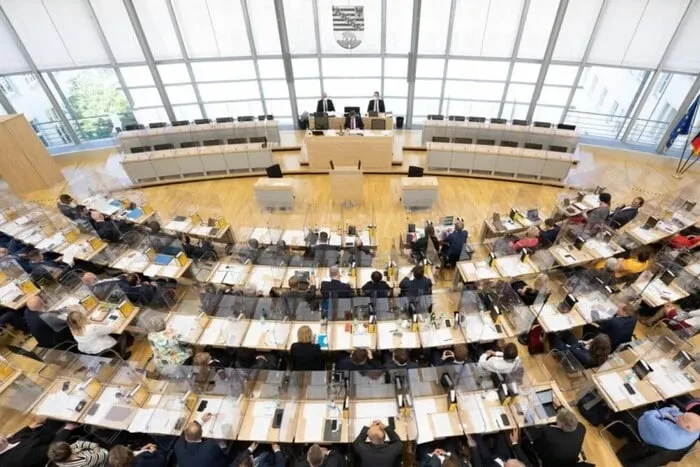
On Wednesday, October 14, the parliament of the German federal state of Saxony-Anhalt passed a resolution calling for an end to military and financial aid to Ukraine, retaining only humanitarian support.
The document also calls for lifting economic sanctions against Russia and seeking neutral status for Ukraine. As noted, representatives of two parties secured the adoption of a resolution that calls not only for an end to arms deliveries to Kyiv but also for a reassessment of relations with Moscow.
The document, titled “Peace Talks Instead of Escalating the War in Ukraine,” was jointly introduced by the far-right party “Alternative for Germany” (AfD) and the left-populist “Alliance for Social Justice and Economic Common Sense” (BSW).
Representatives of these political forces, which hold a majority in the state parliament, supported the resolution during the vote. In contrast, lawmakers from the Christian Democratic Union (CDU), the Social Democratic Party of Germany (SPD), the Greens, and the Left Party opposed the document.
The state parliament’s decision does not mean an automatic end to Germany’s military aid to Ukraine. The resolution is political in nature and calls on the state government to promote relevant proposals at the federal level.
In the text of the resolution, the authors called for an end to financial support for Ukraine in all areas except humanitarian aid.
A separate demand was to suspend the supply of weapons to the Ukrainian military. “Financial support for Ukraine must be immediately halted insofar as it goes beyond humanitarian aid. Arms deliveries to Ukraine must be suspended. Additional weapons only prolong the war and increase the risk of further escalation,” the document states.
Representatives of the AfD and BSW stated that the current policy of supporting Ukraine and exerting economic pressure on Russia has allegedly failed. According to the authors of the resolution, continuing financial aid to Kyiv, transferring weapons, and maintaining sanctions do not contribute to ending the war.
Therefore, the lawmakers proposed changing Germany’s approach to the Russia-Ukraine war and focusing on advancing the negotiation process.
In particular, the state parliament called on the government of Saxony-Anhalt to use all available political means to implement these demands.
One of the proposed mechanisms was an initiative in the Bundesrat—the body representing Germany’s federal states, which participates in the legislative process at the national level.
A separate section of the resolution was devoted to the conditions for a possible end to the war. The authors of the document called for an immediate ceasefire and the start of peace negotiations with Russia.
At the same time, they proposed linking a potential settlement to the restoration of economic relations between Berlin and Moscow. “An immediate ceasefire and the start of peace talks with Russia are necessary. As part of a ceasefire agreement, economic relations between Germany and Russia must be normalized. Economic sanctions against Russia must be lifted immediately,” the resolution states.
In addition, the document calls for Ukraine to be granted neutral status as part of a long-term peace settlement.
This was reported with reference to an official statement from the state parliament and the text of the adopted resolution.
Germany has reaffirmed sanctions against Russia despite Trump’s agreement with Putin.
President Volodymyr Zelenskyy stated that revenues from the export of Russian petroleum products help the Kremlin continue the war against Ukraine. According to him, the consequences of easing the restrictions have become particularly noticeable against the backdrop of Russian strikes on Kyiv.
U.S. President Donald Trump announced that an agreement had been reached with Russian dictator Vladimir Putin regarding the supply of millions of metric tons of Russian diesel fuel to the American and global markets.




