
Three-toed woodpecker nesting confirmed in Poland’s Sudetes after nearly 130 years — RMF24
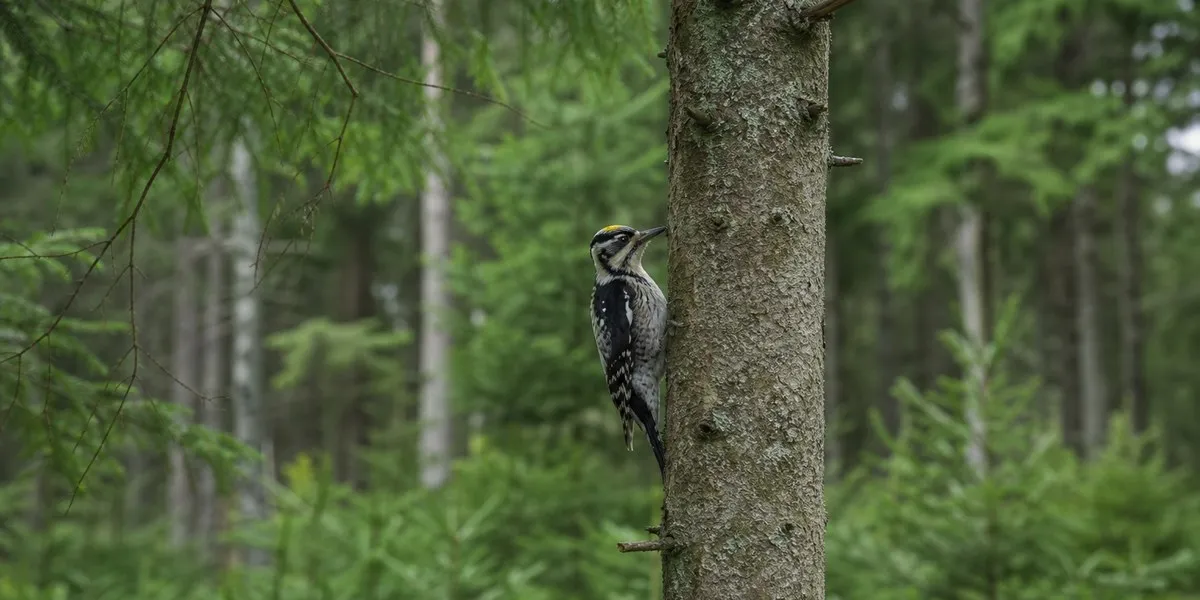
Nesting by the three-toed woodpecker has been confirmed in the Mały Śnieżnik nature reserve in the Polish part of the Sudetes — a species that had been considered absent from local forests for nearly 130 years. Ornithologists discovered a nest cavity on June 10, 2025, in a living spruce tree at an altitude of around 1,070 metres above sea level, RMF24 reports.
The chicks left the nest
During the first observations, researchers saw adult birds bringing food to the chicks. Later, the young woodpeckers left the nest, confirming the pair’s successful breeding.
The previous confirmed case of three-toed woodpecker nesting in Silesia dated back to 1896, when it was recorded near Duszniki-Zdrój. Since then, the species had not been confirmed in the Silesian forests of the Sudetes.
More current news is available on the UA.News Telegram channel Telegram.
The species depends on old forests
The three-toed woodpecker requires mature coniferous forests, especially those with old spruce and fir trees. It needs dead or dying trees to create nest cavities and search for food. Abandoned cavities made by these birds may be used by other animals, including pygmy owls, tits and small mammals.
In Poland, the three-toed woodpecker is found mainly in the Carpathians and in the country’s northeast. Its breeding population is estimated at 1,000–1,400 pairs; the species is listed on Poland’s Red List of Birds as near threatened. The greatest danger to it is the cutting of old and dead trees, which serve as nesting and feeding sites.




