
Brazilian authorities investigate possible arson in the Amazon ahead of elections — CBC World
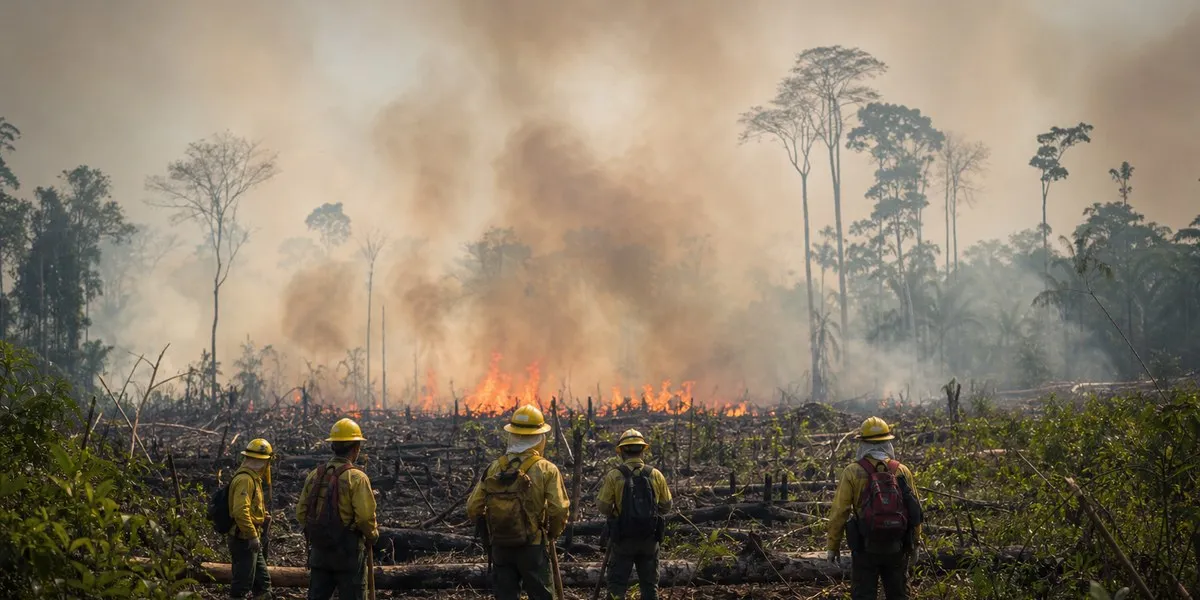
Brazilian authorities are investigating possible deliberate arson in the Amazon after a sharp increase in the number of fires ahead of the second round of the presidential election scheduled for October 25. The number of fire hotspots in the region has tripled since October 4, when the first round of voting took place, CBC World reports.
Signs of possible arson
Environment Minister João Paulo Capobianco told the Associated Press that there are signs of premeditated fire-setting activities. He and environmental service workers flew over the affected areas twice — on Sunday and Wednesday. According to the minister, fires were recorded in protected forest areas in a distinct geometric pattern, which may indicate their deliberate origin.
It is currently unknown who may have caused the fires and what the motives were. The states of Amazonas and Pará were particularly affected. João Morita, coordinator of the federal ICMBio agency, noted that the causes of the fires may vary, including residents of national forest areas burning crop plots despite the ban, retaliation for environmental protection measures, or deliberate actions. Any unauthorized burning in Brazil is a crime.
More current news is available on the UA.News Telegram channel Telegram.
Smoke in Manaus and political disputes
Smoke from the fires disrupted daily life in Manaus, the capital of Amazonas state and the largest city in Brazil's part of the Amazon. School classes were canceled there, and residents were advised to use protective masks. Biologist Susana Braz, who studies the impact of toxic ash on the region's rivers, said she could not sleep in her own bedroom because of the smoke.
The fires became a subject of controversy in the presidential campaign, where forest protection and climate change were barely central issues. In the first round, Senator Flávio Bolsonaro received 47% of the vote, while incumbent President Luiz Inácio Lula da Silva received 45%. Bolsonaro's allies criticized Lula's government over its response to the fires. The president, in turn, said that federal authorities were directing resources to help fight the fires.
Ane Alencar, science director at the Amazon Environmental Research Institute, said that an increase in the number of fires during this period was expected due to the development of the El Niño phenomenon, but the timing of the increase in fire hotspots draws attention. According to her, nearly all fires in the region are caused by human activity, mainly to renew pastures or clear land, and during droughts the fire can get out of control.




