
South African authorities withdraw asylum directive after unrest — Daily Maverick
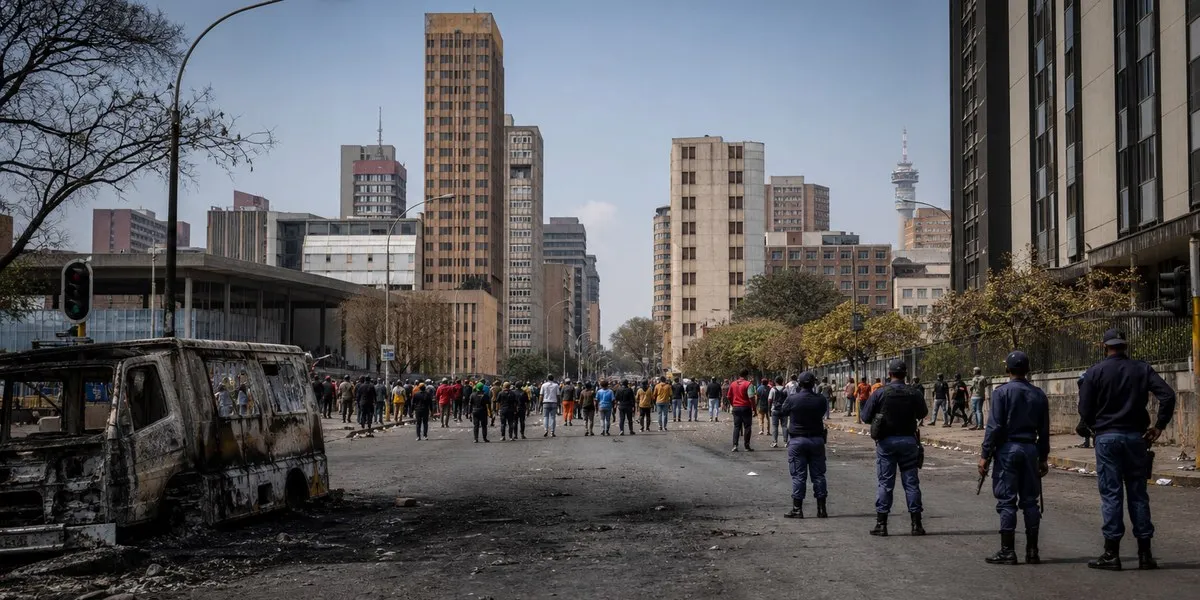
In South Africa, the Department of Home Affairs has withdrawn a directive on accepting asylum applications amid unrest in Durban and Soweto. During the protests on October 8, a total of 24 vehicles were burned. Injuries, looting of foreign-owned shops and property damage were also reported.
As Daily Maverick reports, on September 28 the department issued a directive to implement a July ruling by South Africa's Constitutional Court. The court found certain procedural restrictions in the Refugees Act unconstitutional and invalid, as they could prevent the submission of asylum applications and the consideration of cases on their merits.
What the directive provided for
The document required refugee reception centres to accept people who personally state their intention to seek asylum and assist them in submitting applications. This applied, in particular, to people who entered the country illegally, crossed the border outside an official border crossing point, had no visa or did not approach one of the five centres within five days.
More current news is available on the UA.News Telegram channel Telegram.
On October 6, participants in the March and March movement disrupted the submission of applications at a refugee reception centre in Durban, where hundreds of people were standing in line. On October 9, more than 300 participants in an anti-foreigner protest gathered near the Constitutional Court in the Braamfontein area of Johannesburg. A vehicle was burned there, and police used rubber bullets to disperse the crowd.
Authorities' position
The Inter-Ministerial Committee on Migration stressed that the Constitutional Court's ruling does not automatically grant refugee status or the right to permanent residence and does not legalize illegal migration. Each applicant must undergo a formal refugee status determination procedure, during which their application will be assessed according to established criteria.
The Department of Home Affairs said that refugee reception centres had become overcrowded within days of the directive being issued, while department staff faced security risks. After withdrawing the document, the department plans to develop a new procedure for implementing the Constitutional Court's ruling that is suitable for practical application.




