
Uber launches Britain’s first autonomous taxi service in London — Autocar
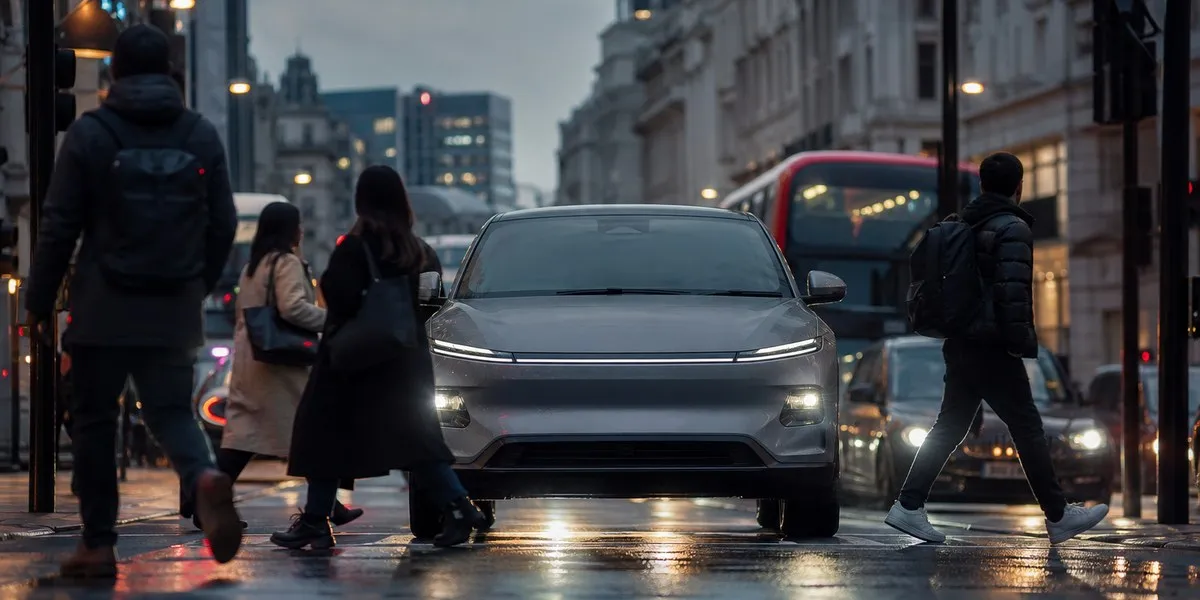
In September, Uber launched Britain’s first autonomous taxi service in London, United Kingdom. As part of the project, 15 electric Ford Mustang Mach-E vehicles were deployed on the streets of the British capital, Autocar reports. Permission to operate the vehicles was granted by London’s transport authority, Transport for London.
Passengers can request an autonomous vehicle through the Uber app. At the same time, each car has a safety driver who must intervene if necessary. This requirement will remain in force until government and DVLA permits are obtained for journeys without a person behind the wheel.
Wayve system
The vehicles use AV 2.0 technology developed by the British company Wayve. It combines artificial intelligence, GPS maps and sensors. The system learns from experience to navigate streets and avoid other road users without traditional high-precision local maps and rigidly programmed response rules.
Kevin Vincent, director of the Centre for Connected and Autonomous Vehicle Research at Coventry University, supported the launch. He said that up to 90% of road accidents may be linked to human error, while self-driving vehicles could potentially improve the safety, accessibility and efficiency of transport, as well as reduce congestion and emissions. According to him, regulatory approval is currently the main obstacle to wider deployment.
More current news is available on the UA.News Telegram channel Telegram.
Safety and congestion
Vincent noted that statistics from the United States indicate that robotaxis have lower accident rates than human-driven cars. At the same time, researchers at the University of Central Florida found that in low-light conditions, including at dawn or dusk, autonomous vehicles were involved in accidents five times more often, and twice as often when making turns.
According to the publication, some users of the London service reported errors in assessing traffic situations. In one described case, a vehicle stopped behind a car parked in the middle of the road in Whitehall, mistaking it for the end of a queue; the safety driver had to drive around the obstacle.
Adam Tranter, the former cycling and walking commissioner for the West Midlands, expressed the view that robotaxis are not the answer to London’s transport needs because the city does not need additional cars. Wayve responded that it expects more active shared use of the fleet and more efficient route planning, and that its technology is prepared to interact with pedestrians.




