
Air Quality in Kyiv on October 9: Where Is It Cleanest and How to Check the Readings

On the morning of October 9, air quality in Kyiv is at a good level—the overall AQI is 37. However, pollution levels vary depending on the neighborhood and specific address. You can check the current situation using the SaveEcoBot, LUN Misto AIR, and Aqicn services.
Readings on different monitoring maps may vary slightly, as these services use their own networks of monitoring stations and data processing methods. Therefore, to assess the situation, it’s important to consider the overall pollution trends and readings in a specific area, rather than relying on a single reading.
Air quality can change throughout the day. It is recommended to check the latest data before spending an extended period of time outdoors.
According to SaveEcoBot, as of 7:00 a.m. on October 9, 2026, the air quality index (AQI) in Kyiv was 37. This corresponds to a “good” pollution level, which has a minimal impact on human health.
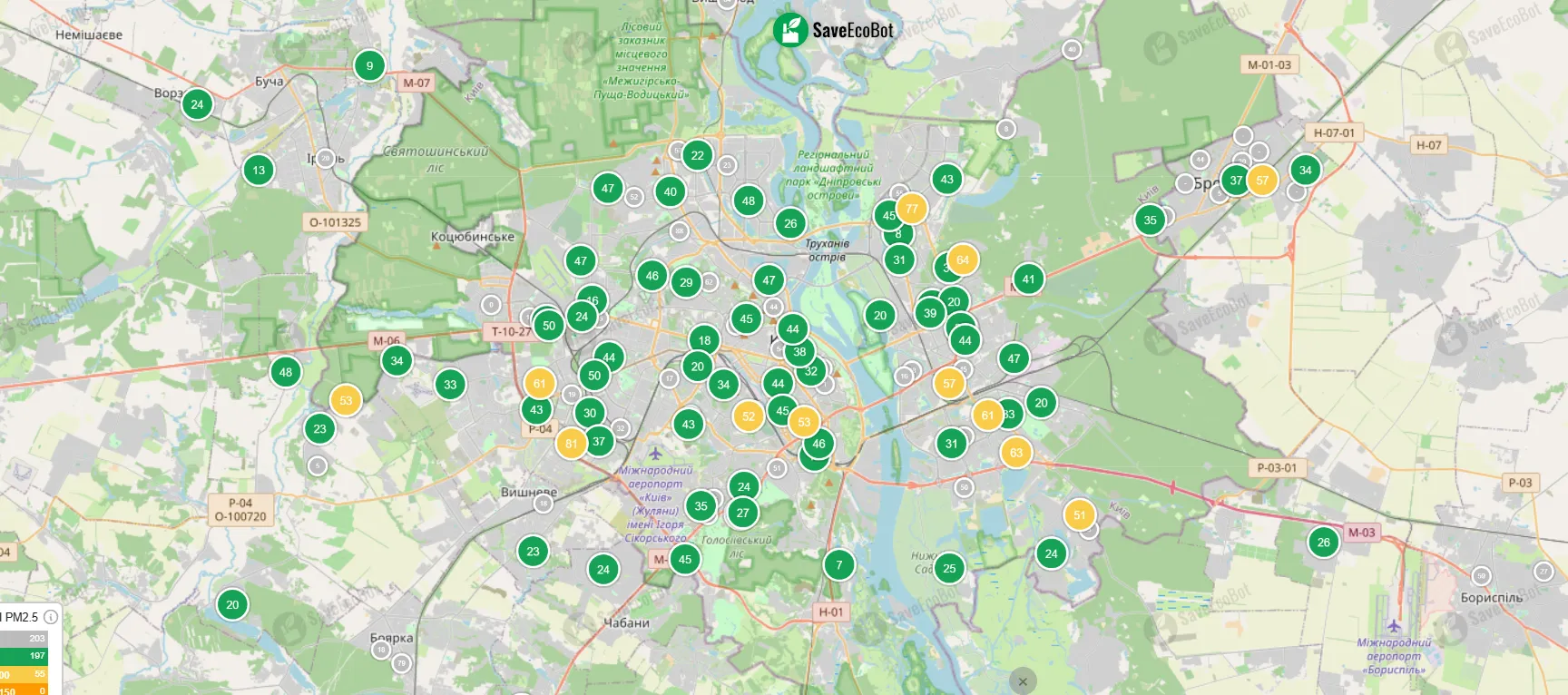
The service uses data from online monitoring stations, some of which transmit information in real time.
According to the data shown on the map, the lowest pollution index was recorded in the following districts of the capital:
- Obolon District — 29 AQI;
- Holosiivskyi District — 33 AQI;
- Dniprovskyi District — 33 AQI.
At the same time, the highest district reading was recorded in the Podilsky District—49 AQI.
At certain addresses, the readings were higher. Specifically, at 5 Hryhorovych-Bars’kyi Street, the index was 81 AQI, which corresponds to a moderate level of pollution on the general AQI scale.
You can check the current readings on the SaveEcoBot interactive map.
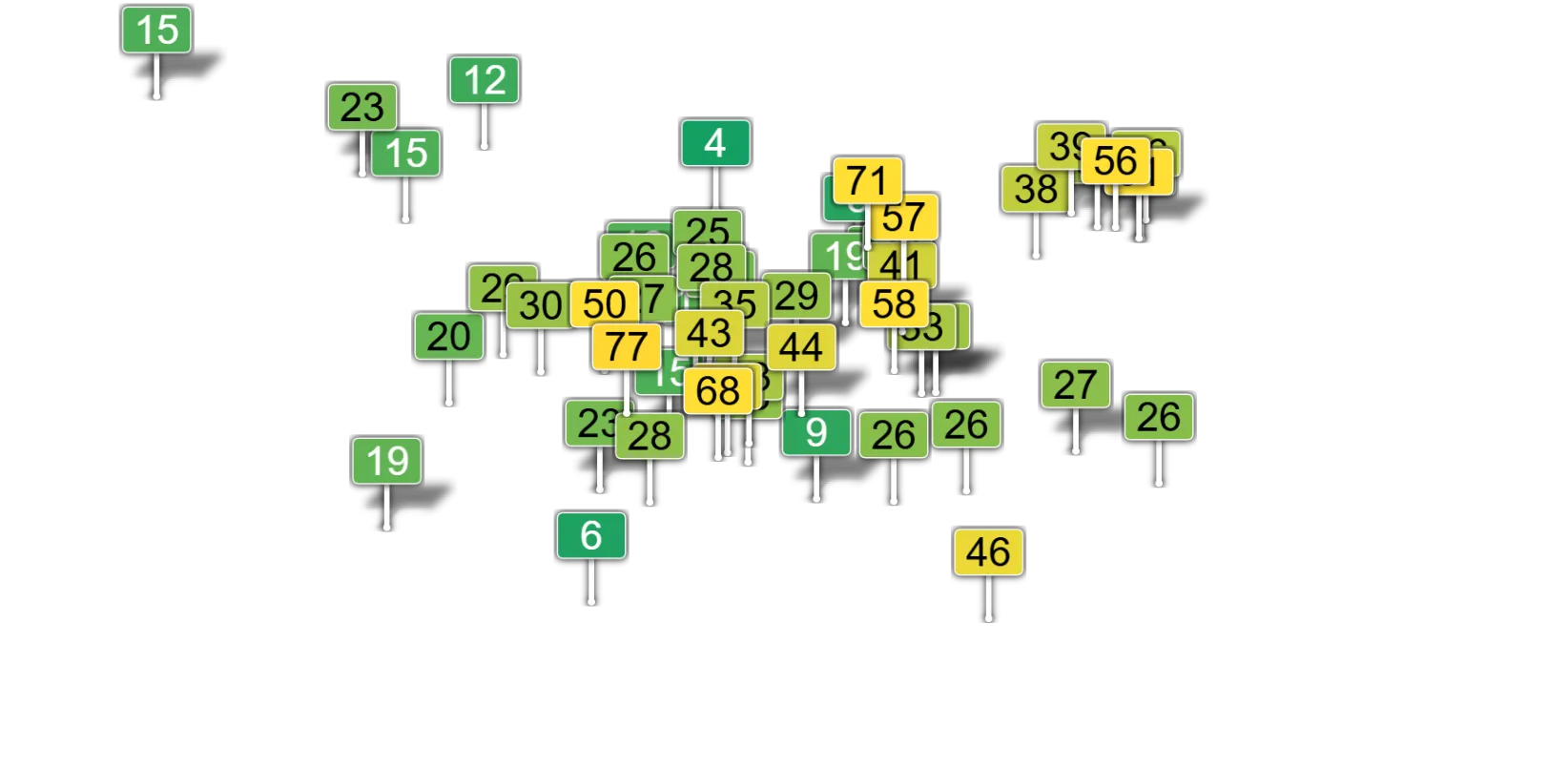
Aqicn displays the air quality index in real time and allows you to view data from individual monitoring stations.
The service uses a scale ranging from good to hazardous pollution levels. This helps assess the current situation and track changes throughout the day.
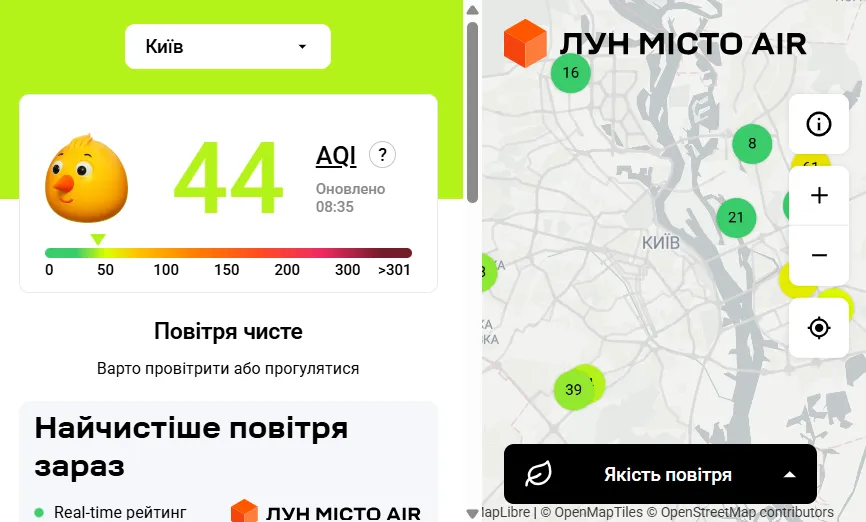
The LUN City AIR system tracks the concentration of fine particulate matter (PM1, PM2.5, and PM10), as well as air temperature and humidity.
Data from the stations is displayed on an interactive map in AQI format. The higher the index, the greater the level of air pollution.
It’s important to note that results from different services may vary due to the location of the stations, the composition of the measured parameters, and the specifics of data processing.
If pollution levels rise, it is recommended to take the following measures:
- Limit time spent outdoors and stay indoors whenever possible.
- Close windows and doors if the outside air is polluted. It’s best to ventilate the room once the readings improve.
- Avoid strenuous physical activity outdoors, as people inhale a greater volume of air during such activities.
- If possible, use an air purifier according to the manufacturer’s instructions.
- People with respiratory or cardiovascular conditions, children, and the elderly should pay particular attention to how they are feeling.
Therefore, on the morning of October 9, the overall air quality in Kyiv is rated as good, though local readings may vary. To get up-to-date information, check the data from the nearest monitoring stations throughout the day.
The day before, air quality temporarily deteriorated in five towns in the Kyiv region: Ivankiv, Boyarka, Vyshneve, Obukhiv, and Brovary.
Air quality in Kyiv has changed dramatically: data as of October 7.
As a reminder, at least two people were killed in Kyiv as a result of an overnight attack.
Earlier, the Northern Bridge in Kyiv, which had been damaged by a drone, was repaired.
On the morning of October 4, during a drone attack, a Russian suicide drone exploded on the roadway of the Northern Bridge in Kyiv.




