
Amyloid fibers helped deliver RNA to mouse embryos — ScienceAlert
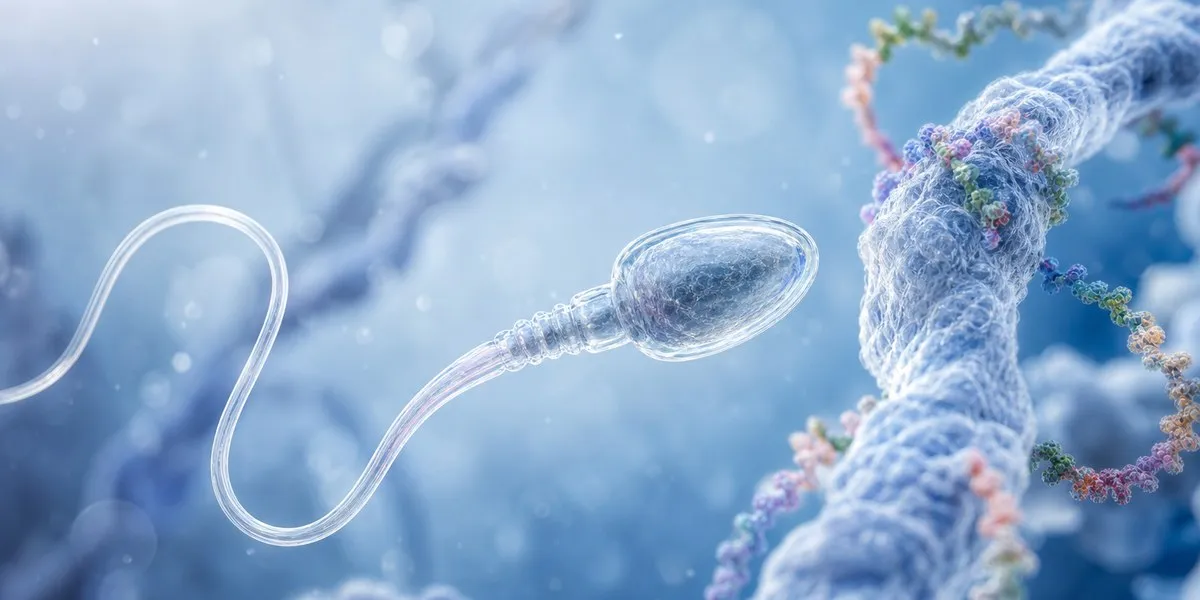
Researchers at Columbia University’s Zuckerman Institute found that tiny amyloid protein fibers in seminal fluid can bind RNA, enter sperm cells and help deliver this cargo to mouse embryos after fertilization. The findings of the study, published in the journal Molecular Cell, are described by ScienceAlert.
RNA helps create its own carrier
Scientists studied a fragment of the enzyme prostatic acid phosphatase, or PAP, which is produced by the prostate gland. This fragment has a positive electric charge, while RNA has a negative one. When mixed in the laboratory, the molecules bound together, formed small droplets and later fibers with an amyloid structure containing RNA.
Without RNA, PAP fragments remained in solution. Adding RNA promoted their assembly and accelerated fiber formation. In samples of human seminal fluid, the team also found small RNAs in the fraction containing amyloid fibers. A significant portion of the identified sequences consisted of fragments of transfer RNA, which normally participates in protein synthesis.
More current news is available on the UA.News Telegram channel Telegram.
Fibers were found inside sperm cells
To test whether the fibers could enter sperm cells, the researchers attached tiny gold particles to fibers created in the laboratory. They used bull sperm for detailed visualization because its cells are relatively large. Cryo-electron tomography revealed labeled fibers inside sperm cells. Additional experiments showed that human and mouse sperm cells can also take up such fibers.
During in vitro fertilization, mouse sperm cells were pretreated with fibers formed from fragments of human PAP. These protein fragments were later detected in two-cell mouse embryos. To track RNA, the scientists used molecules labeled with heavier isotopes of carbon and nitrogen: in the presence of fibers, more of this RNA reached the embryos.
When the fibers were loaded with RNA containing instructions for the synthesis of green fluorescent protein, the embryos contained at least ten times more of this protein than embryos obtained from sperm cells that received the same RNA without fibers. At the same time, the researchers emphasized that they have not yet established whether natural fibers and their usual RNA cargo affect embryo development. The experiments were not conducted on human embryos or under conditions of natural conception.




