
Aviva reports surge in subsidence claims in Britain — The Guardian
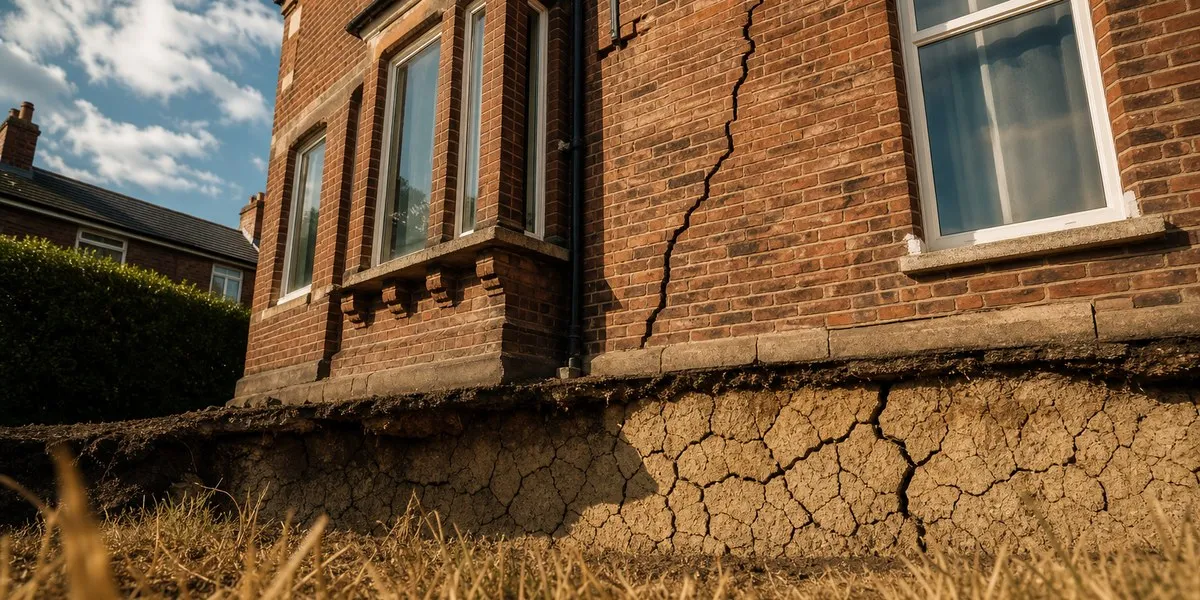
In the United Kingdom, the country’s largest insurer, Aviva, has recorded an increase in claims for compensation for damage related to ground subsidence beneath homes. As The Guardian reports, this comes amid an exceptionally hot summer and an overall rise in such claims to insurers.
Ground subsidence can lead to cracks in homes, uneven floors, as well as warped doors and windows. During dry periods, the soil beneath buildings contracts, weakening their foundations. In winter, when it becomes saturated with moisture and expands again, the damage can worsen.
Claims continued through October
Aviva chief executive Amanda Blanc said the company saw a peak period for claims from July to September, with applications continuing to arrive in October. The insurer did not specify the scale of the increase in such claims.
Blanc advised homeowners to monitor drainage systems, pipes and gutters and promptly repair leaks that could affect the soil beneath the house. She also drew attention to the need to monitor trees near homes.
More current news is available on the UA.News Telegram channel Telegram.
Insurance payouts increased
Other British insurers have also reported an increase in claims. Hastings Direct received a record number of applications in August, 140% more than a year earlier. Axa described the current year as a period of sharp growth in such cases.
According to the Association of British Insurers, the average subsidence claim from April to June reached a record £20,000 — more than £2,000 higher than in the same period of the previous year. Overall, insurers paid out £72 million on subsidence claims for residential homes, compared with £60 million a year earlier.
The British Geological Survey estimates that by 2070, up to 11% of homes in the country, or more than 4.2 million dwellings, could be at risk of ground subsidence. Older homes with shallow foundations and buildings on soils with high clay content are considered the most vulnerable, particularly in London, Essex, Kent and areas near Oxford.




