
LS Cable & System to invest $263 million in magnet plant in South Korea — Korea Herald
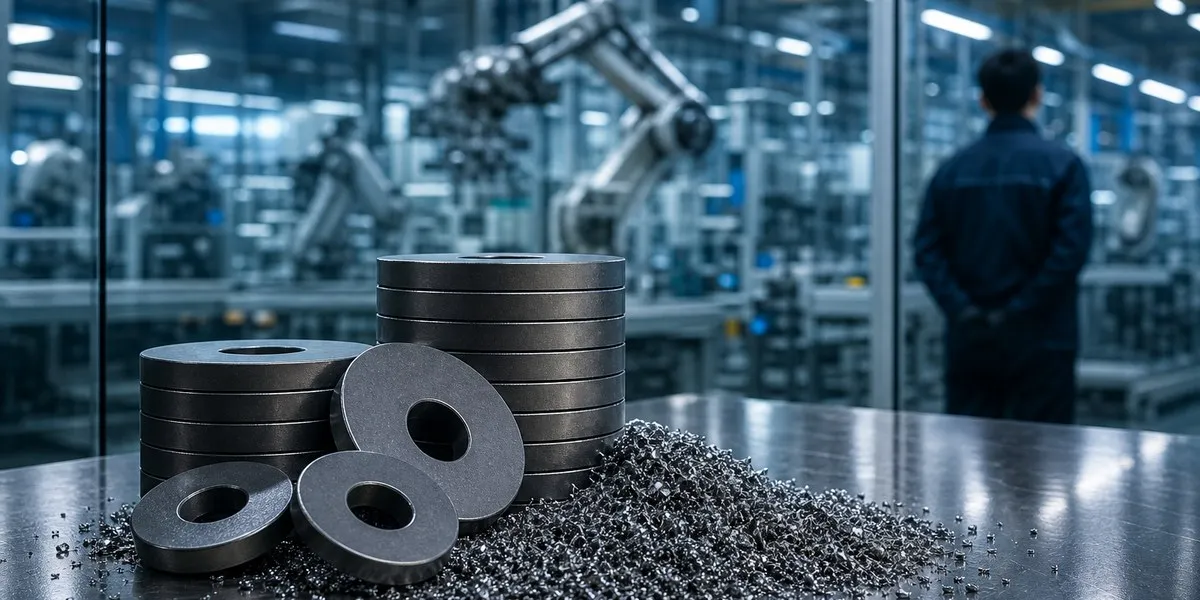
South Korea’s LS Cable & System plans to invest 350 billion won, or $263 million, in building a rare-earth magnet plant in the city of Gumi, North Gyeongsang Province. Another magnet manufacturer, KMMI, announced plans to invest 300 billion won by 2030 to expand production in the city of Pohang. This was reported by Korea Herald.
New US procurement rules
The investments come ahead of tighter US restrictions on the use in military procurement of certain permanent magnets, tantalum and tungsten originating from China, Russia, Iran and North Korea. From January 1, 2027, the rules will apply to the entire supply chain — from the extraction and processing of raw materials to finished products.
The restrictions concern samarium-cobalt and neodymium-iron-boron magnets used in US defense contracts. Previously, the requirements mainly concerned alloy production and manufacturing processes, but starting next year they will also cover raw material supplies, including samarium and cobalt for samarium-cobalt magnets.
More current news is available on the UA.News Telegram channel Telegram.
Production in Gumi and Pohang
Construction of LS Cable & System’s facility through its subsidiary Korea Motion Works is planned to begin in the first half of 2027. Mass production of neodymium magnets for electric vehicles and robots is expected to start in the second half of 2028. The plant is later planned to be expanded to produce samarium-cobalt magnets for the defense industry.
The facility’s annual capacity is expected to exceed 1,000 tonnes, equivalent to about 17% of South Korea’s estimated domestic demand of 6,000 tonnes. The company plans to obtain rare-earth raw materials from Australia’s Lynas, process them into metals through LS Eco Energy in Vietnam, and supply them to production sites in South Korea and the United States.
KMMI, the South Korean subsidiary of US manufacturer Evolution Metals & Technologies, intends to establish production capacity in Pohang for 6,000 tonnes of rare-earth and non-rare-earth magnets per year. The products are planned to be supplied for electric vehicles, defense equipment, the semiconductor industry and other high-tech sectors.




