
FLIP method detects hidden exoplanet in Webb data — ScienceDaily
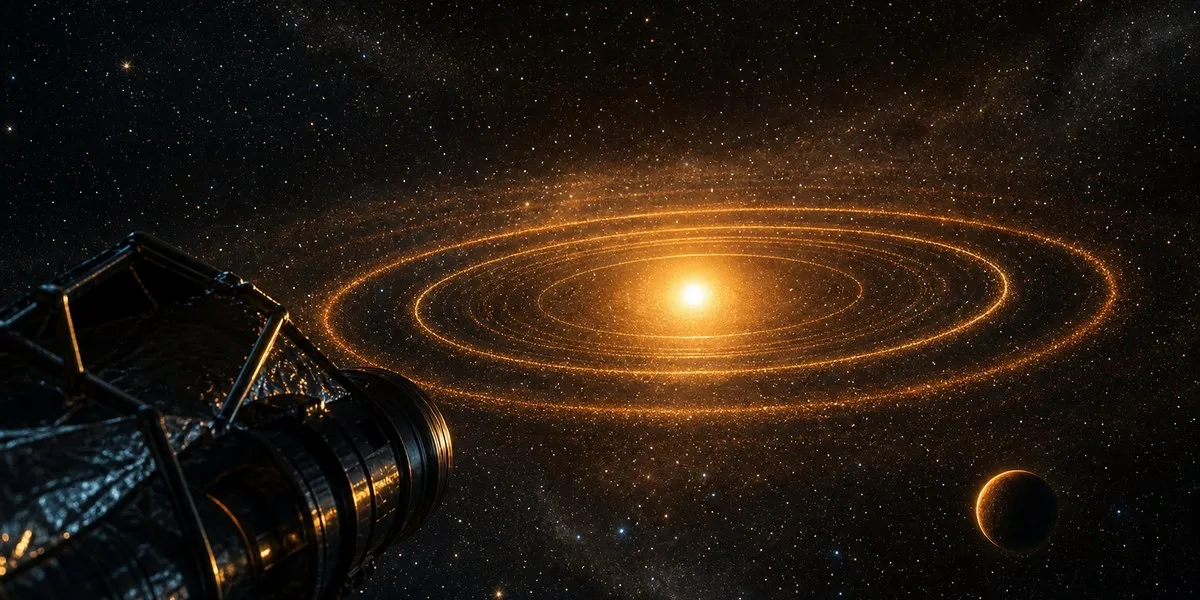
Researchers have developed the computational FLIP method, which made it possible to detect an exoplanet hidden in images already obtained by the James Webb Space Telescope. The technology models the operation of the NIRCam infrared camera and subtracts the image of bright starlight that prevents significantly dimmer planets near it from being seen, ScienceDaily reports.
A digital model of the telescope
The method was named Physics-based Learning for Imaging Planets, or FLIP. The team created a detailed physical model of NIRCam — a kind of digital twin of the instrument. It accounts for minor instabilities and imperfections in the optical system that alter the appearance of starlight in images.
The researchers then optimize millions of model parameters so that it reproduces real observations as accurately as possible. The simulated starlight is subtracted from the original image, allowing faint signals from planets to emerge. In tests on already known exoplanets, detection sensitivity was two to 15 times higher than with conventional methods.
More current news is available on the UA.News Telegram channel Telegram.
Searching James Webb archives
The study's lead author, Rodrigo Ferrer-Chávez of Northwestern University, said that the method makes it possible to find and study planets that could not previously be seen, although they may already have been present in the James Webb archive data.
The work was published in the journal Nature under the title Imaging exoplanets below the telescope stability limit. Its co-authors include scientists from the California Institute of Technology, the Massachusetts Institute of Technology, and the Space Telescope Science Institute.
Applications for future missions
The authors plan to improve FLIP and test its performance with other instruments, including the Nancy Grace Roman telescope and ground-based observatories. In their view, this approach may also be useful for the future proposed Habitable Worlds Observatory mission, focused on direct observation of Earth-like planets near Sun-like stars.




