
Museum in Poland receives anonymously handed-over artefacts linked to the Vandals — Notes from Poland
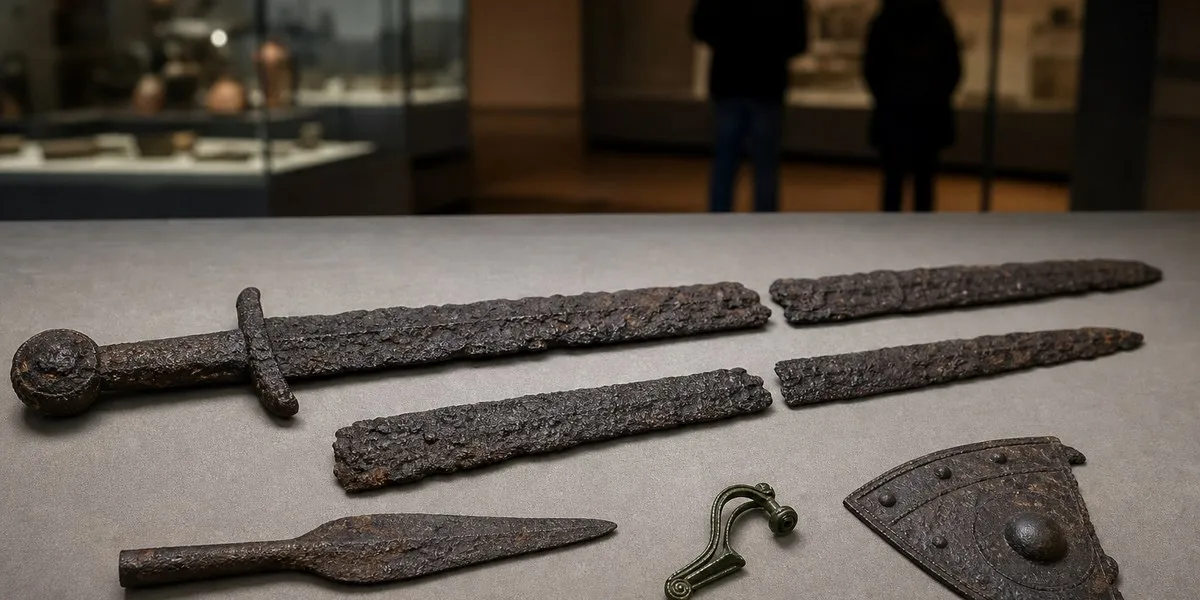
The Father Stanisław Staszic Museum in Hrubieszów, eastern Poland, has received an anonymously handed-over collection of artefacts nearly 2,000 years old linked to the Vandals. The collection includes a sword, spear and javelin heads, shield components, spurs and other items from a burial. This was reported by Notes from Poland.
Sword and warrior’s equipment
The most notable item is a sword preserved in three fragments. The museum noted that the Vandals deliberately broke or bent weapons and other items from burials during funeral rites. The collection also includes two broken spearheads, a shield boss with a spike, a shield handle, a knife fragment, a belt buckle and two spurs.
Among the finds were also parts of a bone comb and a bronze fibula, a clasp for a cloak. The items are in poor condition and require urgent conservation, especially the iron elements of the weaponry, which had lain in the ground for centuries. The objects were also exposed to high temperatures, as the deceased was cremated together with personal belongings. Based on the nature of the items, the museum suggests that the buried person had a high social status.
More current news is available on the UA.News Telegram channel Telegram.
Burial site is planned to be examined
Museum staff do not know who exactly found the burial or where it is located. According to information received by the institution, the burial was discovered several years ago in an agricultural field in the Werbkowice municipality. The artefacts were handed over to the museum through an intermediary; a local metal detectorist played an important role in arranging the transfer.
The museum plans to establish the exact location of the find next summer through archaeological excavations. It believes there may be other similar burials in the area that have been damaged by agricultural work.
The Vandals were an ancient Germanic people who, researchers believe, arrived in the territory of present-day Poland around the 3rd or 2nd century BC. They are usually associated with the Przeworsk culture, which existed in part of the territory of present-day Poland during the Iron Age and the Roman period.




