
NASA suspends scientific operations of two Mars missions — Ars Technica
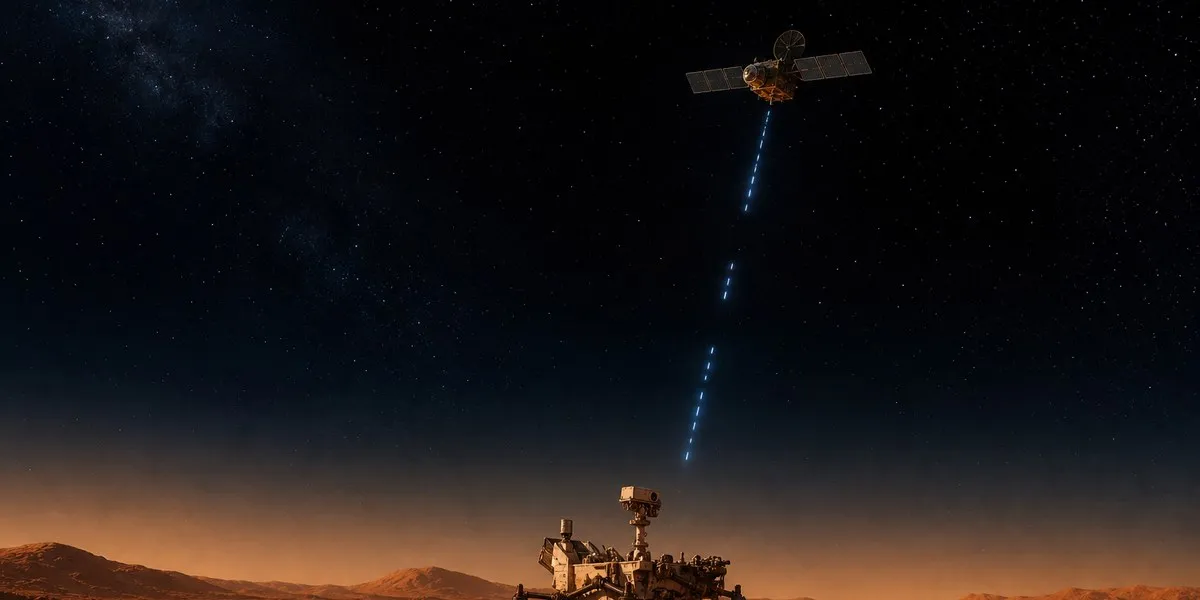
NASA has suspended the scientific operations of the Perseverance rover and the Odyssey Mars orbiter due to separate technical malfunctions. Perseverance is experiencing communications issues, while Odyssey has two functioning reaction wheels left, although at least three are needed for stable spacecraft orientation. This was reported by Ars Technica.
Perseverance communications issues
On October 30, one of the two redundant UHF radio transmitters on the Perseverance rover did not respond when it was switched on. The system automatically switched to the backup transmitter and placed the spacecraft into safe mode. NASA’s Jet Propulsion Laboratory specialists in California later determined that the backup transmitter was operating at about half of its expected power.
The team temporarily stopped using both UHF radios to determine the causes of the failures and assess the safety of their continued operation. Perseverance is currently transmitting signals directly to Earth via X-band, but the speed of this connection is significantly lower than when data is relayed through orbiters. NASA first wants to restore the backup radio channel and then move on to the primary one. The team hopes to return the rover to scientific operations by the end of November.
More current news is available on the UA.News Telegram channel Telegram.
Odyssey uses hydrazine for orientation
In early November, one of Odyssey’s four reaction wheels stopped spinning. The first wheel failed back in 2013, leaving the spacecraft with only two functioning ones. Without three operational wheels, Odyssey is forced to use hydrazine thrusters to maintain its orientation.
The spacecraft needs stable orientation to point its solar panels toward the Sun and its scientific instruments toward Mars. Before the new malfunction, Odyssey already had a limited fuel supply, but with minimal use it could operate at least until the end of 2028. Now, NASA estimates that the hydrazine may last for only one to two months. Ground teams have achieved initial success in addressing the reaction wheel problem, but additional tests are needed to determine whether it can be restored.
Orbiters relay rover data
Odyssey arrived in Mars orbit in 2001 and is the longest-operating Mars mission in history. It is part of a group of orbiters through which NASA relays data from the Perseverance and Curiosity rovers to Earth. NASA also planned to involve Blue Origin in developing a telecommunications orbiter for Mars under a $700 million contract, but the project has been put on hold because of Rocket Lab’s protest over the tender results.




