
NASA suspends scientific work of two Mars missions — Space.com
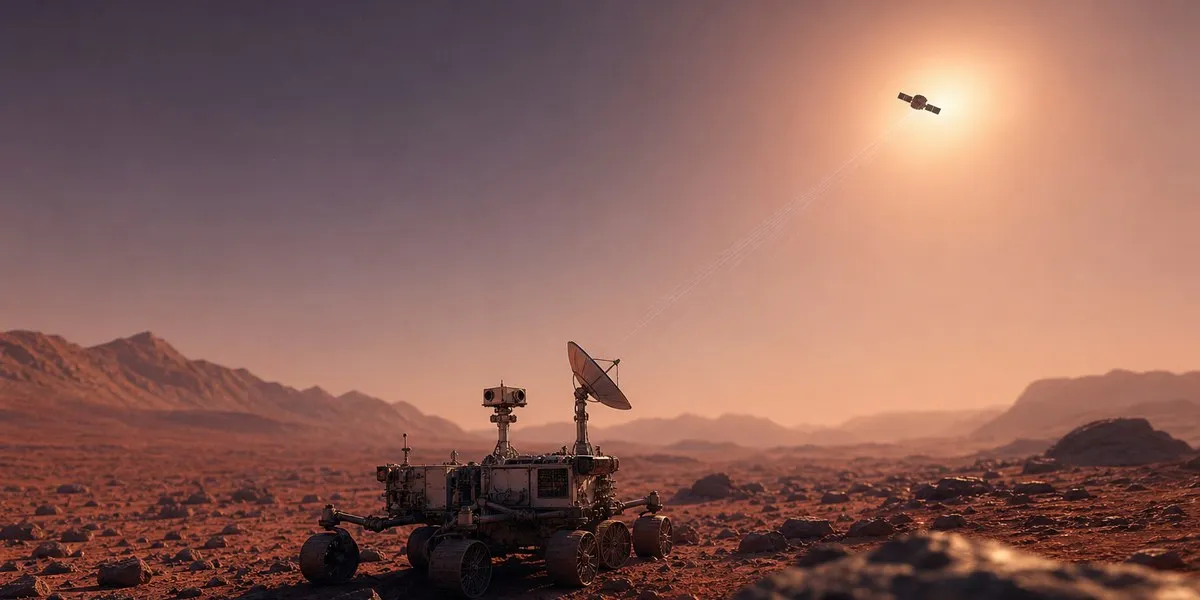
NASA has suspended scientific observations by the Perseverance rover and the Mars Odyssey orbiter due to technical malfunctions. Perseverance experienced problems with two UHF radios, while Odyssey lost the ability to use another reaction wheel, which helps maintain the spacecraft’s orientation in space. This was reported by Space.com.
Perseverance communication problems
At the end of October, the mission team discovered that Perseverance’s primary UHF radio had stopped sending standard status signals to the main computer. The rover independently switched to its backup radio and entered safe mode, shutting down non-essential systems.
After exiting safe mode, engineers recorded a new problem: the backup radio was transmitting a signal at about half the expected power. It was also taken out of use. Perseverance now maintains direct communication with Earth through its high-gain antenna and the Deep Space Network, without relaying through spacecraft in Mars orbit.
This channel provides a lower data transmission rate, so the team is prioritizing the transmission of diagnostic information. Scientific operations, including camera observations, have been temporarily halted. NASA said the rover is stable and remains in contact with specialists; the agency hopes to return it to scientific work by the end of November.
More current news is available on the UA.News Telegram channel Telegram.
Odyssey reaction wheel malfunction
Mars Odyssey, which arrived at Mars in October 2001, entered safe mode on November 4 because of a problem with one of its four reaction wheels. At least three wheels must operate to maintain the spacecraft’s orientation, while Odyssey lost one of them back in 2013.
The spacecraft remained in safe mode until November 6. The team managed to make the faulty wheel move on command, but tests intended to determine whether it can be restored are ongoing. Odyssey has not yet resumed either scientific research or relaying data from spacecraft on the Martian surface.
If the wheel cannot be restored, the spacecraft will have to be oriented using only its engines. According to NASA, its hydrazine supply for such a mode will last only one or two months. The agency plans to return Odyssey to scientific and relay operations after completing tests and analysis in the last week of November.




