
Two tears in the Arabian Plate discovered beneath southeastern Iran — ScienceAlert
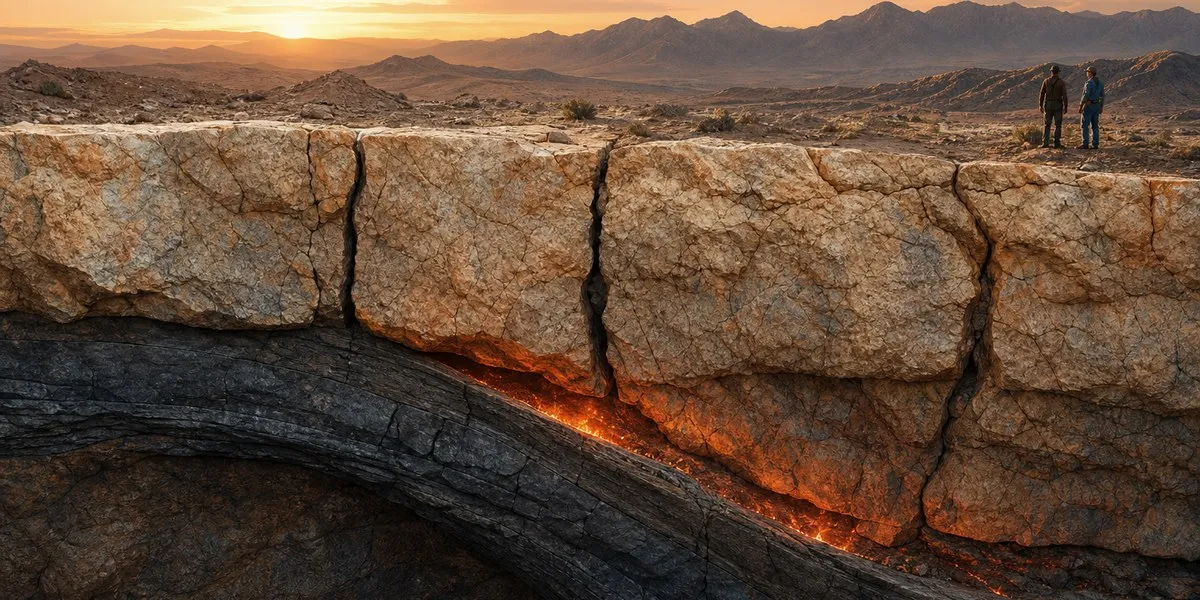
A research team led by scientists from the Chinese Academy of Sciences has discovered two large tears in the Arabian tectonic plate beneath southeastern Iran. The discovery is described in an article in the journal Nature Geoscience, ScienceAlert reports.
Different rock structures
One segment of the plate consists of oceanic lithosphere that was previously part of the ancient Neo-Tethys Ocean. The basaltic rocks in this part are thinner and denser, so they sink beneath the adjacent plate through subduction.
The other part has a continental structure: it is thicker but less dense and contains lighter, granite-like rocks. Such lithosphere resists sinking deep into the Earth and forms mountains during collisions. According to the authors' conclusions, the difference between the oceanic and continental parts of the plate contributes to the formation of tears.
More current news is available on the UA.News Telegram channel Telegram.
Data from 69 seismic stations
To investigate structures at depth, scientists analyzed data from 69 seismic stations that recorded vibrations from distant earthquakes between March 2017 and September 2018. The speed at which such waves travel depends, among other factors, on the temperature and density of rocks, making it possible to reconstruct the structure of the lithosphere.
The researchers found that one tear runs horizontally and is located at the junction of the Zagros collision zone and the Makran subduction zone. The second, smaller vertical tear was detected closer to the surface, near the Makran Trench.
According to the authors' estimates, in the Makran zone, oceanic lithosphere has descended at least 450 km, while in the Zagros zone, continental lithosphere in the west has descended no deeper than 300 km. Models indicate that both tears developed over several million years and may eventually merge. The scientists also suggest that hot magma is already filling some of the gaps formed by these structures.




