
Saudi Arabia changes approach to Vision 2030 spending — CNBC
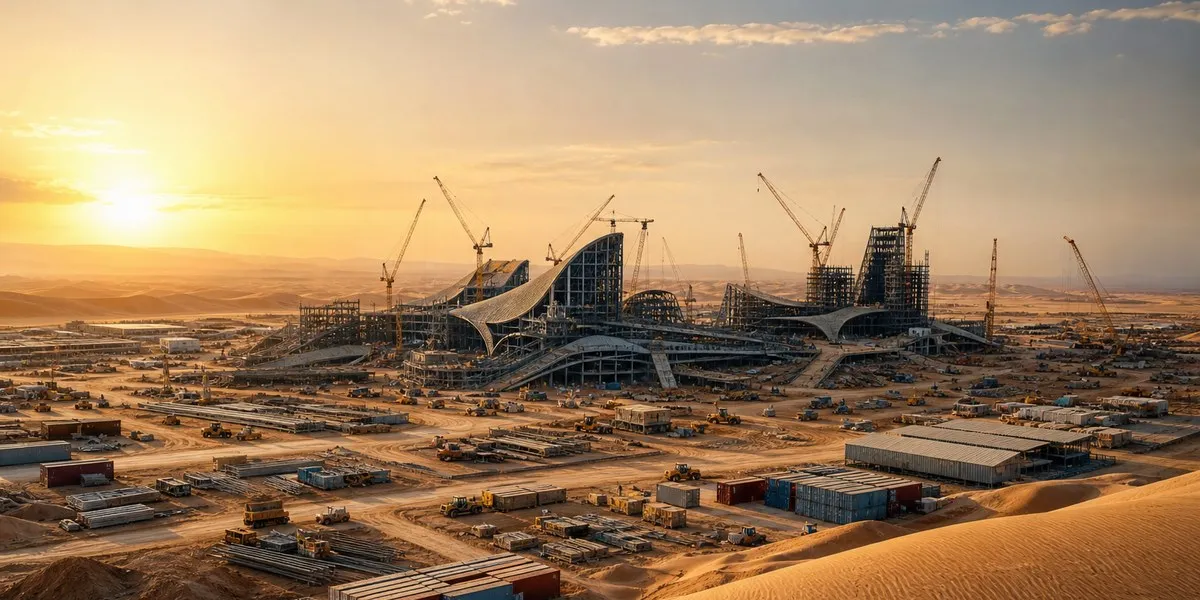
Saudi Arabia is shifting from funding and implementing projects at any cost to an approach under which spending must be justified. Economy Minister Faisal Alibrahim said this in an interview with CNBC amid an economic contraction and security pressure.
According to the minister, the authorities seek to allocate every riyal more precisely while reducing the economy’s dependence on government spending. Saudi Arabia is also working on a clearer regulatory environment for business, aligned with international standards. Such steps include introducing a 15% minimum effective tax rate on the profits of multinational corporations.
Review of major projects
The Vision 2030 program was launched in 2016 to reduce the kingdom’s dependence on oil revenues. To implement it, the state actively used the resources of the sovereign Public Investment Fund.
Recently, the kingdom has reviewed the spending and commercial prospects of a number of flagship initiatives, including the NEOM economic region and the futuristic city of The Line. Saudi Arabia also withdrew funding for the LIV Golf tournament, halted construction of a planned skyscraper in Riyadh, and postponed the 2029 Asian Winter Games, which were to be held in Trojena, part of NEOM.
More current news is available on the UA.News Telegram channel Telegram.
Economic downturn and security pressure
According to government data, Saudi Arabia’s real GDP contracted by 3.8% year-on-year in the third quarter. Oil activity fell by 20.4%, while the non-oil sector grew by 1.9%. Net inflows of foreign direct investment in the second quarter decreased by 19.5% compared with the same period of the previous year.
The Finance Ministry expects the economy to contract by about 2.1% this year and grow by 10.9% next year. At the same time, Oxford Economics forecasts a decline of 3.4% this year and another 4% in 2027.
The country is also experiencing the consequences of Houthi strikes in Yemen, whom CNBC describes as backed by Iran. According to the outlet, the attacks targeted, among other things, the Public Investment Fund tower, Riyadh airport, and the country’s largest oil refinery. Alibrahim said infrastructure investment enabled the energy sector to restore production to nearly pre-crisis levels, while cargo flows were redirected from the east to the west of the country by land transport.




