
Hong Kong installs 15 artificial nests for rare cockatoos — Mongabay
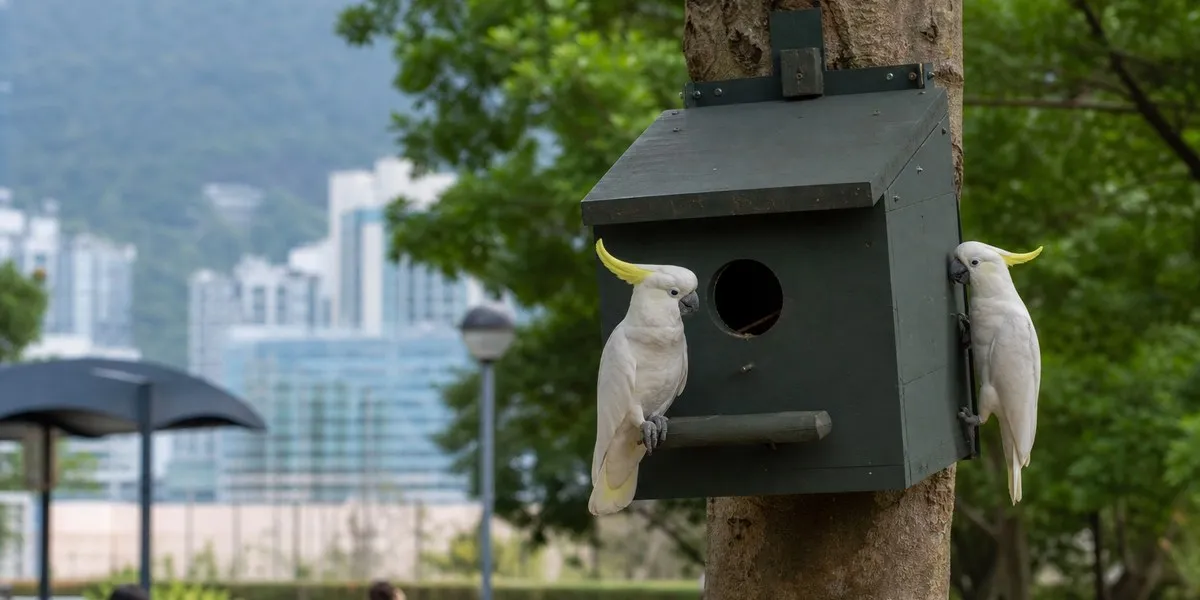
In Hong Kong, China, the HK Cockatoo Watch conservation project team has installed 15 artificial nest boxes for yellow-crested cockatoos since March 2025. Four of them have already been occupied by bird pairs. The boxes are placed in public parks and on school grounds, including St. Louis School and ISF Academy, Mongabay reports.
Lack of natural hollows
The yellow-crested cockatoo (Cacatua sulphurea) is critically endangered: fewer than 2,000 individuals remain in its natural range in eastern Indonesia and East Timor. About 200 wild cockatoos live in Hong Kong and are believed to be descendants of pet birds that escaped or were released.
The population in the city remains stable due to strict legal protection and the absence of natural predators. At the same time, more than 60% of natural hollows where the large birds nest have been lost because trees were damaged by severe storms and through tree pruning.
More current news is available on the UA.News Telegram channel Telegram.
Cameras in nests and help for a chick
Biologist and University of Hong Kong postdoctoral researcher Astrid Andersson, together with arborist and conservationist Harry Wong, adapted Australian nest designs for Hong Kong's humid climate. Cameras were installed inside the boxes, allowing the birds' breeding to be monitored remotely.
In May, a chick found in an air conditioner ventilation opening in a residential building was placed in one of the artificial nests. Its parents reunited with it and fed it until it was fully feathered. Harry Wong is now working to improve the PVC boxes to lower the temperature inside and improve nesting conditions.
Recent genetic testing showed high genetic diversity among Hong Kong's cockatoos. Researchers believe that preserving this urban population may be important for restoring wild populations of the species in Southeast Asia.




