
Possible defensive structure up to 4,000 years old discovered in Morocco — ScienceDaily
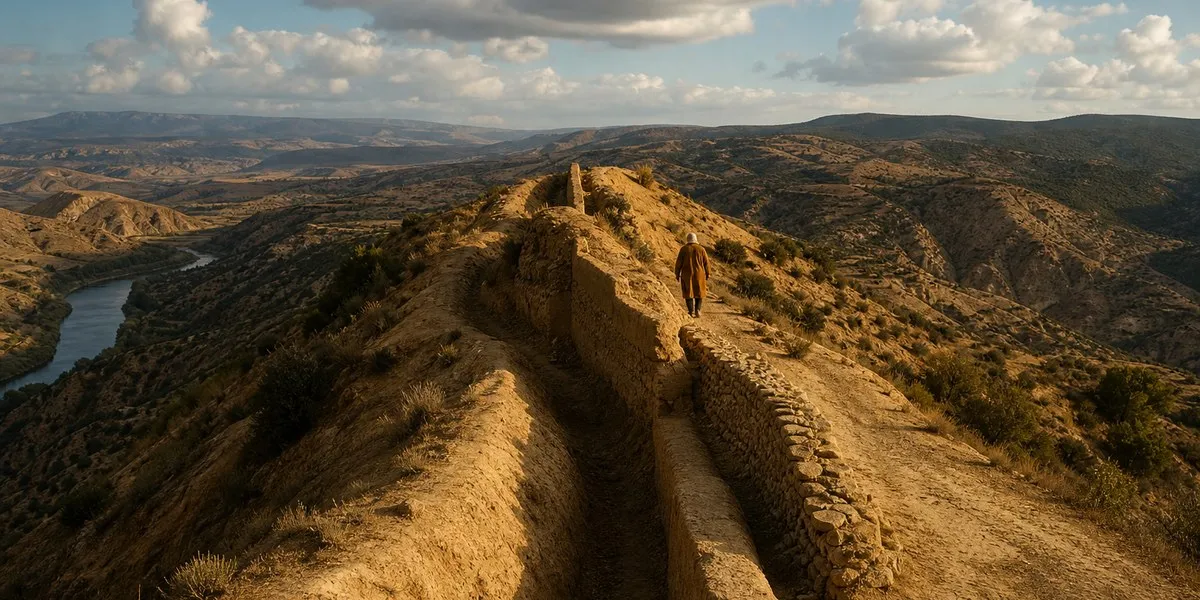
Archaeologists have discovered a large-scale structure at the Oued Beht site in northwestern Morocco that likely had a defensive purpose. Its initial construction is dated to approximately 4,000–3,500 years ago. As ScienceDaily reports, it is the earliest confirmed large defensive construction in North Africa outside Egypt.
Moat, rampart and wall on the ridge
New excavations in 2023 clarified the nature of the structure, traces of which had been noticed since the 1930s. On a narrow section of ridge between a river and a ravine, researchers documented a multi-phase system consisting of a moat, rampart and wall. It cut off and protected the southern edge of the Oued Beht ridge.
Radiocarbon dating of deposits associated with these structures placed their initial construction in a period corresponding to the Bronze Age in other parts of the western Mediterranean. Scientists believe that building such a system required planning, coordination and the mobilization of labor.
The exact threat for which the fortifications were built is unknown. Researchers suggest they may have been linked to growing competition for land and resources or to controlling movement through the territory, rather than necessarily to an external invasion.
More current news is available on the UA.News Telegram channel Telegram.
Settlement and Mediterranean connections
Excavations at Oued Beht also revealed a significant concentration of human activity across an area of at least 10 hectares. The site’s earliest major phase dates to the middle of the 4th and the beginning of the 3rd millennium BCE, the Final Neolithic. The community of that time grew barley and wheat, used wild plants and kept livestock.
Thousands of polished stone axes and other tools, as well as pottery, sometimes decorated with painting, were found at the site. Researchers have not determined whether Oued Beht was a permanent settlement or a seasonal center, but describe it as an important hub in the landscape of northwestern Morocco.
In the 11th–13th centuries CE, the ridge was reused: the defensive structure was rebuilt, a hamlet or farm appeared on a neighboring hill, and a cemetery was arranged between the two sites. Researchers also point to connections between communities in northwestern Africa and broader Mediterranean networks, including territories of present-day Spain and Portugal.




