
Nepal tests scent barriers against tigers and leopards — Mongabay
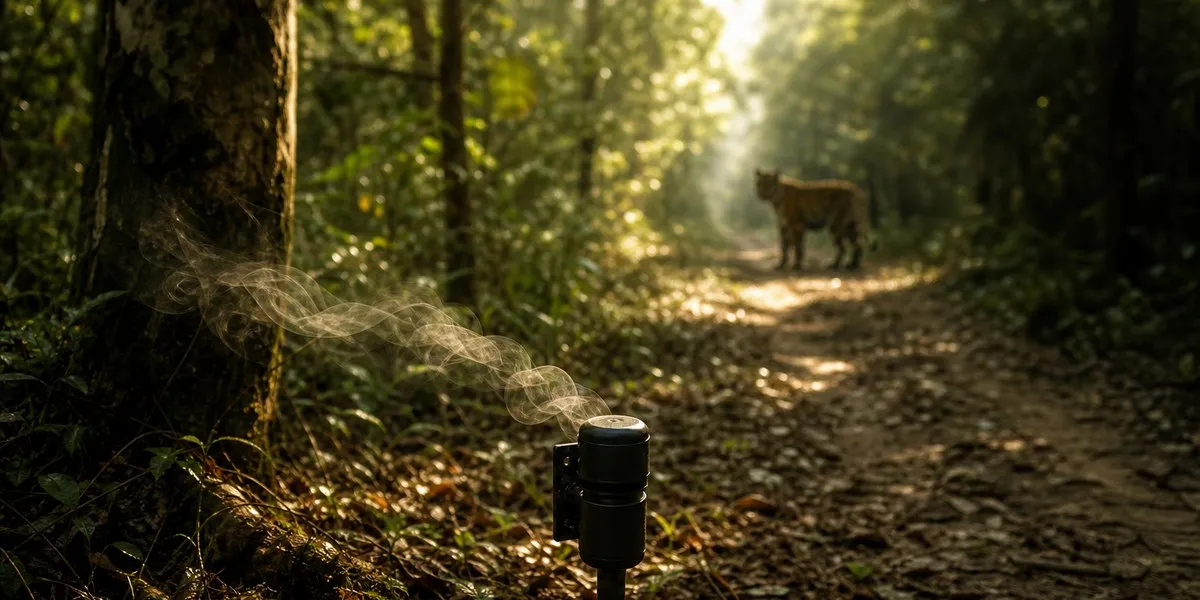
Researchers from Cornell University, WWF Nepal and local forestry authorities are testing synthetic chemical compounds in Nepal that mimic the scent markings of big cats. The project, called BioBoundaries, aims to create invisible scent barriers that could keep tigers and leopards away from livestock, farms and human settlements, Mongabay reports.
In March 2025, a camera trap in the Khata corridor recorded a Bengal tiger approaching a dispenser installed near a trail, sniffing it and stopping. Similar reactions have been repeatedly observed in both tigers and leopards, but scientists emphasize that an animal turning away near a station does not yet prove that the method reduces livestock attacks.
Experiment results vary
Trials began in October 2024 in the 13-kilometer Khata corridor, which connects Bardia National Park with India’s Katarniaghat Wildlife Sanctuary. Thirty stations with iron stakes, scent dispensers and camera traps were installed there. The team tested 10 compounds, comparing animal responses at treated and control stations.
More current news is available on the UA.News Telegram channel Telegram.
Three compounds were associated with fewer leopard records on camera traps, while two others were associated with fewer tiger records. At the same time, some scents had the opposite effect: tigers showed greater interest in them and visited the stations more often. Most of the substances in the tests were identified in tiger scent markings, so these animals examined them particularly closely, including by displaying flehmen, a behavior used to analyze chemical signals.
Not a replacement for livestock protection
In Botswana, one of the compounds, known as 3M3MB, significantly reduced leopard attacks on livestock, according to the researchers. However, the Nepalese trials are not a direct replication of that experiment: of the 10 substances tested there, only 3M3MB had previously been tested in Botswana.
If the scents’ effectiveness is confirmed, dispensers could be installed near livestock enclosures, settlements and other dangerous locations, as well as attached to grazing animals. The researchers note that the technology should supplement, rather than replace, stronger livestock sheds, proper grazing and livestock supervision. Outstanding questions include cost, how often dispensers need refilling, the production and distribution of the substances, and their performance in different weather conditions and over long periods.




