
Map of migration routes of 262 antelopes created in South Sudan — Mongabay
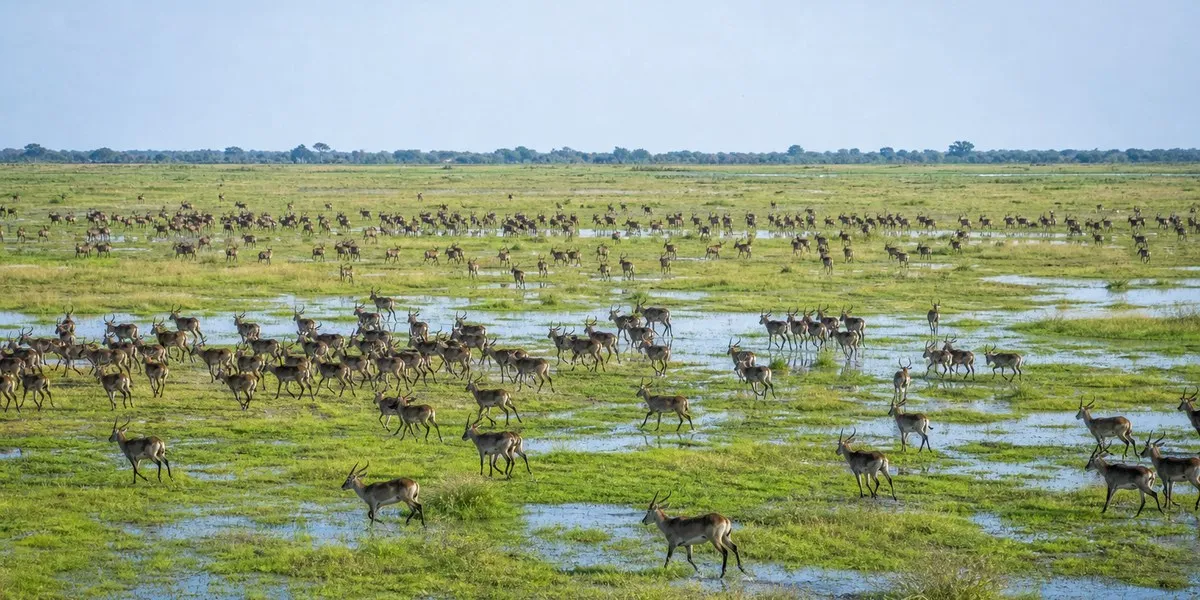
In South Sudan, conservationists have created a map of the seasonal movements of four antelope species, combining millions of GPS points obtained from collars worn by 262 animals since 2023. The data are intended to help identify areas critical to the world’s largest mammal migration, involving about 6 million antelopes, Mongabay reports.
The map tracked the movements of white-eared kob, tiang, Mongalla gazelle and Nile lechwe within the Greater Nile migration landscape. The animals’ movement lines help identify heavily used corridors, traditional lekking sites and areas where antelopes give birth.
Beyond national parks
Boma and Badingilo national parks are located at the center of the migration landscape, but antelopes spend at least 70% of their time outside their boundaries. The area is also used by about 1 million people, their livestock, as well as new settlements, roads and mining sites.
According to African Parks conservation manager Megan Claase, protecting the migration requires a holistic approach because the animals move across the entire territory. African Parks jointly manages Boma and Badingilo parks with the government of South Sudan.
More current news is available on the UA.News Telegram channel Telegram.
During the dry season, white-eared kobs remain in the area between the White Nile, the Akobo River and the White Nile tributary Sobat. During the wet season, they can move south toward the border with Kenya. One GPS-collared kob covered nearly 3,000 km in a year.
Long routes of tiangs
According to GPS tracking data, tiangs cover the greatest distances among the four species: one animal traveled 11,573 km in just over three years. Part of their route between the cities of Bor and Pibor runs outside the two national parks and crosses the main road connecting these settlements.
According to African Parks’ 2025 aerial survey estimate, the migration landscape contains about 5.17 million white-eared kobs, 440,500 tiangs, 191,200 Mongalla gazelles and 131,700 Nile lechwes. The survey was conducted along transects across an area of about 110,000 square kilometers; the organization stressed that these are estimates rather than exact counts. No noticeable change in numbers compared with the 2023 estimate was recorded.
The 112,000-square-kilometer Boma-Badingilo migration landscape recently received UNESCO World Heritage Site status. South Sudanese wildlife biologist Malik Doka Morjan said that involving local communities is necessary to protect the area.




