
Israel conserves 1,500-year-old synagogue mosaic — Jerusalem Post
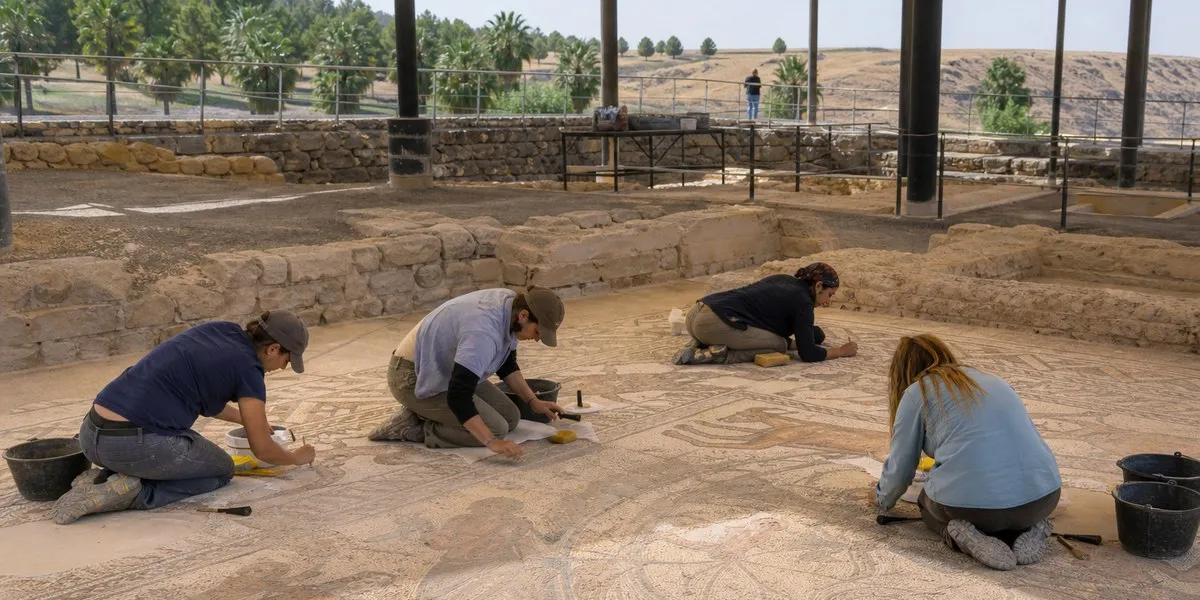
At Beit Alpha National Park in northern Israel, about 20 specialists from the Israel Nature and Parks Authority carried out conservation work on the mosaic floor of an ancient synagogue that is approximately 1,500 years old. The work was coordinated by the authority’s archaeology and heritage division, the Jerusalem Post reports.
Cleaning and reinforcing the mosaic
Conservators cleaned the mosaic’s surface, stabilized loose tesserae and reinforced vulnerable areas. The gaps between the elements were filled with binding materials compatible with the floor’s original materials. This technique is called repointing — filling the joints.
Before and after the work was completed, specialists documented the condition of the mosaic. The documentation will become part of ongoing monitoring of its preservation and will help plan further maintenance of the monument.
A monument of the Byzantine era
The synagogue in Beit Alpha was built at the end of the 5th century, during the Byzantine period. The mosaic floor was discovered in 1928 by archaeologist Eleazar Lipa Sukenik of the Hebrew University of Jerusalem.
More current news is available on the UA.News Telegram channel Telegram.
The floor consists of three colorful panels depicting the Ark of the Covenant, the zodiac and the biblical scene of the Binding of Isaac. In the central composition, twelve signs of the zodiac, inscribed in Hebrew, surround the Greek sun god Helios in a chariot. Female figures symbolizing the four seasons are placed in the corners of the square frame.
Inscriptions of the masters
An Aramaic inscription, the right side of which is largely lost, indicates that the floor was created during the reign of Justinian, likely Emperor Justinian I, who ruled from 527 to 565. Another inscription in Greek names the mosaic’s creators — Marianus and his son Hanina. Their names are also mentioned in an inscription in the Beit Shean synagogue, which may indicate that their workshop was located there.
According to Orit Bortnik, director of the archaeology and heritage division of the Israel Nature and Parks Authority, the mosaic consists of more than 800,000 small stones that together tell of the inhabitants of this place and the masters who created the composition.




