
Philippine village residents report two years without floods — Mongabay
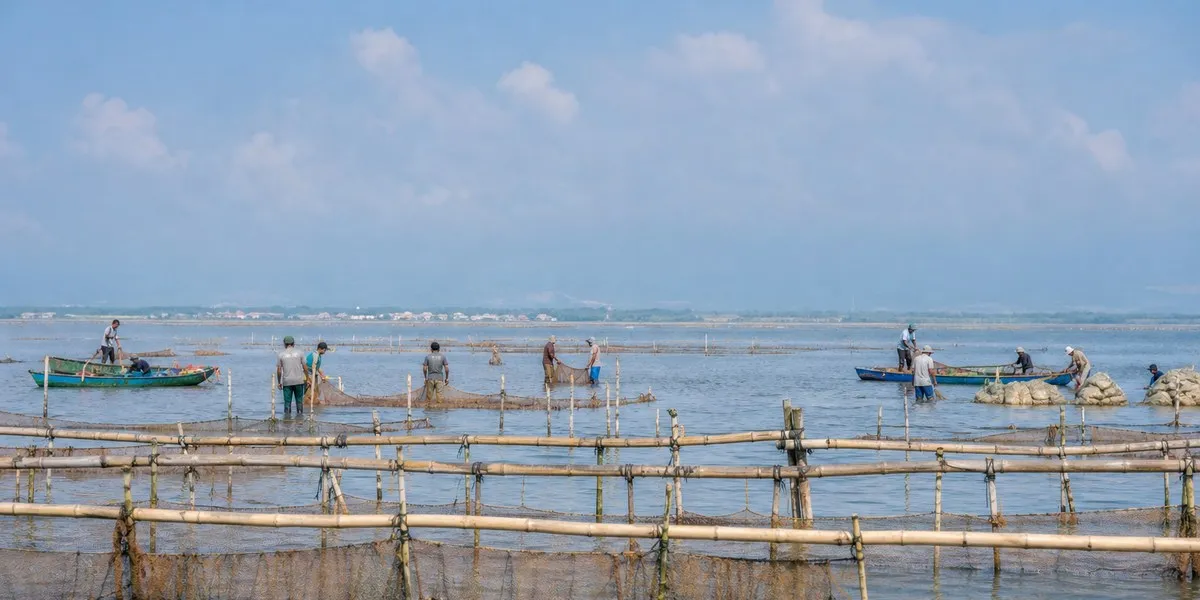
In the fishing village of Pamarawan in the city of Malolos in the Philippines, residents said they have suffered no flooding for nearly two years since the launch of a nature-based coastal protection project. Instead of concrete structures, installations made of bamboo, oyster shells and coconut fiber were put in place, Mongabay reports.
Pamarawan is a low-lying settlement on the coast of northern Manila Bay that can only be reached by boat. Previously, during the southwest monsoon and typhoons, waves would spill over the existing 3–4-meter concrete breakwater and flood streets and homes.
Bamboo traps silt and sand
Connected bamboo frames were installed in the sea near the village across an area of 14 hectares. Together with coconut-net bags filled with discarded oyster shells, they act as breakwaters and weaken wave energy.
The bamboo structures also trap silt and sand. According to barangay council member Ferdinand Cruz, about 0.3 meters of sediment has already accumulated in some places. In about two years, the seabed level is expected to become sufficient for planting mangrove trees. The shell bags are intended to help restore oyster reefs, which will further strengthen the coast.
More current news is available on the UA.News Telegram channel Telegram.
Pilot project and impact on fishers
Malolos Mayor Christian Natividad approved the project, developed by the Dutch engineering company Haskoning, in 2023. Construction began in 2024, and the work is scheduled to be completed later in 2026. The initiative costs 130 million Philippine pesos, or about $2 million.
The pilot initiative is described as the Philippines' first nature-based coastal protection project. According to Haskoning, 80–90% of construction workers were hired from among Pamarawan residents. At the same time, local fisher Jerome Faustino said that more than 50 people lost income because their fishing enclosures and oyster farms were located within the project area. Local officials said that fishers affected by construction were given priority in employment.
Officials see Pamarawan as a possible example for other flood-prone areas of northern Manila Bay. At the same time, Trevor Morrish-Gale, president and head of Haskoning Philippines, stressed that such solutions need to be adapted to the hydrological, environmental, geotechnical and socioeconomic conditions of each coastline.




