
Clinical obesity linked to twice the volume of brain changes — ScienceAlert
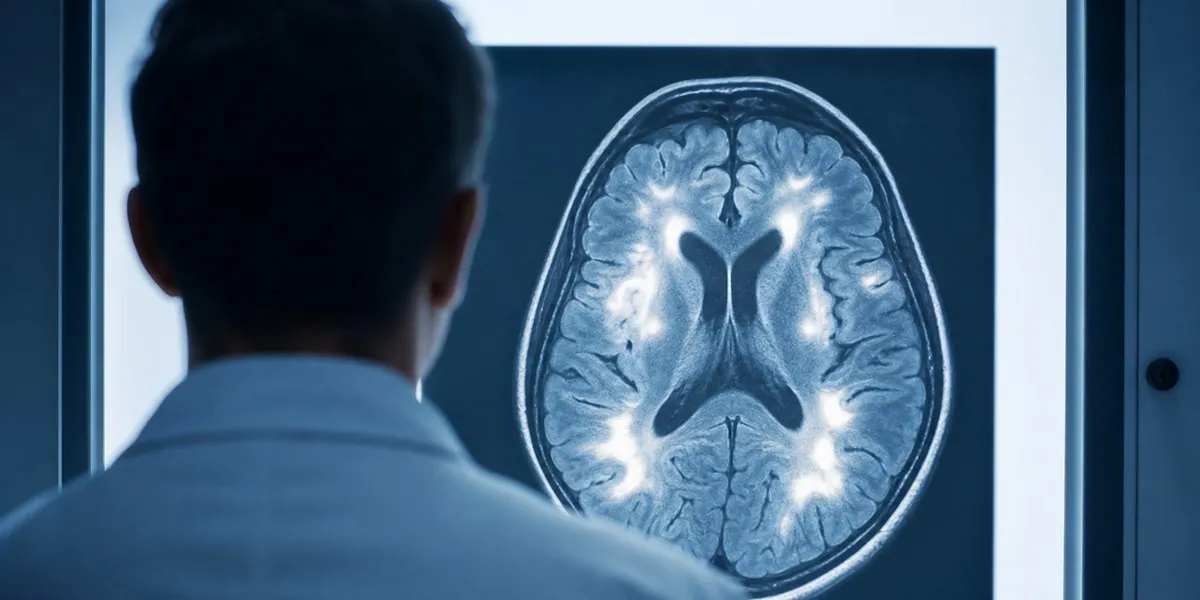
In the United States, researchers found a link between long-term clinical obesity and a larger volume of white matter hyperintensities in the brain — changes visible on MRI scans. Participants who had clinical obesity for longer over their lifetimes had, in middle age, more than twice the median volume of such areas as people who had not been diagnosed with this condition. ScienceAlert reports on the findings of the study, published in Neurology Open Access.
Data from long-term observation
Scientists analyzed data from 190 participants in the Bogalusa Heart Study, a long-term study of a cohort of children from the city of Bogalusa, Louisiana. Observation of this group began in 1972, while medical examination data used for the analysis had been collected since 1985. Participants underwent MRI scans in 2017–2025; their average age at that time was 56.5 years.
To assess weight and health status, the authors did not limit themselves to body mass index. They used the Lancet Commission approach, which distinguishes between the absence of obesity, preclinical obesity, and clinical obesity. The latter means obesity accompanied by serious metabolic health consequences.
More current news is available on the UA.News Telegram channel Telegram.
What the MRI scans showed
Of the 190 participants, 133, or 70%, had clinical obesity at least at one stage of life. The share of such people increased with age: among people in their twenties, it was less than one-third of the group; by their mid-thirties, it exceeded half; and by their mid-forties, it reached two-thirds.
White matter hyperintensities are bright areas on MRI scans that may be a marker of damage to blood vessels and other structural changes in white matter. They have previously been linked to cognitive decline. The authors noted that hypertension, diabetes, and dyslipidemia, which are among the criteria for clinical obesity, are known factors that accelerate small-vessel damage in the brain.
At the same time, the study shows only a statistical association and does not prove that obesity at a younger age directly caused the changes recorded later. The hyperintensities themselves are also not evidence of dementia or cognitive impairment. The researchers specifically pointed to the small sample size and the fact that MRI was performed only once, making it impossible to assess how these changes developed over time.




