
More than two hours of sleep restored in mice with an Alzheimer’s model — ScienceDaily
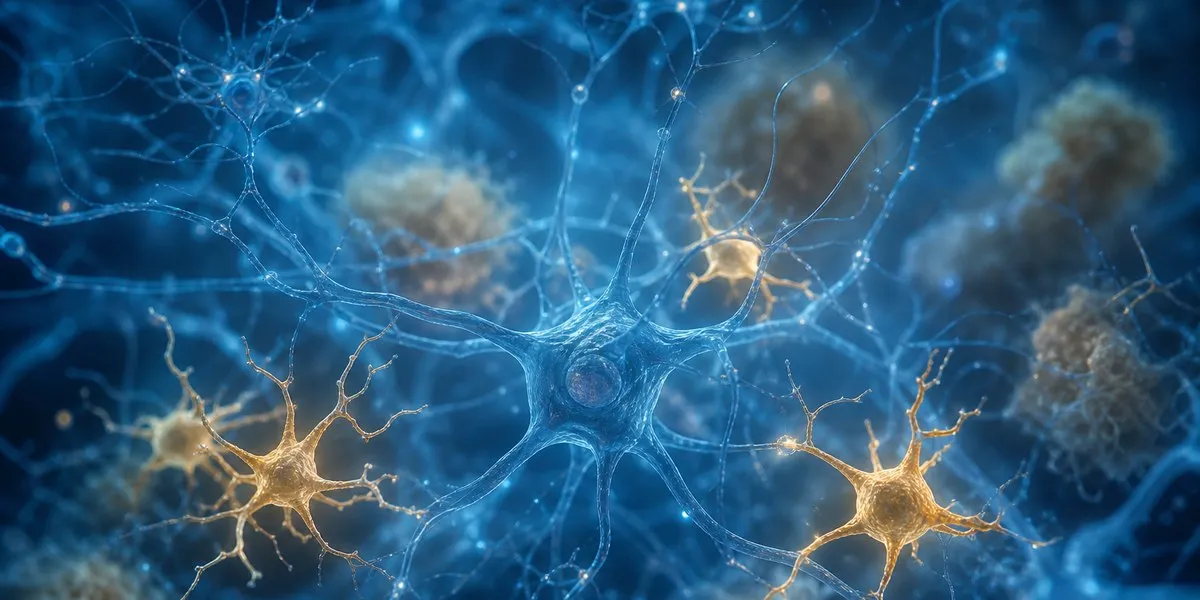
Researchers at the University of Kentucky restored more than two hours of sleep per day in mice with pathology similar to Alzheimer’s disease. To do this, they temporarily reduced the number of microglia, the brain’s immune cells. The level of amyloid plaques did not decrease, ScienceDaily reports.
The role of immune cells
The study was published in the journal Alzheimer's & Dementia. The team, led by Associate Professor of Physiology Shannon L. MacAulay and first author Nicholas J. Constantino, studied mice genetically predisposed to accumulating amyloid plaques at six and 18 months of age. The animals’ sleep was assessed using electroencephalography and electromyography.
The scientists suggest that sleep disturbances may be linked not only to plaques or neuronal dysfunction, but also to an excessive inflammatory response by microglia to these deposits. Under normal conditions, microglia clear cellular debris from the brain and respond to damage, but their activity may increase in the presence of amyloid plaques.
More current news is available on the UA.News Telegram channel Telegram.
Effect after microglia suppression
For 14 days, the animals received pexidartinib (PLX3397) with their food, a drug that blocks a signal required for microglia survival. After this, the number of these cells fell by about 87%. The mice slept longer and spent more time in the slow-wave NREM sleep phase, which the authors describe as important for the body’s recovery.
The researchers also found that sleep disorders appeared early in the Alzheimer’s model: in six-month-old mice, when plaques were only beginning to emerge, they were already significant and subsequently changed little, although the number of plaques more than doubled. Normal aging mainly reduced the REM sleep phase, whereas Alzheimer’s pathology had a greater effect on NREM sleep.
The experiment was conducted in mice, so its results have not yet been confirmed in humans. The authors plan to study ways to regulate microglial activity without nearly completely eliminating these cells. They are also studying metformin and stiripentol as possible means of affecting the metabolism of these immune cells.




