
Bangladesh to form wage board after garment workers’ protests — Kathmandu Post
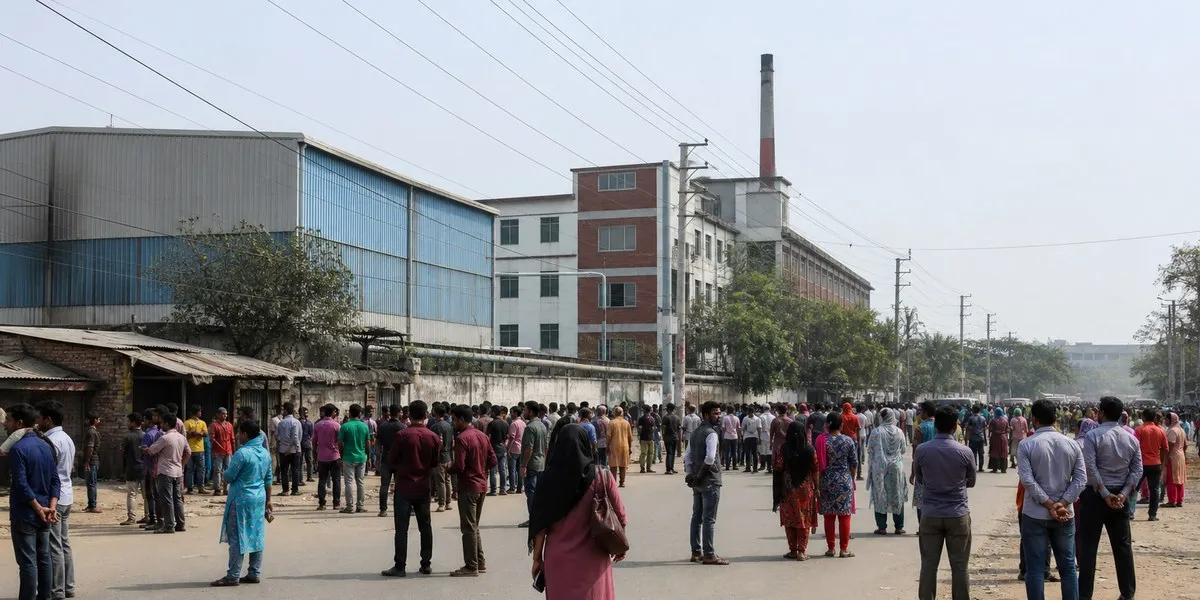
In Bangladesh, the government will form a wage board on Sunday to review the salaries of garment industry workers. The decision was announced after protests that led to the closure of dozens of factories and clashes with police, Kathmandu Post reports.
Workers’ demands
Workers are demanding that the minimum monthly wage be set at 30,000 taka, or about $245. This is more than twice the current minimum rate of 12,500 taka. Protest participants say that their purchasing power has significantly declined due to rising costs of food, housing, transport and medical services.
Labour and Employment Minister Ariful Haque Chowdhury said that the authorities would officially form the board after consultations with representatives of workers and industry. He called on workers to return to work, noting that a review of the wage structure meets their key demand.
More current news is available on the UA.News Telegram channel Telegram.
Factory closures and clashes
On Saturday, about 30 garment factories in Ashulia, a major industrial area on the outskirts of Dhaka, declared a day off because of the protests. Hundreds of workers also blocked a major intersection in the capital, while demonstrations in other industrial zones disrupted traffic and business operations.
According to police, several people, including police officers, were injured during clashes in Ashulia. Law enforcement used tear gas and stun grenades to disperse the protesters. Chowdhury warned that prolonged production stoppages could delay export shipments and payments from international buyers.
Bangladesh’s garment industry, the world’s second largest after China’s, employs about 4 million people, generates more than 80% of the country’s export earnings and accounts for around 10% of its gross domestic product. Manufacturers also report rising production costs, periodic disruptions in gas and electricity supplies, and uncertainty in energy markets due to tensions in the Middle East.




