
Memory chips accounted for up to 55% of semiconductor industry revenue — Susquehanna estimate
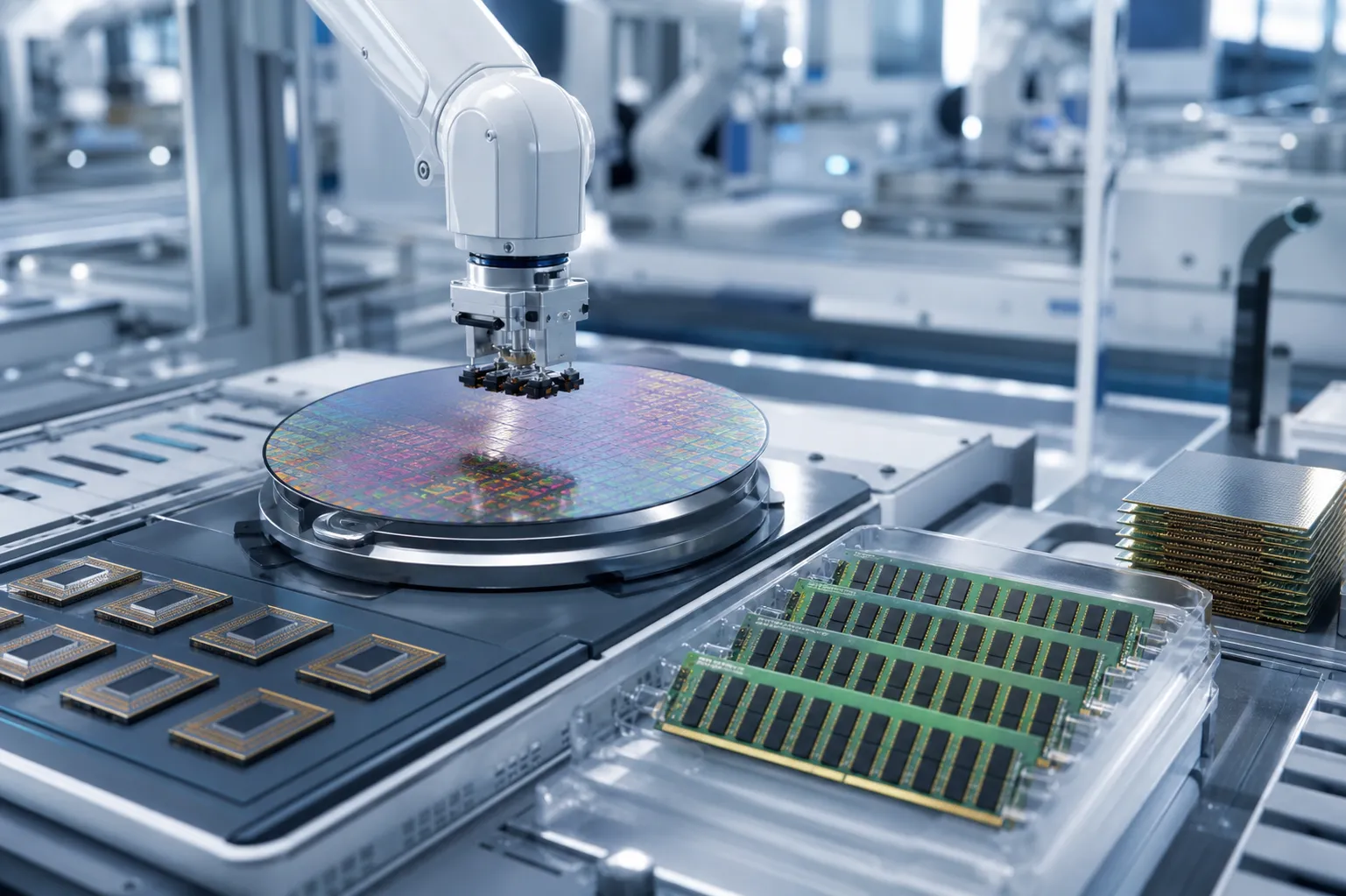
Memory chips have become the main factor driving revenue growth in the semiconductor industry, which could reach $1.5 trillion this year. According to Susquehanna analyst Mehdi Hosseini, investments in data centers for artificial intelligence have put the industry on a path to doubling revenue, while the memory segment has become the main driver of this growth.
Memory share rose sharply
As MarketWatch reports, memory chips now account for 50% to 55% of the semiconductor industry’s total revenue. Historically, their share was approximately 20–30%.
Demand for memory has increased as a result of the AI boom, causing a significant supply shortage and higher prices. Citing Semiconductor Industry Association data on global shipments and average selling prices in July, Hosseini noted that without the memory segment, price growth in the industry would have been more moderate.
Price and production forecasts
The analyst expects average prices for DRAM dynamic random-access memory to rise by 50% in the current quarter compared with the previous quarter, and by another 20% in the fourth quarter of 2026. For NAND, he forecasts a 60% increase in average prices in the current quarter and another 25% in the next quarter.
More current news is available on the UA.News Telegram channel Telegram.
Amid such demand, Micron Technology shares have risen 250% since the beginning of the year, while shares of Sandisk, which specializes in NAND flash memory, have gained 632%. Hosseini has positive ratings on both companies.
Earlier, South Korean publication Electronic Times reported that Micron aims to double its production capacity for high-bandwidth HBM memory by the end of the year. This technology involves stacking DRAM layers and is in high demand among chipmakers, including Nvidia, for processing intensive AI workloads. HBM production, which requires significant amounts of silicon, has also intensified the DRAM shortage.
Logic chips, including central processing units, have also benefited from higher average prices, but recent trends point to a period of stabilization, Hosseini said. He linked this to delays in the rollout of Nvidia’s future Rubin AI platform, which includes Vera processors and Rubin graphics processing units.


