
Giant black holes are not a significant share of dark matter — Space.com
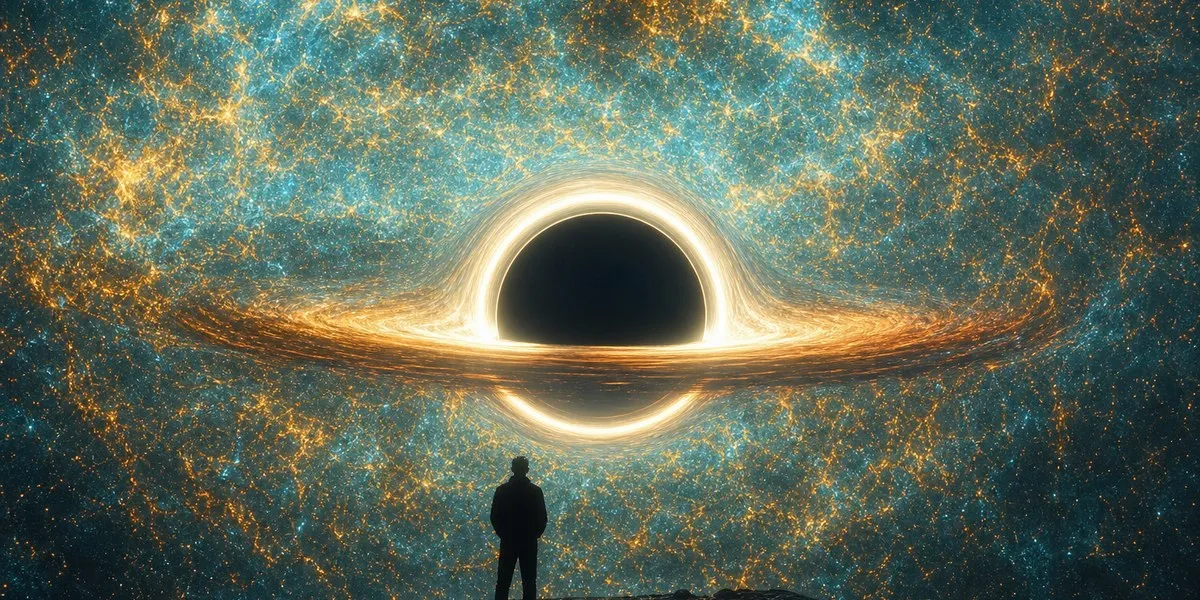
Exceptionally large black holes cannot be a significant component of dark matter, according to the results of a new study reported by Space.com. The objects in question have masses exceeding 100 billion solar masses. Scientists stress that the conclusion does not mean such black holes cannot exist, but that they do not make up a substantial share of the mysterious substance in the Universe.
Testing through the early Universe
Researchers analyzed the cosmic microwave background radiation — light that began to propagate freely after hot plasma cooled and atoms formed, approximately 380,000 years after the Big Bang. This radiation still reaches Earth and contains information about the distribution of matter in the young Universe.
The temperature of the cosmic microwave background varies across different parts of the sky by about one hundred-thousandth. As study co-author Antonio Iovino of New York University Abu Dhabi explained, this structure reflects how matter was distributed at that time.
More current news is available on the UA.News Telegram channel Telegram.
Why the hypothesis was not confirmed
If a significant portion of dark matter were concentrated in a small number of exceptionally massive black holes, the Universe would be more “grainy” on large scales. According to study co-author Christopher Gerlach of the Mainz Institute for Theoretical Physics, such a distribution can be tested through the characteristics of relic radiation.
The analysis did not detect the expected “graininess” that such black holes would create. Nikolas Leister of the Mainz Institute for Theoretical Physics said that these objects cannot constitute a substantial part of dark matter. The largest black hole currently known may have a mass of about 36 billion solar masses, whereas hypothetical objects with masses ranging from 1 million billion to 10 million billion solar masses would be heavier than entire galaxies.
The authors also noted that they continue to investigate another possible option — relatively small, asteroid-sized black holes. The paper is due to be published on October 26 in the journal Physical Review Letters.




