
NASA ends Swift mission after failed attempt to raise its orbit — Space.com
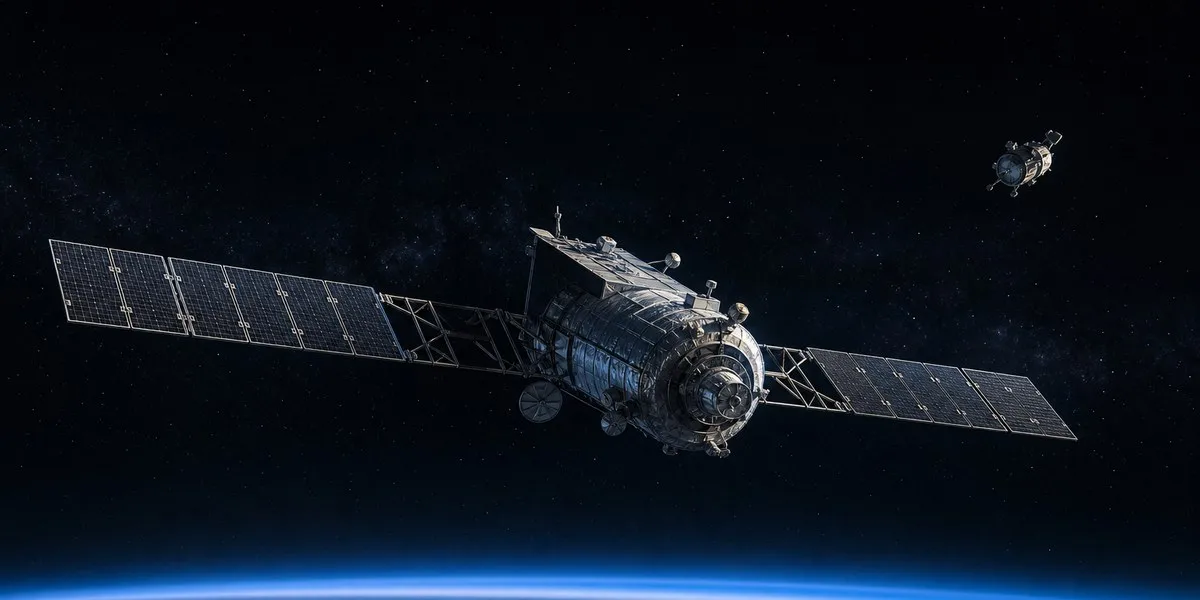
In the United States, NASA has officially ended the mission of the Neil Gehrels Swift Observatory, known as Swift. The decision was made after the private servicing spacecraft LINK failed to capture the telescope and raise its orbit. Swift continues to descend under atmospheric drag and, according to NASA’s assessment, is expected to enter Earth’s atmosphere in the coming weeks, Space.com reports.
An attempt to extend the telescope’s operations
In September 2025, NASA awarded Arizona-based Katalyst Space Technologies a $30 million contract to rescue the observatory. The specially designed LINK spacecraft was intended to approach Swift, capture it with three robotic arms, and move it to a higher orbit. The telescope itself has no engines capable of compensating for its gradual orbital decay.
LINK was launched on July 3 — just over nine months after Katalyst received the contract. About three weeks after launch, the spacecraft encountered malfunctions in its propulsion system and reaction wheels, which maintain its orientation in space. As a result, it began spinning at an unexpected rate and was unable to perform the capture. At the same time, LINK came within 12–15 km of Swift and photographed the observatory.
More current news is available on the UA.News Telegram channel Telegram.
More than 20 years of observations
Swift was launched into low Earth orbit in November 2004 to study gamma-ray bursts, the most powerful explosions in the universe. The spacecraft was designed to operate for two years, but it worked for more than two decades. Swift collected its last scientific data on October 20.
During its operation, the telescope studied more than 2,000 gamma-ray bursts and more than 1,400 supernovae, and also observed asteroids, comets, and black holes. It also conducted an all-sky survey in the X-ray range. Mission data were used in approximately 7,000 scientific publications, while the observatory’s archive of multiwavelength observations will remain available for research.




