
Perseverance sets extraterrestrial driving record on Mars — TimesLIVE
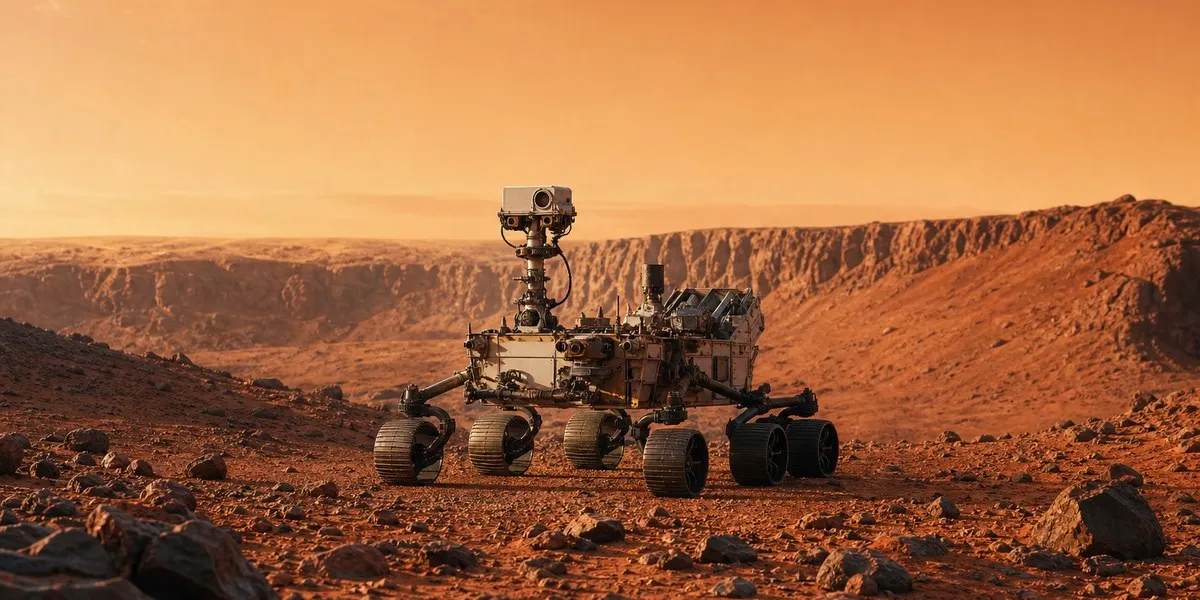
NASA's Perseverance rover has travelled 45.2 km since arriving on Mars in 2021, setting a distance record among all vehicles that have moved across the surfaces of celestial bodies beyond Earth. TimesLIVE reports.
The six-wheeled, car-sized vehicle surpassed the previous record held by the Opportunity rover, which travelled 45 km across Mars between 2004 and 2018. Both rovers have also travelled farther than any lunar rover.
Exploring Jezero Crater
Perseverance operates in Jezero Crater in Mars' northern hemisphere. The region is believed to have been flooded with water billions of years ago and to have contained a lake. The rover reached the record distance while travelling toward the Idubi area through terrain near the crater's western rim known as Lac de Charmes.
According to Stephen Lee, Perseverance and Curiosity rover project manager at NASA's Jet Propulsion Laboratory in California, Perseverance's engineering systems and instruments are in excellent condition, while backup systems remain available. An assessment of all systems showed that the vehicle can operate into the 2030s and likely longer.
More current news is available on the UA.News Telegram channel Telegram.
Autonomous navigation
NASA attributes much of the rover's success to the AutoNav autonomous navigation system. According to Lee, 90% of the vehicle's movements are carried out without human intervention. Perseverance takes stereo images of the terrain ahead, creates a three-dimensional software map, and independently selects the safest route to a designated point.
The fast Vision Compute Element coprocessor makes it possible to process images almost continuously and run autonomous driving software. Previous rovers had to stop before each section of their route to process data.
The initial mission plan called for travelling 20 km. NASA recently extended the mission to explore the crater rim until approximately the end of 2028. According to Lee, Perseverance's plutonium-based power system is operating as expected and has a supply of useful energy for many years.
Lee called Perseverance's most significant result the potential biosignature discovered last year — a possible sign of ancient microbial life. It was found in reddish rock that likely formed 3.2–3.8 billion years ago in a river channel that fed an ancient lake in Jezero Crater.




