
Due to Ukrainian attacks, three Russian ports on the Sea of Azov are on the verge of collapse
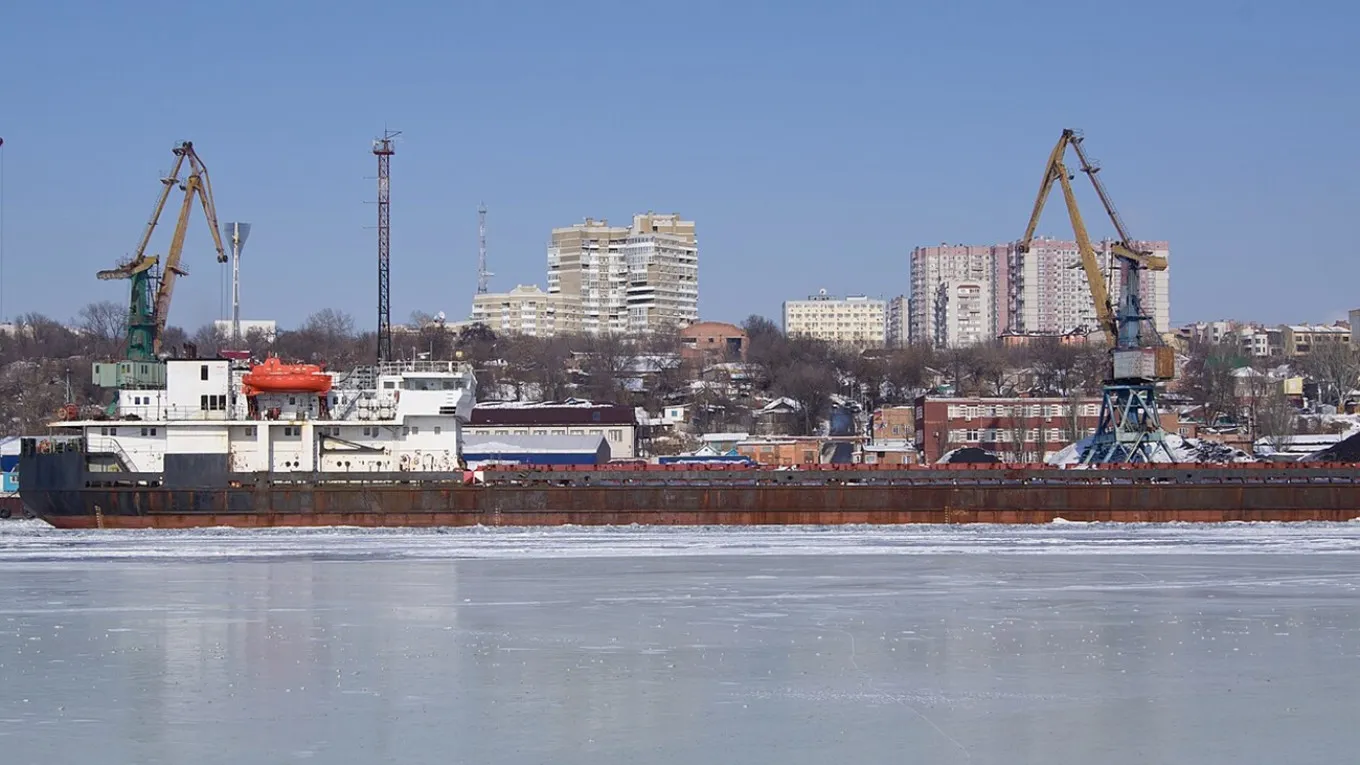
Three ports in Rostov-on-Don, Taganrog, and Azov may have to shut down permanently due to the consequences of Ukrainian attacks and navigation problems. This was stated by Yuriy Slyusar, governor of the Rostov Region. According to him, without urgent financial assistance from the federal government, the region risks losing these enterprises.
Yuriy Slyusar, governor of the Rostov Region, stated that all three ports have effectively ceased operations. At the same time, the enterprises continue to pay salaries to their employees and must service their loans. As a result, their financial situation is rapidly deteriorating. “Of course, they [the ports] are also going through difficult times. All three of our ports… have effectively stopped operating. At the same time, the loans remain, and the obligation to pay salaries hasn’t gone anywhere,” Slyusar said in an interview with the “Russia 24” television channel.
According to him, Ukrainian strikes have damaged quay walls, storage tanks, and other port infrastructure facilities. In addition, the shutdown of port hubs and navigation problems in the Azov-Black Sea basin have led to serious economic consequences for the region. As a result, a regional state of emergency has been declared there.
About 7,000 people work at the three ports. Even after operations effectively ground to a halt, they continue to receive their salaries. This places an additional financial burden on companies that are receiving almost no revenue from cargo transportation. “If we don’t provide radical assistance to this industry now, we will lose it,” the governor stated. Back in October, Slyusar warned that port and shipping companies in the Rostov region were facing bankruptcy. He cited regular drone attacks and restrictions on vessel traffic as the reasons.
According to the governor, cargo transshipment volumes in Rostov, Azov, and Taganrog have fallen by 45%. At the same time, sources at the Kommersant newspaper reported that in September, ports on the Azov and Black Seas lost 95–100% of their cargo traffic and about 85% of their passenger traffic.
Problems with maritime transport began as early as the beginning of July, when Russian authorities restricted shipping in the Azov Sea basin due to Ukrainian strikes. This led to a halt in shipments from the Don ports. Subsequently, the port of Kavkaz in the Krasnodar Krai ceased operations, and cargo shipments from deep-water terminals on the Black Sea also declined significantly.
Before these problems arose, Russia’s southern ports shipped about 60 million metric tons of grain abroad each year. Now, due to the near-complete halt in their operations, Russian grain exports have plummeted. According to estimates by the Sovekon analytical center, Russia exported only 1.8 million metric tons of grain in September. This is the lowest figure in the past 17 years. Due to problems with the southern routes, the country has even begun using an unusual export route: in late October, it was reported that Russian grain was shipped for the first time via the port of Murmansk and the Arctic Ocean to Africa.
At the same time, according to Reuters, some grain-carrying ships began passing through the Kerch Strait into the Sea of Azov again in late October. However, this does not yet indicate a full resumption of port operations. To save the companies, Slyusar appealed to the Russian federal government for financial support. Specifically, he proposes deferring tax payments, providing the ports with preferential loans, and introducing rent holidays for the use of infrastructure owned by Rosmorport and other organizations.
Thus, Russian authorities acknowledge serious problems in the port sector in the south of the country. Without additional assistance, the three ports—which were previously vital for the export of Russian grain and other cargo—may not resume full operations. This is reported by Russian media.
In the temporarily occupied city of Sevastopol, the command of the Russian Federation’s Black Sea Fleet has ordered military ships to be moved daily from one bay to another. In this way, the Russian military is attempting to change the ships’ mooring locations.
The Russian Baltic Fleet has begun using an unusual camouflage pattern on its Project 1331-M small anti-submarine ships. Patterns imitating urban buildings and a waterfront have appeared on the hulls.




