
The Main Intelligence Directorate (GUR) has uncovered foreign components in Russia's "Kometa" navigation modules

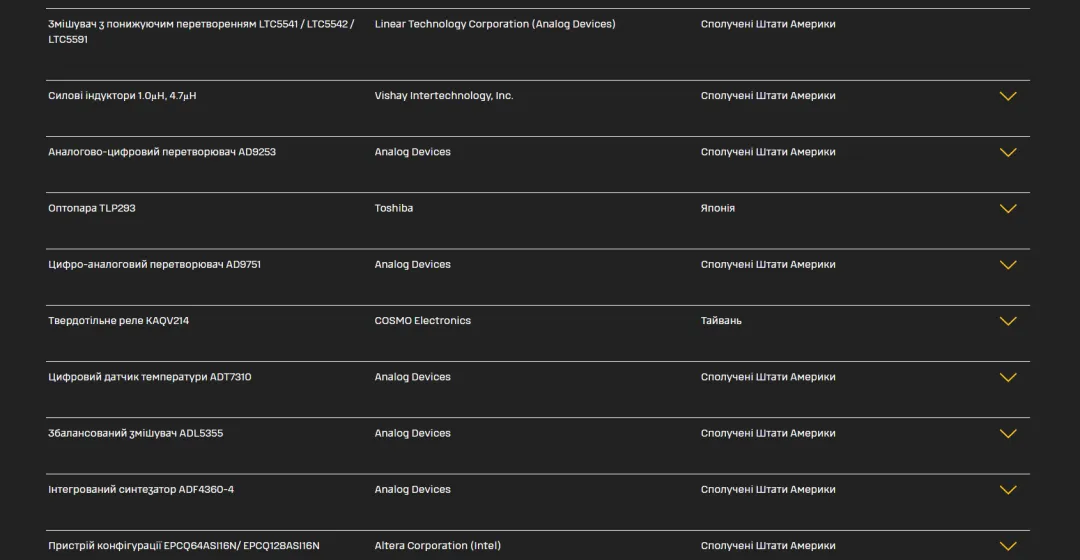
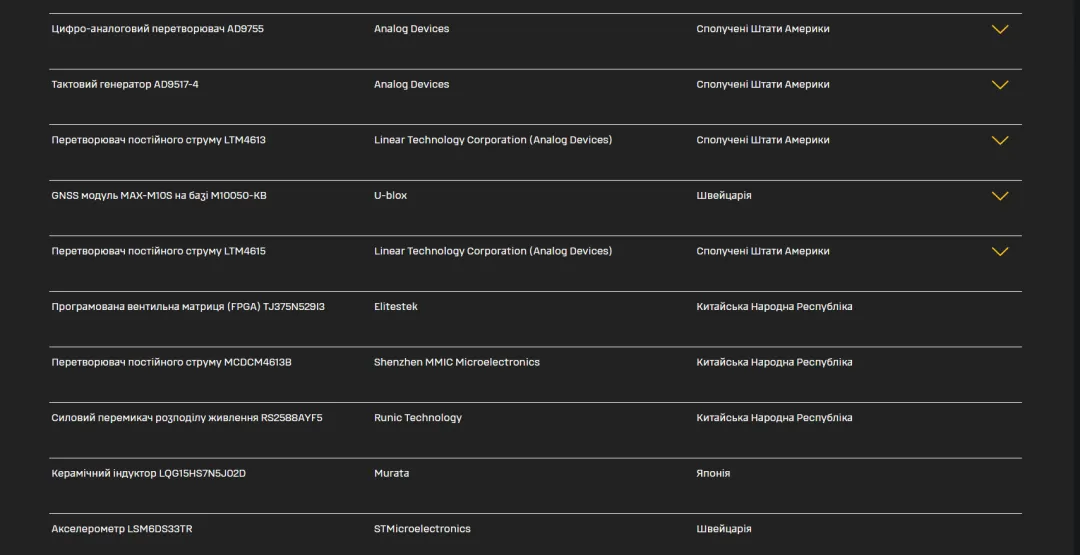
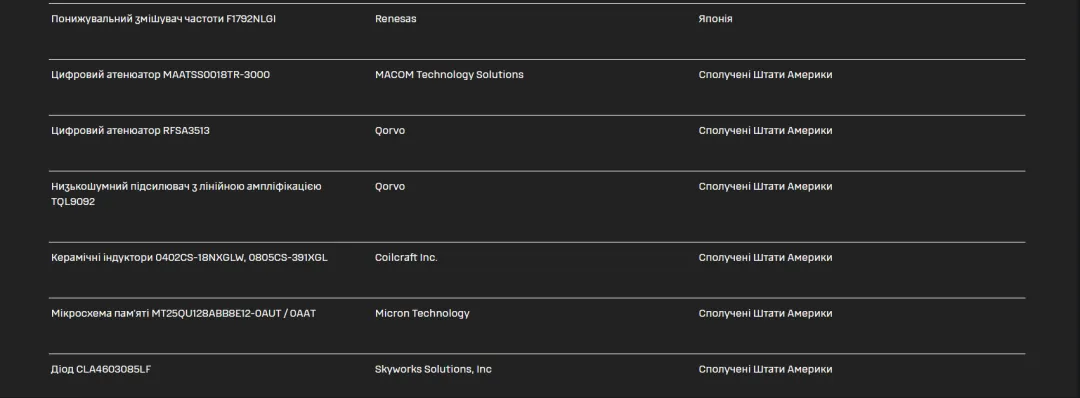
The Main Intelligence Directorate of the Ministry of Defense of Ukraine has published on the War&Sanctions portal a list of 37 foreign electronic components used in the “Kometa” jam-resistant navigation modules. Intelligence also published information on 28 companies involved in the production of these systems and the supply of components, as well as 13 pieces of foreign technological equipment used in their manufacture.
According to Ukrainian intelligence, one way to protect onboard systems from electronic warfare (EW) jamming is to use Controlled Reception Pattern Antennas (CRPA). Such antennas can mitigate the effects of interference by altering the radiation pattern and applying signal analysis algorithms.
“One way to protect onboard systems from EW jamming is to use Controlled Reception Pattern Antennas (CRPA), which are capable of filtering out interference by altering the antenna’s radiation pattern and applying signal analysis algorithms. This is precisely the method used in the ‘Kometa’ systems,” the intelligence report notes.
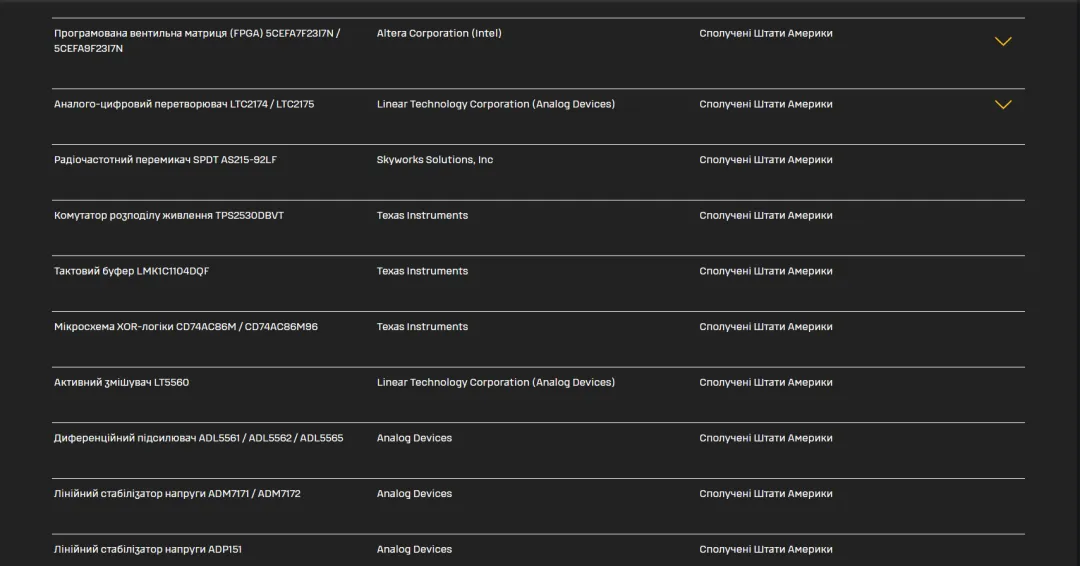
Russia uses “Kometa” navigation modules in modern missiles, drones, and guided aerial bombs. According to the GUR, the classic version of the system consists of two main elements: an antenna array with a certain number of patch antennas and a signal processing module based on an Altera Cyclone (FPGA) Altera Cyclone—a product of Altera, a subsidiary of Intel.
The navigation system’s resistance to interference depends on the number of patch antennas, their arrangement, and the algorithms the FPGA uses to separate the useful signal from interference. Placing the antennas on a special array allows for the acquisition of spatial information about the direction of the incoming radiation and compensates for its unwanted effects.
According to Ukrainian intelligence, Russia is already making widespread use of “Kometa” systems with 16 patch antennas and is organizing mass production of antenna arrays with 20 elements.
It has also been confirmed that CRPA systems manufactured in China and Alabuz, which have 32 antennas, are being used.
The developer and main manufacturer of “Comet” modules in various configurations is the Russian company “VNIIR-Progress.” It is part of the “ABS Elektro” group of companies, which is linked to Nenad Popović, a Serbian pro-Russian politician subject to sanctions, according to the Main Intelligence Directorate (GUR).
“VNIIR-Progress” holds patents on key technical solutions that underpin the design and operation of the “Kometa.” One of the inventors of these technologies is Vladimir Kharisov. His daughter, Irina Kharisova, currently heads the parent company of the “ABS Elektro” group.
Components for the production of navigation modules are procured through another company in this group—the joint-stock company “VNIIR.” According to intelligence reports, suppliers include Chinese distributors and sellers of microelectronics, as well as Russian intermediaries.
To fulfill orders from companies in the Russian military-industrial complex, “VNIIR-Progress” uses its own production facilities. These include JSC “VNIIR” and the company “ABS ZEIM Automation.”
Contract manufacturers are also involved in production, including:
- “Pantes”;
- “Aviv”;
- “PSB Technologies”;
- “Erikon”;
- “Vector Group.”
According to the Main Intelligence Directorate, this year the number of orders for the production of “Komet” systems from Russian defense industry enterprises significantly exceeds 100,000 units of various modifications.
The main customers for these navigation systems are manufacturers of Russian cruise and ballistic missiles, attack drones, guided aerial bombs, and glide munitions.
The GUR has published a list of 37 foreign-made components used in Russian navigation modules. The list includes products from nearly two dozen manufacturers in the U.S., China, Switzerland, Japan, and Taiwan.
“In addition, today we are publishing a list of 37 foreign-made components used in the ‘Kometa’ systems. The list includes products from nearly two dozen manufacturers in the United States, China, Switzerland, Japan, and Taiwan. The most critical of these are programmable logic devices (FPGAs) such as Altera Cyclone (Intel, U.S.), analog-to-digital and digital-to-analog converters, as well as radio frequency microchips from the American manufacturer Analog Devices and its subsidiary brand Linear Technology,” the GUR stated.
In addition to the components, the War&Sanctions portal has published data on 28 Russian and Chinese companies, their role in the production of navigation systems, and the supply of electronic components. Information is also available on 13 pieces of foreign equipment used in the manufacture of the “Komet.”
According to intelligence reports, “VNIIR-Progress” is constantly seeking alternative supply channels and replacements for products from Altera and Analog Devices. Difficulties with these components have arisen due to the sanctions imposed and the tightening of export controls.
“This indicates that sanctions are currently a crucial element in countering the aggressor and creating the conditions for a just peace. Increasing sanctions pressure and control measures can disrupt technology supply chains to Russia, limit the capabilities of the Russian military-industrial complex, and weaken Russia’s military potential,” the agency emphasizes.
The published materials are intended to help identify foreign manufacturers and suppliers of components used in Russian weapons. A complete list of data on “Kometa” navigation modules, involved companies, and technological equipment is available in the “Weapons Components” section on the War&Sanctions portal.
This was reported by the Main Intelligence Directorate (GUR).
Previously, Ukraine’s military intelligence published information on 20 seagoing vessels that transport Russian oil, petroleum products, and liquefied natural gas (LNG) and refuel sanctioned vessels. All of them are subject to sanctions by the United Kingdom or Ukraine, and one of the vessels is also subject to U.S. restrictions.
The number of ships flying the Russian flag increased by more than a third from January 2025 to June 2026. This is happening against the backdrop of intensifying international pressure and the fight against the so-called “shadow fleet,” according to a study by the Center for Energy and Clean Air Research.




