
Russia's Starlink counterpart, Rassvet, has encountered new problems, according to the Main Intelligence Directorate
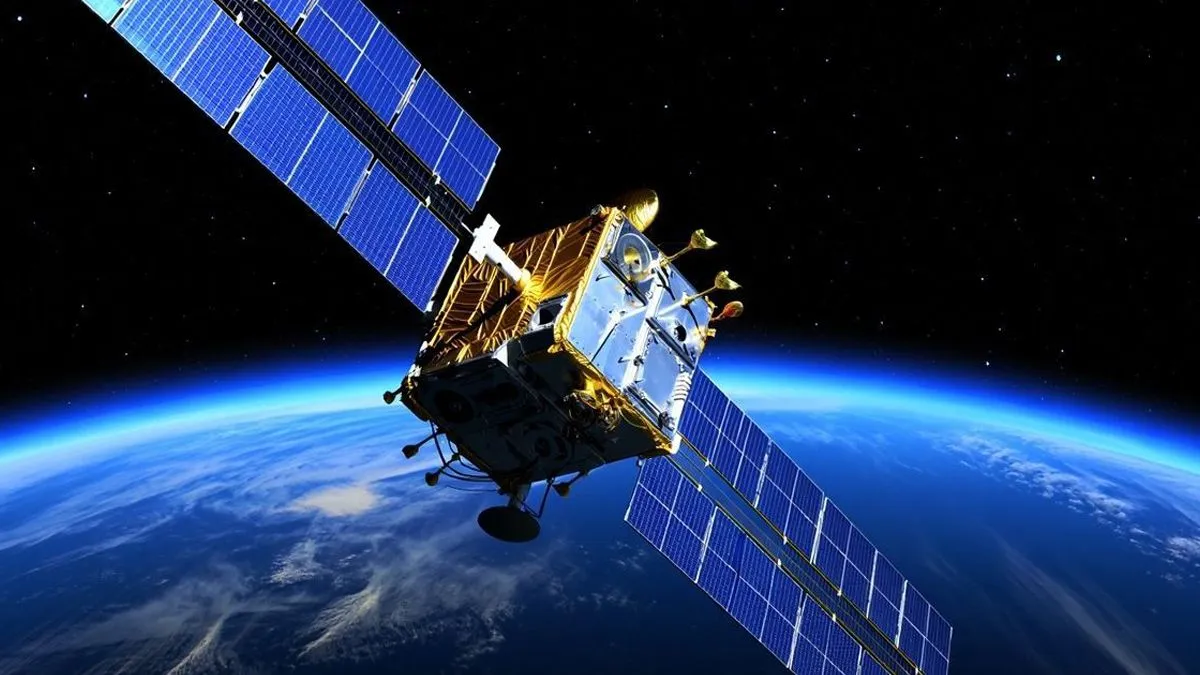
The Main Intelligence Directorate of the Ukrainian Ministry of Defense has released new information about the Russian “Rassvet” low-Earth orbit satellite communications system, which Russia positions as an equivalent to Starlink. Despite attempts to accelerate its deployment, the project faces a number of technological and manufacturing challenges.
According to Ukrainian intelligence, the main problems with the Russian system include dependence on foreign components, difficulties in placing satellites into their planned orbits, and challenges in developing compact subscriber terminals.
In particular, the third satellite launch, scheduled for 2026, has reportedly been canceled or postponed.
As of now, Russia has carried out two launches and placed a total of 30 satellites into orbit. The first batch was launched on March 23, and the second on July 19, 2026. Two satellites have already fallen out of orbit.
Of the 30 satellites, 26 have reached a stable position at an altitude of approximately 500–520 km. None of them reached the planned altitude of 800 km. The remaining satellites continue to maneuver to reach their target orbit.
Each satellite weighs about 280 kg and measures 2.7 × 1.8 × 0.6 m.
One of the system’s key technologies is intersatellite laser communication. It allows data to be transmitted directly between satellites without constantly relying on ground-based infrastructure.
By the end of 2026, Russia planned to expand the “Rassvet” satellite constellation to 47–48 satellites. In 2027, it expects to launch another 240 satellites.
The stated goal is to provide coverage of 94% of the Russian Federation’s territory with data transmission speeds of up to 150 Mbit/s.
Further expansion of the constellation is projected as follows:
- by 2031—408 satellites;
- by 2035—924 satellites.
For the launches, the Russians are using Soyuz-2.1b rockets, which launch from the Plesetsk Cosmodrome.
The ground segment of the system is centered around the main control center in Moscow. It is responsible for satellite control, the operation of laser communication channels, and traffic routing.
The project also calls for the creation of a network of ground stations in Moscow, Murmansk, Anadyr, Rostov-on-Don, Norilsk, Zheleznogorsk, and Yuzhno-Sakhalinsk.
In September 2026, the Russian side completed testing of the “Ultra” terminal. The claimed data download speed is up to 650 Mbit/s. The device is designed to operate even when the vehicle is traveling at speeds of up to 250 km/h.
By the end of the year, the Russians plan to deliver about a thousand of these devices to customers.
In addition, four more terminal models—"Zemlya," "Mini," "Prime," and "Voda"—are scheduled to be developed in 2027. The presentation of the “Air” aviation terminal is scheduled for 2028.
The main contractor for the project is Bureau 1440 LLC, which is part of IKS Holding. At least 46 Russian and three Belarusian companies are involved in the production partnership.
According to the Main Intelligence Directorate (GUR), 22 enterprises, including “Bureau 1440,” are not subject to sanctions.
One of the key manufacturers of critical components is the Kaliningrad-based joint-stock company “OKB ‘Fakel’.” The company manufactures low-thrust engines and propulsion systems for satellites.
At the same time, “Rassvet’s” technological base relies on electronics imported from China. In particular, Chinese components are used to manufacture antenna arrays, ground stations, and subscriber terminals.
The project is overseen by Roscosmos Director Dmitry Bakanov. Prior to his appointment to this position, he headed JSC “Gonets Satellite System,” which collaborated with the British company OneWeb on the deployment of satellite internet infrastructure in Russia.
After the start of the full-scale Russian invasion in 2022, OneWeb ceased cooperation with the Russian side.
At the same time, as noted by the Main Intelligence Directorate, it cannot be ruled out that during their previous collaboration, Russia may have gained access to certain technical developments and technologies, which it subsequently used in the creation of its own satellite system.
The intelligence report also noted that the Russian design bureau “Fakel” previously manufactured components for OneWeb satellites. Specifically, this refers to the SPT-50M engines.
Currently, this same company manufactures critical components for the “Rassvet” satellites, the GUR emphasized.
This information was published on the GUR’s Facebook page.
As a reminder, Russia is developing the “Rassvet” satellite communications system, which could pose a serious threat first to Ukraine and later to other European countries. Europe needs to accelerate investment in affordable defense technologies that can be rapidly produced in large quantities.




