
Unmanned aerial systems struck more than 10,000 invaders over the course of 19 days in October
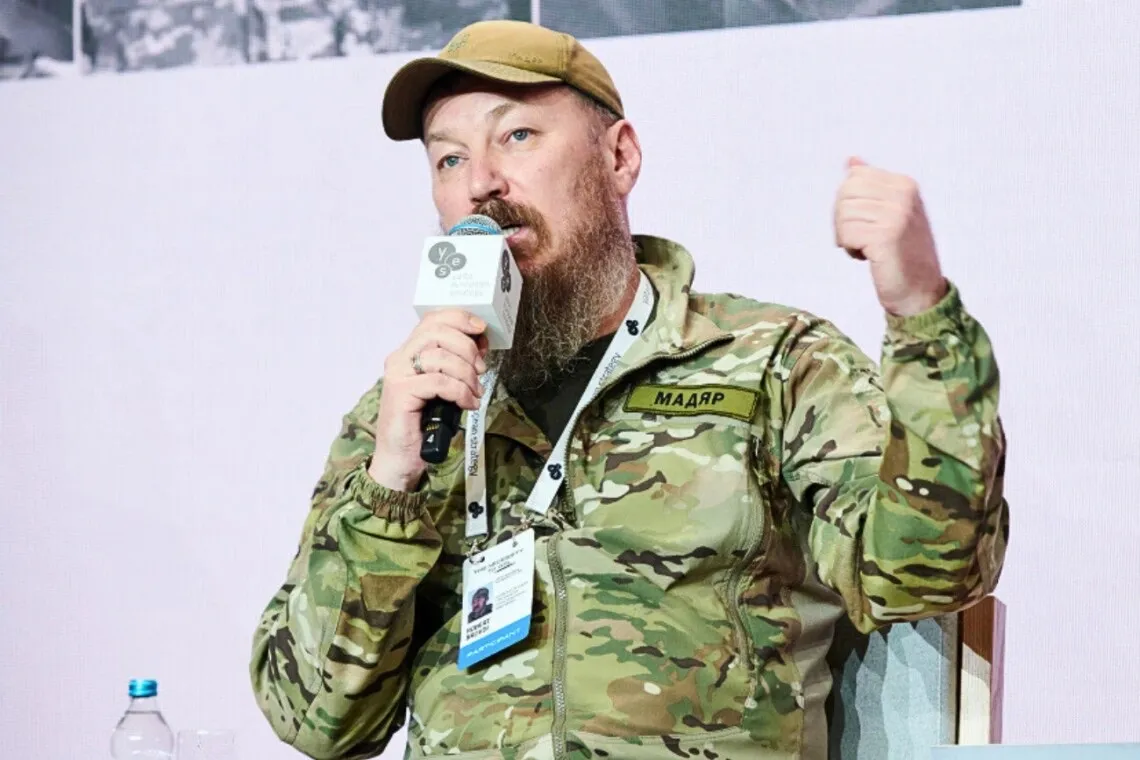
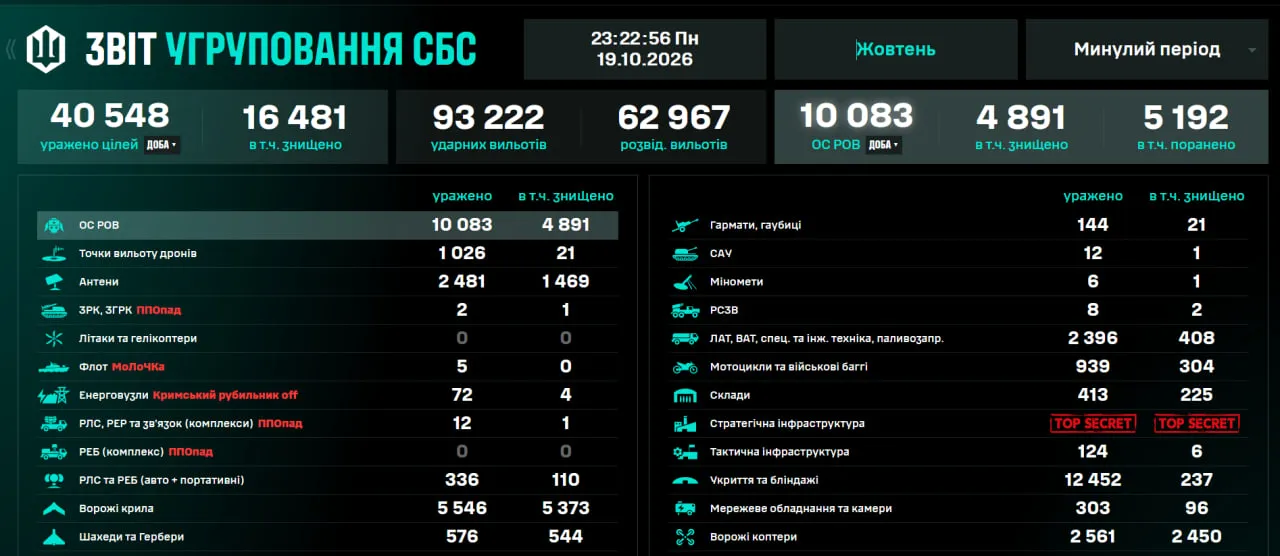
From October 1 to 19, the Ukrainian Armed Forces’ Unmanned Systems Forces Group struck 10,027 Russian soldiers. This was reported by the commander of the Unmanned Systems Forces, Robert Brovdi, known by the call sign “Madyar.”
The UAS Group met its monthly target for enemy casualties at 7:00 p.m. on October 19, Brovdi noted. At that time, the “UAS Count” online scoreboard showed 10,027 units. These are the occupiers’ irrecoverable and medical casualties, confirmed by the “Delta” situational awareness system.
According to the commander’s estimates, in October the SBS is taking out one occupier every 162 seconds. Brovdi called this a new pace of operations for the units.
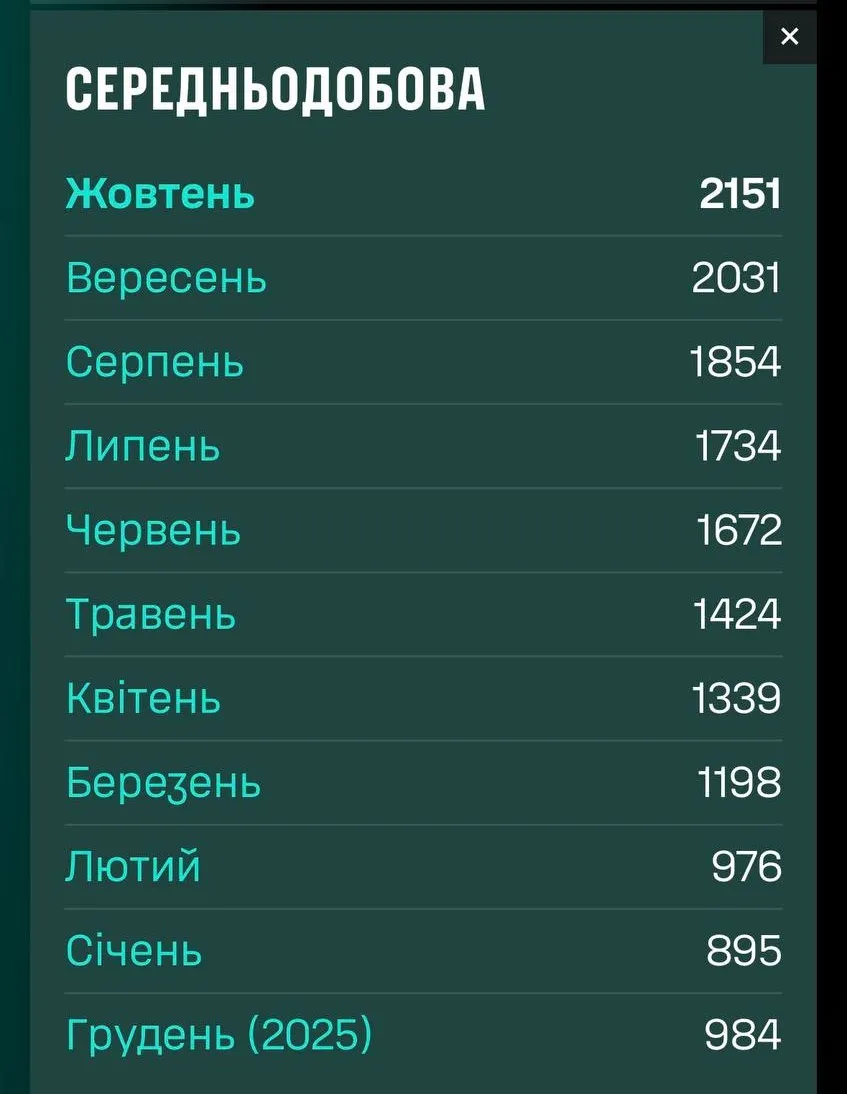
The result for the first 19 days of October exceeds the figures for the corresponding periods of the previous two months:
- August 1–19 – 6,376 occupiers neutralized; the October figure is 57% higher;
- September 1–19 – 8,097; the October figure is 23.8% higher.
According to Brovdi, the Dobropil-Pokrovsk section of the front line within the “Azov” Task Force’s area of operations remains the fiercest. There, from October 1–19, the number of occupiers neutralized reached 4,474. This figure is 41% higher than during the corresponding period in September (3,170) and 98.2% higher than during the corresponding period in August (2,257).
The commander emphasized that the figures cited pertain exclusively to units of the SBS Group and do not include the results of other Defense Forces units. He also assessed the prospects for the rest of the month: “The weather conditions aren’t great, but we’ll take down 15,000–16,000 by the end of October,” Brovdi added.
Earlier, the General Staff updated data on Russian military casualties as of October 20.
Zelenskyy also presented awards to military personnel for their participation in Operation Vivaldi.
A local counteroffensive or a strategic recapture of the Donbas: what’s behind Operation “Vivaldi.”
Operation Vivaldi is compounding problems for Russian propaganda and military correspondents, according to the ISW.




