
At least 183 homes demolished due to erosion in eastern England — The Guardian
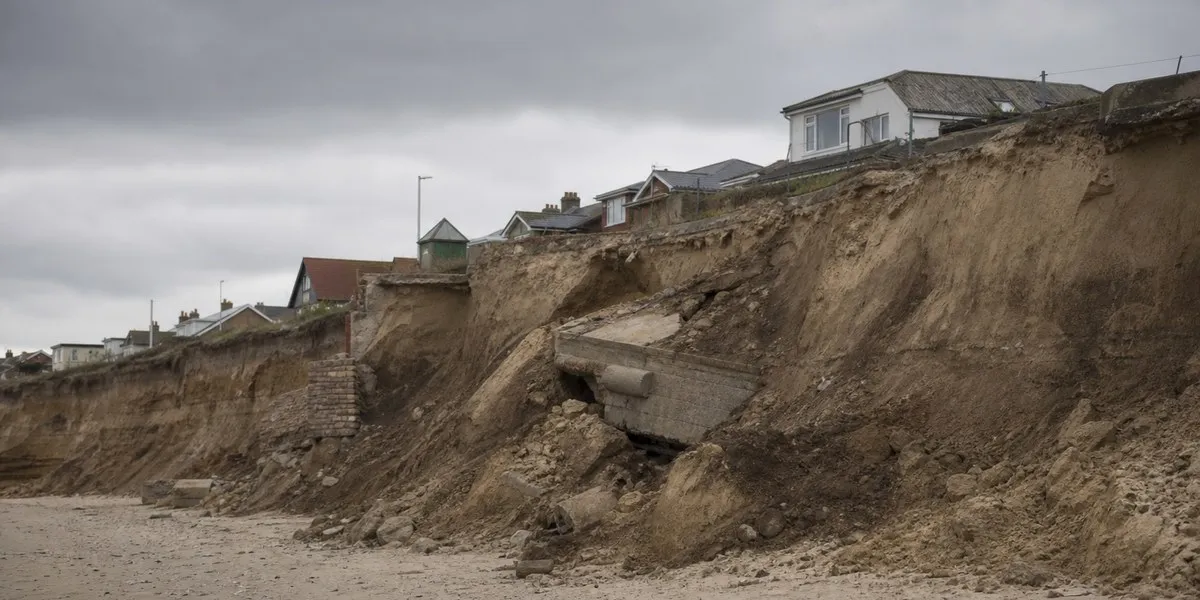
At least 183 residential homes have been demolished on England’s east coast over the past 16 years due to coastal erosion and landslides. Local authorities deemed the properties too dangerous to live in and demolished them before a possible collapse, The Guardian reports.
Demolitions on the coast
The publication obtained data from nine local councils that a House of Commons Environment, Food and Rural Affairs Committee report identified as among the most vulnerable to erosion. Since 2010, the East Riding of Yorkshire Council has demolished the highest number of homes — 66. The area includes the communities of Skipsea, Aldbrough and Mappleton.
Great Yarmouth Borough Council demolished 64 homes, all of them in the village of Hemsby. Since December 2025, 41 properties have been removed there. A council representative said that last winter Hemsby’s dunes experienced about half of the erosion previously projected for the next 30 years, while more than 10 metres of land were lost there in just over 12 months.
North Norfolk Council demolished 21 homes during the period. Nineteen of them were removed before they ended up at the cliff edge. In East Suffolk, where data are available for only six years, eight homes were demolished from 2020 to 2024, and another 16 from May 2025 to April 2026.
More current news is available on the UA.News Telegram channel Telegram.
Costs and risks
The demolitions cost about £1.1 million. The Environment Agency provided around £482,000 to clear 61 homes at risk of collapse. The remaining costs were covered by local councils and, in some cases, by the property owners themselves.
According to the Environment Agency, coastal erosion could put 3,500 properties at risk in England by 2055 and more than 10,000 by 2105. Over the next 80 years, 10 km of major roads, 172 km of secondary roads and about 5.6 km of railway are also at risk.
Sophie Day, a senior research fellow at the University of East Anglia, explained that the sandy, gravelly and silty formations of the east coast are particularly vulnerable. She said wetter winters, stronger storms and rising sea levels intensify erosion and destabilize soft slopes.




