
Study: 94% of destroyed homes were less than 100 m from vegetation — The Guardian
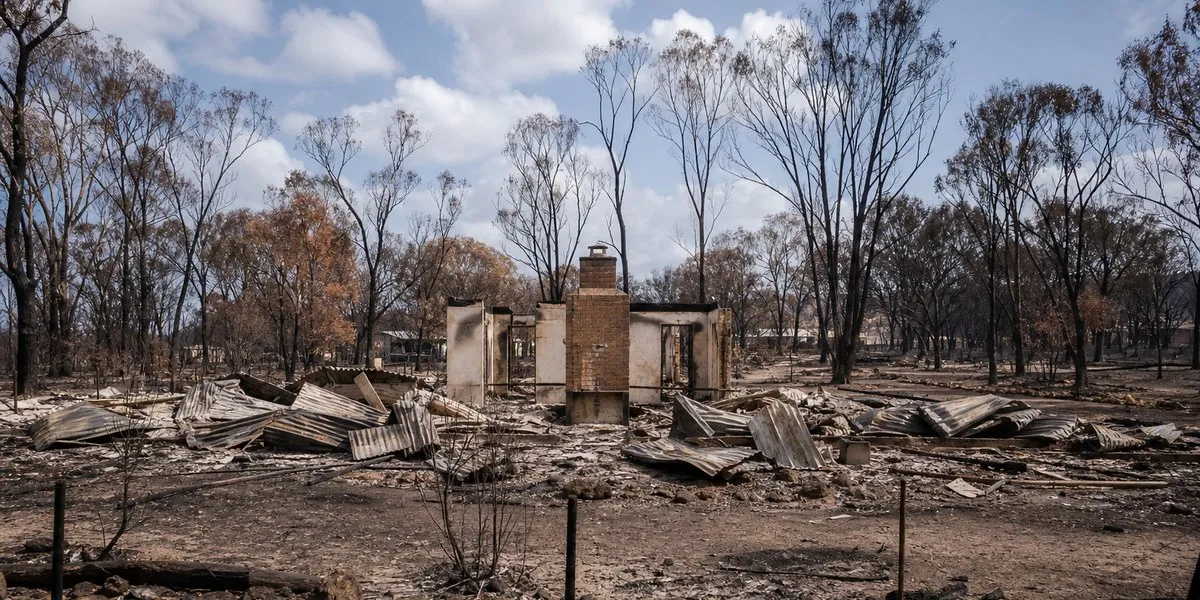
A study found that 94% of the 2,475 homes destroyed during the 2019–2020 “Black Summer” fires in the Australian state of New South Wales were located less than 100 metres from flammable vegetation, including trees. This was reported by The Guardian, citing a study published in the International Journal of Wildland Fire.
More than 3,000 homes were lost across Australia during the “Black Summer” fires. The fires claimed the lives of 33 people, while almost 3 billion native animals died or were displaced.
Assessment of risk zones
The 100-metre buffer zone is a key element of bushfire-prone area maps. Fire services use them to plan public outreach, while urban planning authorities use them to assess fire-resistance requirements for new homes and renovations.
The study’s lead author, University of Wollongong Associate Professor Owen Price, who specialises in bushfire risks, said that this criterion for identifying buildings in at-risk areas was “more or less accurate.” According to him, the distance to vegetation is highly significant for the risk of losing a home.
More current news is available on the UA.News Telegram channel Telegram.
Risk under extreme conditions
Scientists also analysed the fire danger index on the days when homes burned down. It takes into account temperature, wind, humidity and the dryness of combustible materials. At extreme or catastrophic index levels, homes located more than 100 metres from vegetation also burned.
The study warns that current rules may lose effectiveness over time due to increasing fire risks resulting from the climate crisis. The New South Wales Rural Fire Service said that homes in fire-prone areas should be built to higher protection standards and that bushfire protection policy is being reviewed with climate risks in mind.
Residents of fire-prone areas in the state are permitted to remove trees within a 10-metre radius of their homes and clear undergrowth within 50 metres. New South Wales Rural Fire Service Inspector James Morris reported an elevated fire risk this year in the north of the state, the central-western region and the far south coast.




