
Culinary Holiday on November 27, 2026 — Bavarian Cream Cake Day: Three Recipes

On Friday, November 27, 2026, the United States celebrates National Bavarian Cream Cake Day—a dessert featuring a delicate filling, whipped cream, and a crispy crust. Despite its name, its history isn’t limited to Bavaria: the cream that forms the base of the cake gained popularity thanks to French chefs as early as the beginning of the 19th century. Here’s where this sweet treat comes from, which countries have come to love it, and how to make the classic version and two unusual variations at home.
Bavarian cream cake is a dessert with a delicate, airy filling made from milk, eggs, sugar, gelatin, and whipped cream. The filling is spread into a prepared shortcrust or other cake base and then chilled so the cream sets properly. Unlike regular custard, Bavarian cream has a lighter texture thanks to the whipped cream. Gelatin helps the filling hold its shape, so the cake can be cut into neat slices.

The classic dessert typically has a vanilla, creamy, and moderately sweet flavor. But there are many variations. Chocolate, coffee, fruit puree, citrus zest, or nuts are often added to the cream. The finished cake is garnished with berries, whipped cream, chocolate shavings, or fruit sauce. It’s important not to confuse Bavarian cream cake with a simple custard-based dessert. In the classic version, it is the gelatin and whipped cream that give the filling its characteristic firm yet delicate texture. The dessert is served chilled, so it tastes especially good after a few hours in the refrigerator.
Where Bavarian cream comes from
The history of Bavarian cream dates back to before the advent of modern American cakes with this filling. In French cuisine, it is known as crème bavaroise or bavarois. It is a cold dessert made from a custard base, gelatin, and whipped cream. It is chilled in a special mold and can be turned out onto a plate before serving.
The spread of this dish is associated with French cuisine of the early 19th century. One of the chefs who popularized and refined the recipe was Marie-Antoine Carême—a renowned French chef considered one of the founders of haute cuisine. He specialized in exquisite desserts and helped make complex pastry techniques more popular among professional chefs.

However, the exact origin of the recipe remains a subject of debate. The name hints at Bavaria in Germany, but culinary historians have no definitive proof that the dessert was invented there. One theory links its emergence to French chefs who worked in the courts of Bavarian rulers. Another suggests that the recipe was brought to France after the chefs had worked in Bavaria. It is known that by the early 19th century, Bavarian cream was already part of the French pastry tradition.
How the Dessert Spread Throughout Europe and the United States
In the 19th century, Bavarian cream became popular in high-end French restaurants and hotels. It was served as a separate cold dessert, often in decorative molds. It was well-suited for festive dinners, as it could be prepared in advance, chilled, and presented to guests in an impressive manner. Eventually, the recipe spread to Great Britain. There, the dessert was known as Bavarian cream, and recipes for it appeared in cookbooks as early as the mid-19th century. Chefs adjusted the proportions, used various flavorings, and served the cream with fruit or sauces.

Bavarian cream made its way to the United States along with European culinary traditions. In 1884, a recipe titled Bavarian cream appeared in a cookbook by the Boston Cooking School, compiled by Mary Abigail Dodge Lincoln. Another well-known recipe was published by Fanny Farmer in her 1896 cookbook. Thus, the dessert gradually became a staple of American home cooking.

In the U.S., Bavarian cream began to be used not only for individual desserts but also for pies, pastries, and donuts. It was there that the version with a creamy filling as the pie base became particularly popular. American bakeries offer various versions—from classic vanilla to chocolate and fruit.
Today, Bavarian cream can be found in France, Germany, the United Kingdom, the U.S., and other countries where European pastry traditions are popular. In Germany, it is often served as a standalone dessert in glasses or molds, while in the U.S., the name Bavarian cream is also well known for its use as a donut filling. At the same time, it is the Bavarian cream pie that is particularly associated with American culinary culture.
The Origins of National Bavarian Cream Cake Day
National Bavarian Cream Cake Day is celebrated annually on November 27 in the United States. It is not a state holiday nor an official date established by law. It is an informal culinary event included in American calendars of food and culinary holidays.
The exact history of this day’s origins is unknown. The organizers of the National Day Calendar note that they have been unable to determine who exactly started the celebration. At the same time, researchers of culinary dates found one of the earliest printed references to it in the American newspaper The Times Herald in Michigan. It is dated November 27, 2004. The purpose of this day is simple—to draw attention to a dessert that might get lost among more popular American pies. It’s an opportunity to try the classic recipe, visit a bakery, or whip up something unusual at home. On social media, the hashtag #BavarianCreamPieDay is used to celebrate the occasion.
What ingredients are needed for a Bavarian cream pie?
The classic recipe has a few key ingredients. The first is milk, which gives the cream a delicate, buttery flavor. The second is egg yolks, which make the filling thicker and richer. Sugar provides the sweetness, and vanilla adds the characteristic aroma. Gelatin plays a special role. It’s what helps the cream set after cooling and prevents it from running when sliced. Whipped cream is added at the end, once the custard base has cooled slightly. This makes the filling light and airy.
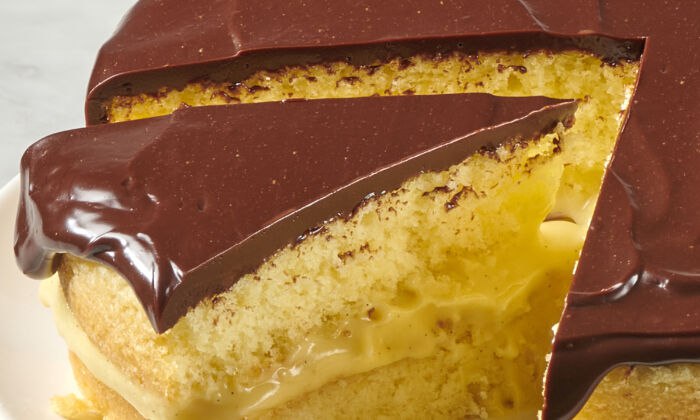
Shortcrust pastry is most commonly used for the base. It pairs well with the soft cream and doesn’t overpower its flavor. You can also use a ready-made pie crust if you want to cut down on preparation time. Modern variations incorporate chocolate, coffee, fruit puree, nuts, shredded coconut, caramel, and citrus fruits. Raspberries, strawberries, cherries, and peaches pair especially well with the creamy filling. They add a light tartness and make the dessert less cloying.
Interesting Facts About Bavarian Cream Cake
1. Its name does not prove its Bavarian origin. The dessert has a name associated with Bavaria, but the oldest known printed recipes for Bavarian cream belong to the French culinary tradition. The exact connection to the German region has not yet been established.
2. It wasn’t originally a cake. The classic bavarois was prepared as a separate cold dessert in a mold. It was chilled and then served on a plate. The American version with a shortcrust pastry base became one of the later ways of using this cream.
3. In the U.S., Bavarian cream is also associated with donuts. Many American bakeries use it as a filling for yeast-raised pastries. These doughnuts can be dusted with powdered sugar or topped with glaze. That’s why, for Americans, Bavarian cream isn’t just an exquisite dessert—it’s also a familiar flavor from the bakery.
4. Carême was a true culinary star of his time. Marie-Antoine Carême worked for members of the European aristocracy and prominent political figures. He paid special attention to the presentation of dishes and elaborate desserts. His contributions helped shape French haute cuisine.
5. Crème can be made in almost any flavor. Vanilla is just the classic option. Melted chocolate, coffee, citrus zest, fruit purée, or nut paste can be added to the base. The key is to maintain the right consistency and not upset the balance between the custard and the cream.
6. The dessert must be prepared in advance. Bavarian cream cannot be served immediately after preparation. It needs time to cool and set. It’s best to leave the cake in the refrigerator for a few hours or overnight.
Three Recipes for Bavarian Cream Cake
Below are three variations of this dessert. The first is perfect for those who want to try the classic flavor. The second combines chocolate, coffee, and nuts, while the third features a delicate cream with raspberries and pistachios.
1. Classic Vanilla Bavarian Cake

Ingredients for the base:
- 200 g all-purpose flour;
- 100 g cold butter;
- 50 g sugar;
- 1 egg yolk;
- 1–2 tbsp cold water;
- a pinch of salt.
For the cream:
- 500 ml milk;
- 4 egg yolks;
- 100 g sugar;
- 10 g gelatin;
- 50 ml cold water for the gelatin;
- 1 tsp vanilla extract or vanilla sugar;
- 250 ml of heavy cream (30–33% fat);
For garnish:
- fresh berries;
- powdered sugar;
- a little whipped cream.
Preparation:
- First, prepare the dough. Mix the flour with sugar and salt. Add the cold butter, cut into cubes, and rub it in with your hands until the mixture resembles fine crumbs.
- Add the egg yolk and cold water. Quickly knead the dough. Don’t knead it for too long, so the crust doesn’t become hard after baking.
- Wrap the dough in plastic wrap and refrigerate for 30 minutes. Then roll it out, place it in a pan about 22–24 cm in diameter, and form the sides.
- Prick the bottom with a fork, cover with parchment paper, and fill with dry beans or special baking weights. Bake for about 15 minutes at 180 °C. Then remove the parchment paper and the weights and bake for another 10–12 minutes until golden brown. Let cool completely.
- Soak the gelatin in cold water and let it swell for 5–10 minutes.
- Heat the milk until it’s almost boiling. In a separate bowl, whisk the egg yolks with the sugar. Gradually pour the hot milk into the yolk mixture, stirring constantly.
- Pour the mixture back into the saucepan and heat over low heat, stirring constantly, until the cream thickens slightly. Do not bring it to a boil. If you have a kitchen thermometer, aim for approximately 82–84 °C.
- Remove the saucepan from the heat, add the softened gelatin, and stir until completely dissolved. Add the vanilla. Let the custard cool, stirring occasionally.
- When the cream begins to thicken but hasn’t set yet, whip the cold heavy cream to soft peaks. Gently fold it into the milk mixture with a spatula.
- Spread the cream into the baked crust, smooth it out, and refrigerate the cake for at least 4–6 hours. Before serving, garnish with berries and whipped cream.
Tip: Do not add whipped cream to a hot custard base. It must cool down first; otherwise, the cream will lose its airy texture. This step is key to achieving a light, delicate cream rather than a dense custard pudding.
2. Chocolate-Coffee Bavarian Cake with Hazelnuts

This version is perfect for those who love rich desserts. It combines dark chocolate, coffee, and toasted hazelnuts. The slight bitterness of the coffee balances the sweetness of the cream, while the nutty base adds a pleasant crunch.
Ingredients for the chocolate base:
- 180 g chocolate cookies;
- 70 g butter;
- 30 g chopped hazelnuts.
For the cream:
- 400 ml milk;
- 100 ml of heavy cream;
- 4 egg yolks;
- 90 g sugar;
- 120 g dark chocolate;
- 2 tsp instant coffee or 40 ml strong espresso;
- 10 g gelatin;
- 50 ml cold water;
- 200 ml of cream with a fat content of 30–33%.
For garnish:
- 50 g toasted hazelnuts;
- chocolate shavings;
- a little cocoa powder.
Preparation:
- Crumble the chocolate cookies into fine crumbs. Mix them with melted butter and hazelnuts.
- Press the mixture into a 22–24 cm diameter pan, pressing it firmly against the bottom and forming low sides. Refrigerate for 20–30 minutes.
- Soak the gelatin in cold water and let it swell.
- Heat the milk and 100 ml of heavy cream in a saucepan. Add the coffee and stir. If using espresso, account for its volume and reduce the amount of milk slightly.
- Beat the egg yolks with the sugar. Gradually pour the hot coffee-milk mixture into them, stirring constantly.
- Return everything to the saucepan and heat over low heat until slightly thickened. Do not boil.
- Remove from the heat, add the chopped chocolate, and stir until smooth. Then add the soaked gelatin and stir until completely dissolved.
- Cool the chocolate base to room temperature, stirring occasionally. It should remain liquid but no longer be warm.
- Separately, whip 200 ml of cold heavy cream until soft peaks form. Gently fold it into the chocolate mixture.
- Spread the cream over the cooled cookie base. Smooth the surface and refrigerate for 4–6 hours.
- Before serving, garnish with toasted hazelnuts, chocolate shavings, and a small amount of cocoa powder.
Tip: For a more pronounced flavor, you can add a pinch of sea salt to the chocolate base. It will bring out the flavors of the chocolate and nuts. And if you want an even richer aroma, you can replace the hazelnuts with toasted almonds.
3. No-Bake Raspberry-Pistachio Bavarian Cake

This is a more unusual and vibrant option. It combines sweet-and-sour raspberries, delicate cream, and pistachios. No baking is required, as the base is made from cookies and butter. This cake looks especially beautiful on a festive table thanks to its pink cream and green nut crumbs.
Ingredients for the crust:
- 200 g shortbread cookies;
- 80 g butter;
- 30 g chopped pistachios.
For the raspberry cream:
- 300 g fresh or frozen raspberries;
- 300 ml milk;
- 3 egg yolks;
- 90 g sugar;
- 10 g gelatin;
- 50 ml cold water;
- 200 ml of cream with 30–33% fat content;
- 1 tsp lemon juice.
For garnish:
- 100 g fresh raspberries;
- 30–40 g shelled pistachios;
- a few mint leaves.
Preparation:
- Crush the cookies in a blender until they form fine crumbs. Add the melted butter and chopped pistachios.
- Press the mixture into a 22–24 cm diameter pan. Press firmly against the bottom, form the sides, and refrigerate.
- Pass the raspberries through a sieve to remove the seeds. Transfer the resulting purée to a small saucepan, add the lemon juice, and heat for a few minutes. There’s no need to boil the mixture for long.
- Soak the gelatin in cold water and let it swell.
- Heat the milk until it’s almost boiling. Whisk the egg yolks with the sugar, then gradually pour the hot milk into them.
- Pour the mixture back into the saucepan and heat over low heat, stirring constantly, until it thickens slightly. Do not bring to a boil.
- Remove the cream from the heat, add the gelatin, and stir until completely dissolved. Then stir in the raspberry purée and mix well.
- Let the base cool. When it has cooled and begins to thicken slightly, whip the cream to soft peaks.
- Gently fold the whipped cream into the raspberry base. Don’t do this too quickly so that the cream remains light and airy.
- Spread the filling over the cookie base, smooth it out, and refrigerate for 5–6 hours.
- Before serving, garnish with fresh raspberries, chopped pistachios, and mint leaves.
Tip: If using frozen raspberries, thaw them first and drain off any excess liquid. This will give the cream a richer flavor and prevent it from becoming too watery. It’s best to lightly toast the pistachios in a skillet without oil—this will make them more aromatic.
How to Celebrate National Bavarian Cream Cake Day
The easiest way to join in on the culinary celebration is to bake a cake at home. You can choose a classic vanilla recipe or try an unusual combination of chocolate, coffee, and nuts. If you don’t feel like spending time in the kitchen, you can look for the dessert at a local bakery or order it for a family tea party.
Another idea is to host a small tasting and compare several fillings. For example, make vanilla, chocolate, and berry cream fillings, and then invite your loved ones to choose their favorite. It’s a great excuse to spend an evening together and try new flavors. On social media, Americans share photos of desserts with the hashtag #BavarianCreamPieDay. You can also share which version of the pie you liked best or post your own recipe. After all, the main idea behind this day is to celebrate a dessert with an interesting history and treat yourself to a little sweet indulgence.




