
Culinary Holiday on November 27, 2026 — Laks Day: Three Recipes
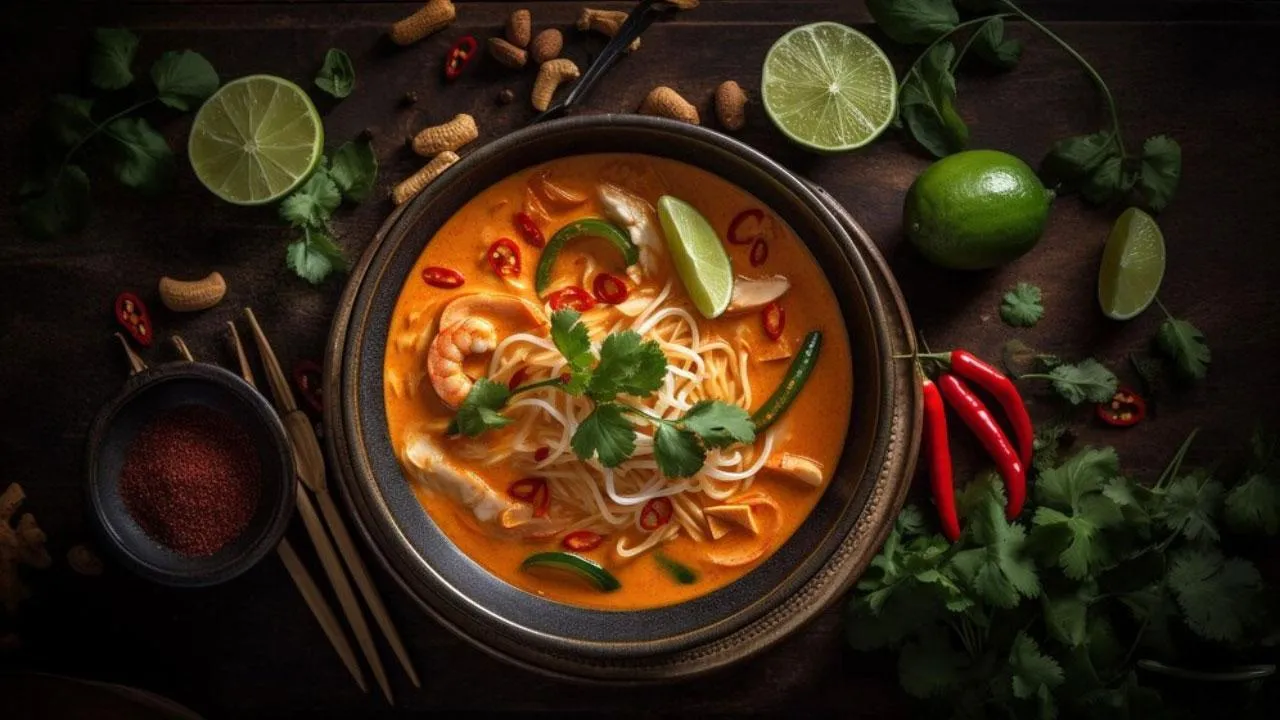
November 27 is marked on some culinary calendars as International Laksa Day—a spicy noodle soup that is particularly popular in Southeast Asia and Australia. It is prepared with a rich broth made with coconut milk or tamarind, to which seafood, chicken, vegetables, and aromatic spices are added. Each region has its own version of this dish, and in Darwin, Australia, they even hold a large-scale festival dedicated to laksa.
Laksa is a spicy noodle soup that combines Chinese culinary traditions with Malay and other Southeast Asian cuisines. It is most often prepared using a spicy paste made from chili peppers, garlic, onions, ginger, and aromatic roots. Broth is added to this paste, and in many recipes, coconut milk is included as well. The finished dish is served with rice noodles, seafood, chicken, fish, eggs, or vegetables.

It is difficult to pinpoint the exact place of origin of laksa. The most common theory links its origins to the Peranakan culture—a community that emerged from the blending of Chinese and local traditions. In the 15th–17th centuries, Chinese merchants and settlers arrived in the port cities of the Malay Archipelago, including Malacca, Penang, and Singapore. They brought with them the custom of preparing noodles in broth, and local culinary traditions added coconut milk, chili, herbs, and spices to this dish.
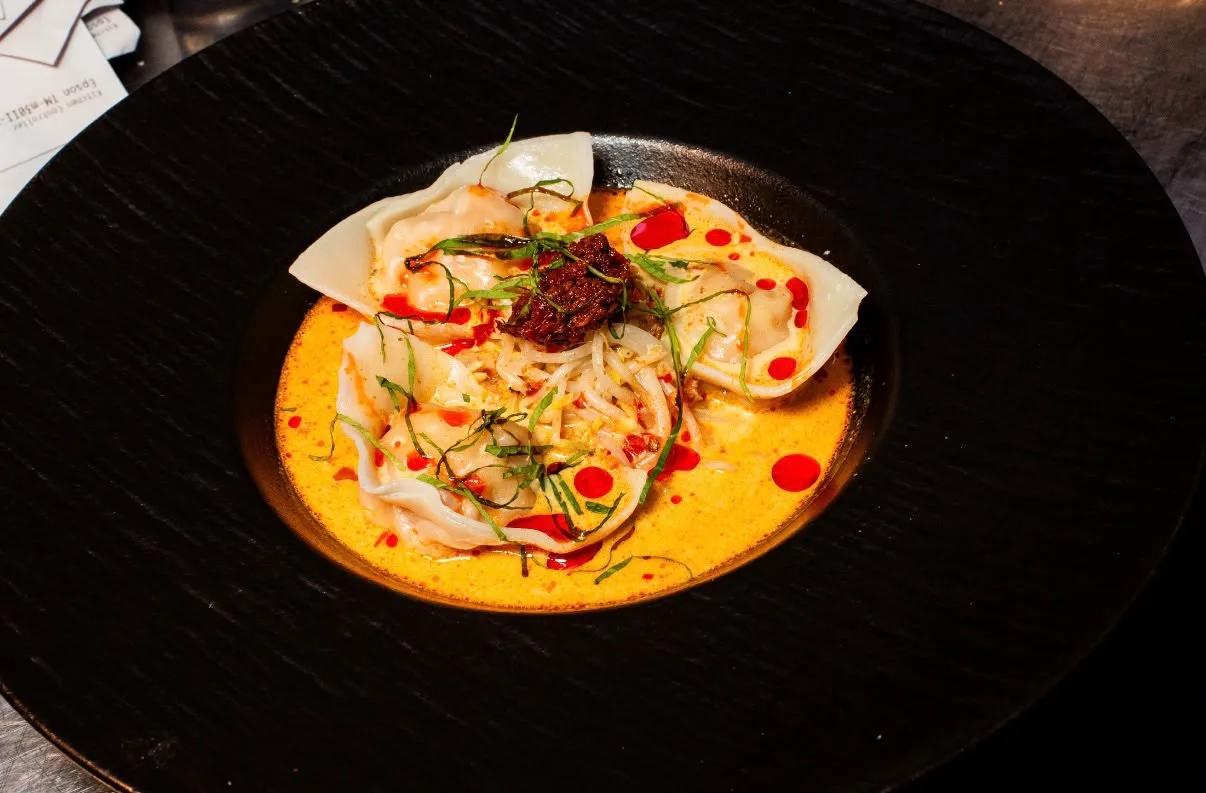
This is how the dish now known as laksa gradually came into being. At the same time, researchers do not agree on its origins: different regions developed their own recipes, so it would not be entirely accurate to call laksa exclusively a Malaysian or Singaporean dish. Its history is closely tied to trade, migration, and culinary exchange among the peoples of Southeast Asia.
The origin of the name itself is not entirely clear. According to one theory, it is linked to an Indian word that referred to a type of noodle. Another theory points to the Persian word “lakhshah,” also associated with noodles. There is also an explanation suggesting that the name alludes to the large number of ingredients in the dish. There is no definitive answer to this question.
In Which Countries Did Laksa Become Popular
Malaysia and Singapore are most closely associated with laksa. It was there that some of the most famous varieties of the soup were developed, which are now served in restaurants around the world. In Malaysia, Penang-style asam laksa is particularly well-known. It’s made with a fish broth infused with tamarind, giving the soup a distinct sour and spicy flavor. Instead of coconut milk, a slightly sour base is used here, and the main ingredients include fish, rice noodles, cucumber, onion, pineapple, mint, and a spicy paste.
Another popular variation is curry laksa, which is often made with coconut milk. Its broth is thick, rich, and aromatic. Shrimp, fish balls, chicken, tofu, and bean sprouts are added to it. Katong laksa is particularly popular in Singapore. Its distinctive feature is the short-cut noodles, which are easy to eat with a spoon. The soup is usually made with coconut milk, shrimp, fish balls, and spices. This variety has become one of the country’s culinary hallmarks.
Indonesia also has many of its own variations of laksa. For example, in the Palembang region, they make a soup with fish and a slightly sour flavor, while in other parts of the country, you can find versions with coconut milk, chicken, eggs, and various types of noodles. Recipes vary depending on the island and local ingredients. The dish is also well-known in Thailand, where it is prepared with local spices and ingredients. Over time, laksa spread beyond Asia—it began to be served in restaurants in Australia, the United Kingdom, the United States, and other countries. It has become particularly well-established in Darwin, Australia, where Asian cuisine has become an important part of the local culinary culture.
Why Australia has a festival dedicated to laksa
In Darwin, Australia, laksa has long been more than just a popular soup. The city is known for its multicultural community and love of Asian cuisine. Local restaurants offer dozens of variations of the dish, and chefs compete for the title of best laksa master. That’s why the Darwin International Laksa Festival is held here. It was launched as a way to celebrate the culinary diversity of Australia’s Northern Territory and support local restaurants and eateries. During the festival, visitors can sample different versions of the soup, visit participating establishments, and vote for their favorite dish.
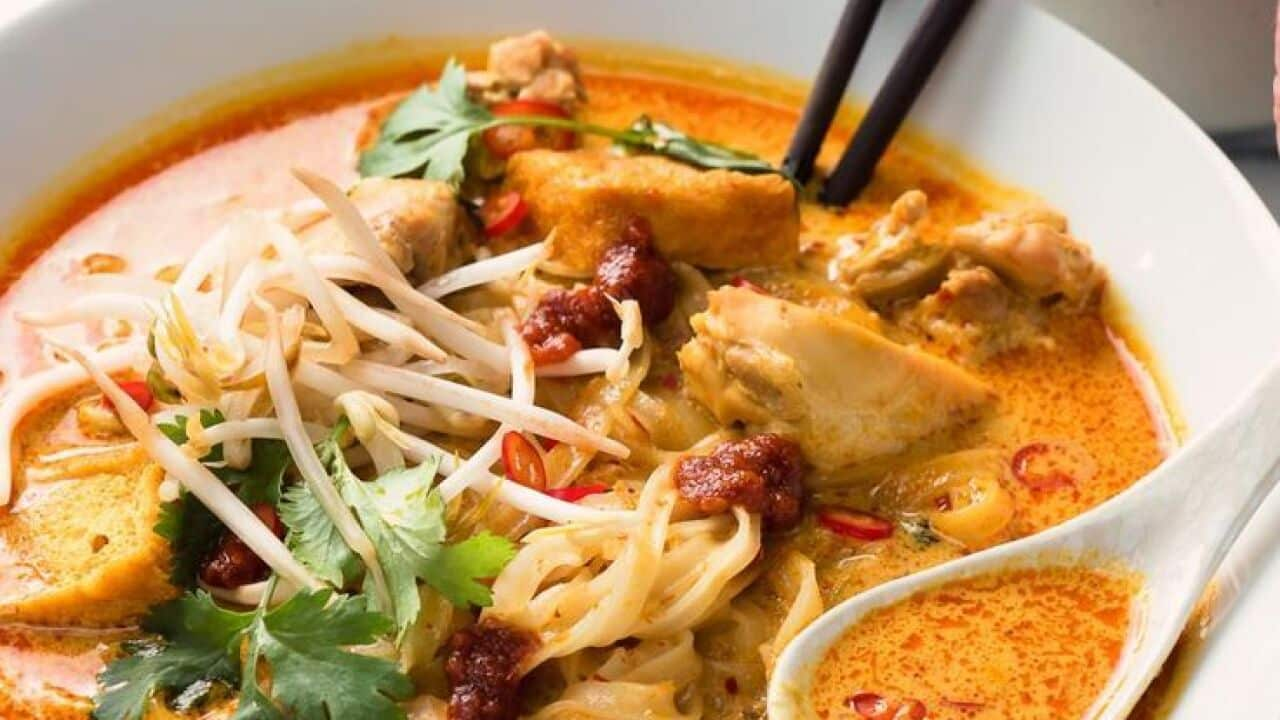
The festival has gradually grown into a major event. In 2026, more than 120 establishments took part, presenting over 230 dishes featuring laksa or inspired by it. The finale took place on the Darwin waterfront, and winners were selected in several categories. Among the entries were not only traditional soups but also unusual culinary experiments.
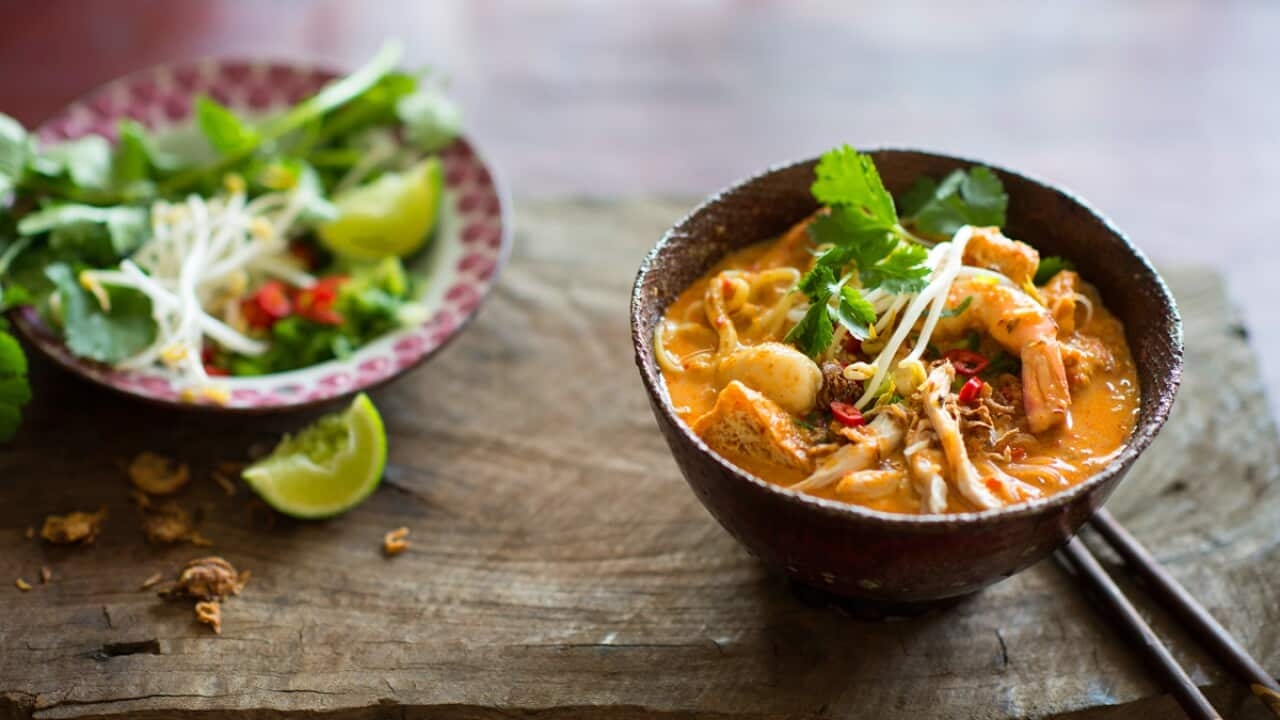
It’s worth noting that the festival in Darwin is now held in October, not on November 27. That date appeared on the calendar for specific festival events in previous years, particularly in 2022. Therefore, November 27 may appear in culinary calendars as a date dedicated to laksa, but it should not be confused with the regular date of the Australian festival.
What Ingredients Are Needed for Laksa
There is no single recipe for laksa. The ingredients depend on the country, region, and specific variety of the soup. However, there are certain ingredients that are most commonly used to prepare this dish.
- Noodles. Rice noodles or vermicelli are most commonly used. Some recipes call for wheat noodles.
- Coconut milk. It gives the broth thickness, creaminess, and a slight sweetness. It’s especially often added to curry laksa.
- Fish and seafood. Shrimp, fish fillets, squid, fish balls, or shrimp paste help make the broth’s flavor richer.
- Chicken. It’s used in many home recipes, particularly in Malaysian and Singaporean versions.
- Chili peppers. These are what give the dish its heat. You can adjust the amount of chili peppers to suit your taste.
- Lemongrass, galangal, and ginger. These ingredients give the soup its characteristic fresh and spicy aroma.
- Garlic and shallots. They form the base of the aromatic paste.
- Tamarind. It is used in sour varieties of laksa, particularly in Penang-style asam laksa.
- Aromatic herbs. Laksa leaves, mint, cilantro, and other herbs and spices are added just before serving or during cooking.
- Toppings. Hard-boiled eggs, tofu, cucumbers, bean sprouts, pineapple, and fish balls make the soup more nutritious and add interesting textures.
The main secret of laksa lies not just in its spiciness, but in the balance of flavors. A good soup should combine spiciness, saltiness, a hint of sourness, and—depending on the recipe—the creamy smoothness of coconut milk.
Interesting Facts About Laksa
- There are dozens of regional variations of laksa. In Malaysia, Singapore, and Indonesia, recipes can differ so much that two bowls of laksa will look and taste completely different. Some soups are thick and creamy, while others are clear, tangy, and rich with the aroma of fish.
- The soup has become the subject of a culinary rivalry. Malaysia and Singapore each have their own traditions for preparing laksa, and local chefs and foodies often debate which country makes the best version. At the same time, the dish’s history predates modern national borders by far.
- Laksa is even eaten for breakfast. In some regions of Southeast Asia, a bowl of hot, spicy noodle soup is a perfectly normal morning meal. Chef Anthony Bourdain, in particular, popularized this tradition and spoke highly of Sarva laksa.
- In Darwin, they even make ice cream out of it. Local chefs experiment with the flavor of laksa and incorporate it into completely unexpected dishes. At festivals, you can find laksa burgers, pies, salads, cookies, and ice cream.
- Sarwak laksa has become famous far beyond Malaysia’s borders. Its popularity has been fueled by television cooking shows and the travels of famous chefs. This variety is distinguished by its aromatic, spicy broth, rice noodles, shrimp, chicken, omelet, and lime.
Three laksa recipes you can make at home
Laksa can be adapted to use ingredients that are easy to find in Ukrainian stores. Some recipes call for ready-made laksa paste or curry paste from the Asian section of the supermarket. If you don’t have galangal or laksa leaves, you can substitute them with more readily available spices and herbs, although the flavor will be slightly different.
1. Classic laksa curry with shrimp and coconut milk

This is one of the most well-known versions of the soup. It turns out thick and aromatic, with a delicate coconut flavor and a pleasant spiciness.
Ingredients for 3–4 servings:
- 250 g rice noodles;
- 300 g peeled shrimp;
- 400 ml coconut milk;
- 700 ml chicken or fish broth;
- 2–3 tbsp laksa paste or red curry paste;
- 2 cloves of garlic;
- 1 small onion;
- 1 tsp grated ginger;
- 1 tablespoon vegetable oil;
- 1 tbsp fish sauce;
- 1 tsp sugar;
- 100 g bean sprouts;
- 2 hard-boiled eggs;
- lime and green onions for serving.
Preparation:
- Cook the rice noodles according to the package instructions. Usually, you need to pour hot water over them or boil them briefly. Drain in a colander.
- Heat the oil in a saucepan. Add the finely chopped onion, garlic, and ginger. Sauté for a few minutes until fragrant.
- Add the laksa paste or curry paste. Stir and heat for about a minute to let the spices release their aroma.
- Pour in the broth and coconut milk. Add the fish sauce and sugar. Bring to a gentle simmer and cook over low heat for 8–10 minutes.
- Add the shrimp to the broth and cook for another 3–5 minutes, until they turn pink and are fully cooked.
- Divide the noodles among bowls and pour the hot broth with shrimp over them. Add the bean sprouts, halved hard-boiled eggs, and green onions.
- Before serving, sprinkle the soup with lime juice.
Tip: If you want a richer flavor, you can add a little shrimp paste or a few fish balls. Adjust the spiciness by varying the amount of curry paste.
2. Unusual Laksa with Chicken, Pineapple, and Peanuts
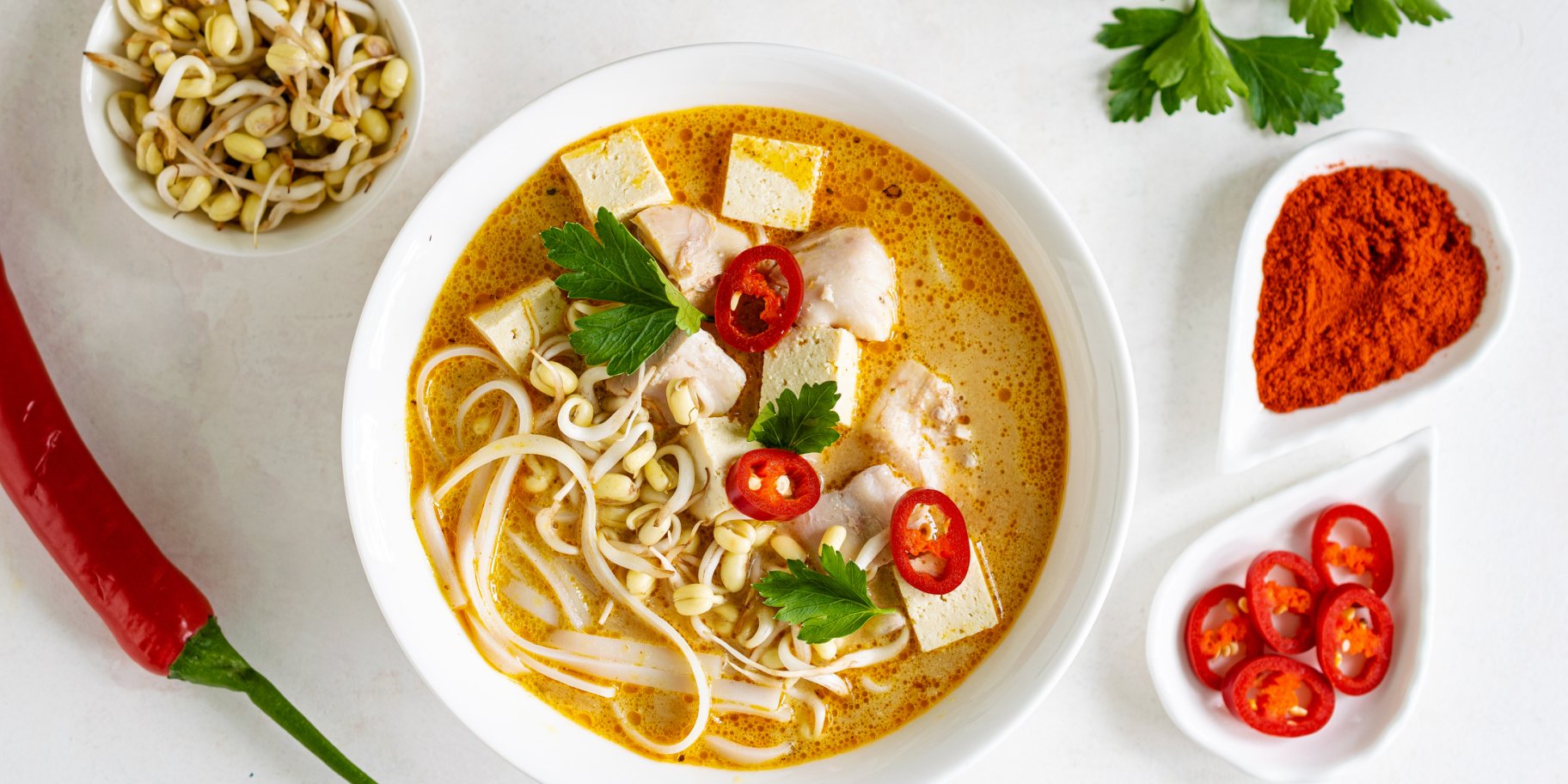
This version is inspired by Southeast Asian combinations of sweet, spicy, and sour flavors. The pineapple adds a fruity freshness to the broth, the peanuts add a nutty flavor, and the chicken makes the soup hearty. This isn’t a classic regional recipe, but rather a homemade, original take on laksa.
Ingredients for 3–4 servings:
- 250 g rice noodles;
- 300 g chicken breast;
- 400 ml coconut milk;
- 600 ml chicken broth;
- 2 tbsp red curry paste;
- 150 g fresh or canned pineapple;
- 2 cloves of garlic;
- 1 tsp grated ginger;
- 2 tbsp sugar-free peanut butter;
- 1 tablespoon soy sauce;
- 1 tsp fish sauce (optional);
- 1 tbsp vegetable oil;
- 1 small carrot;
- 50 g roasted peanuts;
- green onions, cilantro, and lime for serving.
Preparation:
- Cut the chicken breast into small pieces. Cut the carrot into thin strips and the pineapple into cubes.
- Heat the oil in a pot. Add the garlic, ginger, and curry paste. Sauté for about a minute, stirring constantly.
- Pour in the chicken broth and coconut milk. Add the peanut paste, soy sauce, and fish sauce. Stir well to dissolve the peanut paste.
- Add the chicken and carrots. Simmer over medium heat for about 10–12 minutes, until the chicken is fully cooked.
- Add the pineapple and heat the soup for another 2–3 minutes. Taste the broth: if needed, add a little lime juice or more curry paste.
- Cook the rice noodles separately and divide them among bowls.
- Pour the soup over the noodles, and sprinkle with chopped peanuts, green onions, and cilantro.
Tip: For a more pronounced flavor, you can lightly sauté the pineapple in a dry skillet before adding it to the soup. It will become sweeter and take on a light caramel aroma. If you don’t like sweet soups, reduce the amount of pineapple.
3. Penang Asam Laksa with Fish and Tamarind
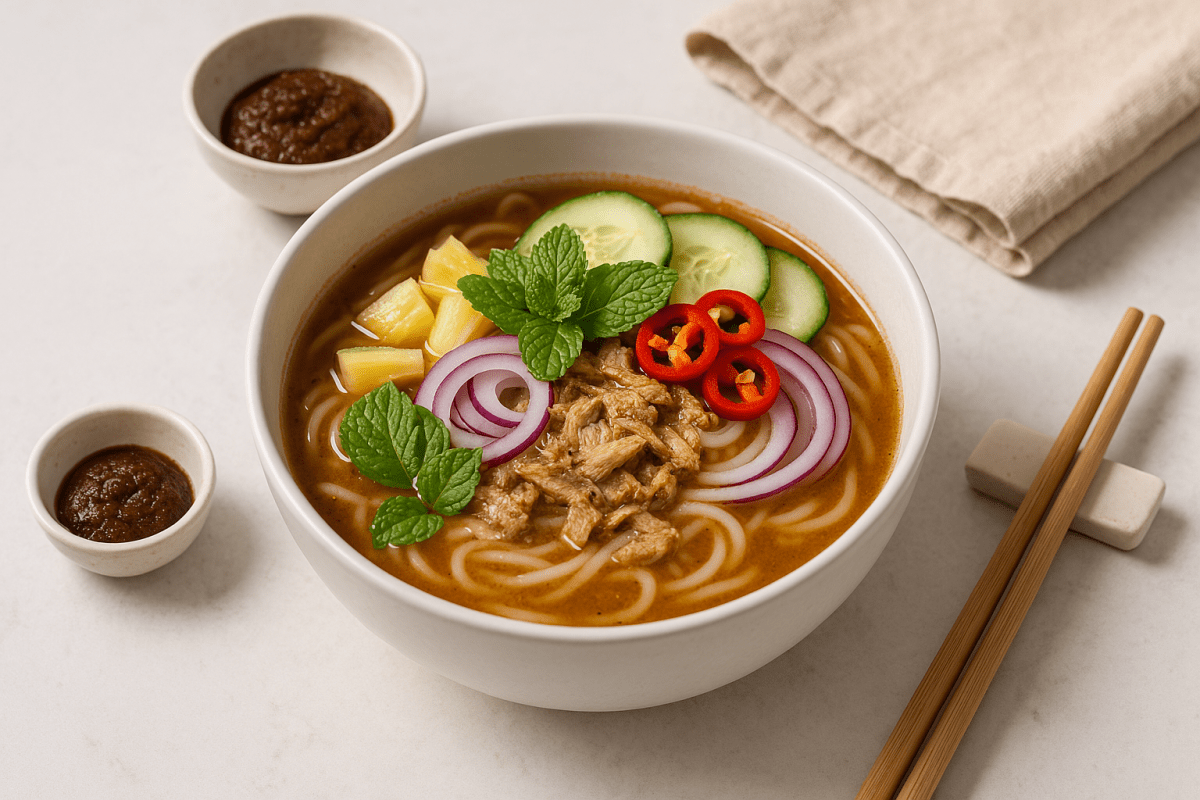
This is an option for those who want to try laksa without coconut milk. Asam laksa has a distinct sour and spicy flavor, and its broth is made with fish, tamarind, and a spicy paste. This particular variety is associated with the Malaysian island of Penang.
Ingredients for 3–4 servings:
- 250 g rice noodles;
- 400 g mackerel fillets or other fatty saltwater fish;
- 1.2 L water;
- 2 tbsp tamarind paste or 3–4 tbsp ready-made tamarind concentrate;
- 2–3 tbsp chili paste;
- 1 small onion;
- 2 cloves of garlic;
- 1 tsp grated ginger;
- 1 stalk of lemongrass;
- 1 tsp sugar;
- 1–2 tbsp fish sauce;
- 1 small cucumber;
- 1 small red onion;
- 100 g pineapple;
- mint and cilantro for garnish.
Preparation:
- Place the fish in a pot, cover with water, and cook for about 10–15 minutes, until done. Remove the fish and strain the broth.
- Remove the bones from the fish and flake the fillets into small pieces.
- In a mortar or blender, combine the onion, garlic, ginger, chili paste, and chopped lemongrass. You should end up with a fragrant, spicy paste.
- Transfer it to a pot with the fish broth. Add the tamarind, sugar, and fish sauce. Simmer over low heat for 10–15 minutes.
- Return the fish to the pot and heat the soup for a few more minutes. Taste the broth: it should be distinctly sour, spicy, and slightly salty.
- Cook the rice noodles separately. Divide them among bowls and pour the hot fish broth over them.
- Top with sliced cucumber, red onion, pineapple, mint, and cilantro.
Tip: If you can’t find tamarind, you can use a little lime or lemon juice instead. However, the flavor will be different: tamarind has its own fruity tartness, which gives asam laksa its distinctive flavor.
How to Celebrate International Laksa Day
The easiest way to join in on this culinary celebration is to make this soup at home or order it at an Asian restaurant. You can try two varieties of laksa and compare them: the creamy version with coconut milk and the tangy asam laksa with fish and tamarind.

Another option is to host a small tasting party with friends. Prepare several types of noodles, broths, and toppings so everyone can customize their own bowl. And if you’re in the mood to experiment, try adding pineapple, peanuts, or other unusual ingredients to the soup. What makes laksa so interesting is that there’s no single, set recipe. It varies depending on local ingredients, traditions, and the chef’s preferences. That’s why this culinary celebration is a great opportunity not only to taste an Asian classic but also to create your own version of this spicy soup.




