
ICJ criticises takeover of Poland’s Constitutional Tribunal — Notes from Poland
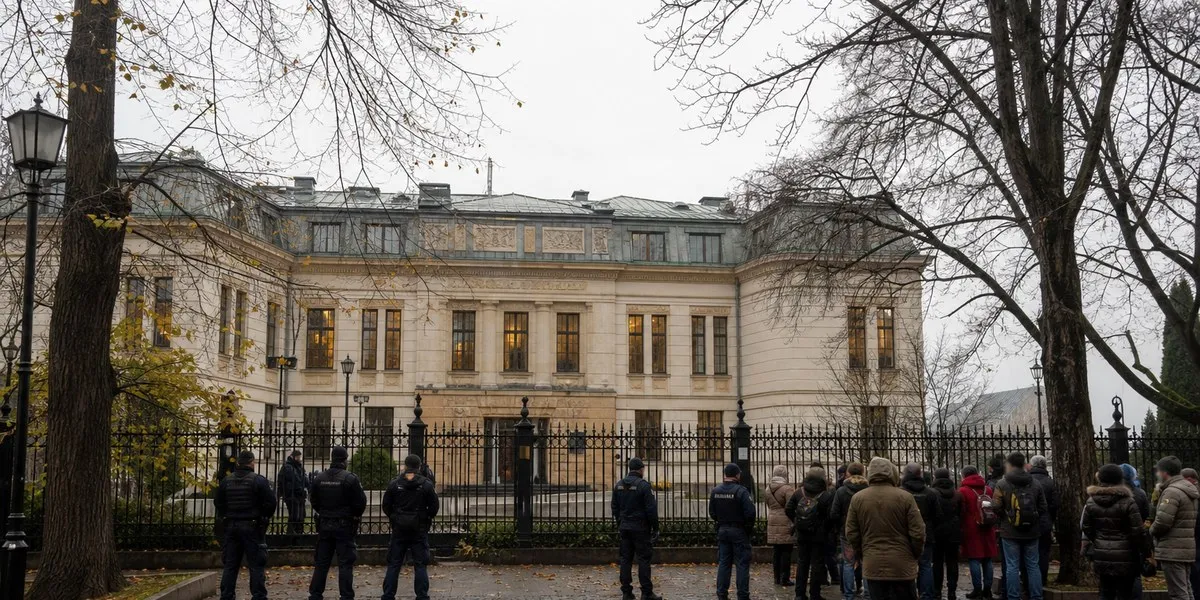
The International Commission of Jurists (ICJ) has criticised the actions of a group of judges who effectively took control of Poland’s Constitutional Tribunal and suspended its president, Bogdan Święczkowski, and vice-president, Bartłomiej Sochański. According to the organisation, these actions contravene international standards of judicial independence, Notes from Poland reports.
On Friday, eight judges elected this year by the parliamentary majority announced the suspension of Święczkowski and Sochański. They stated that the officials had improperly performed their duties. Significant police forces were deployed outside the tribunal building, restraining protesters, including opposition politicians, and preventing Święczkowski and Sochański from entering the institution’s premises.
Position of the International Commission of Jurists
ICJ Secretary General Santiago Cantón also criticised Polish President Karol Nawrocki for refusing to swear in five of the eight judges elected by parliament this year. According to Cantón, this violates international standards and contradicts the interim measures indicated by the European Court of Human Rights.
More current news is available on the UA.News Telegram channel Telegram.
In May, the ECHR applied an interim measure under which all judges elected by parliament were to be given the opportunity to work at the tribunal. Nawrocki and Święczkowski did not comply with this measure, arguing that the ECHR lacks the authority to make such a decision. The ICJ also noted that the roots of the Constitutional Tribunal crisis go back a decade and are linked, in particular, to unlawful judicial appointments during the government of the Law and Justice party.
Disciplinary proceedings and government reaction
Later on Tuesday, following the ICJ statement, the eight judges held their first general assembly and continued disciplinary proceedings against Święczkowski and Sochański. Justice Minister Waldemar Żurek filed six applications with the tribunal seeking to lift Święczkowski’s immunity so that he could face charges over a number of alleged crimes related to his work as tribunal president and his previous activity in the prosecutor’s office under the Law and Justice government.
The judges’ actions also caused divisions among Polish human rights defenders. The board of the Helsinki Foundation for Human Rights stated that it saw no clear legal basis for suspending the tribunal’s leadership. Subsequently, six of the foundation board’s eight members resigned. Prime Minister Donald Tusk stated that these actions were necessary so that legally elected judges could take office and to restore the court’s legitimacy. He later proposed a personal meeting with Nawrocki to discuss the crisis.




