
China Will Send the First Foreign Astronaut to Tiangong
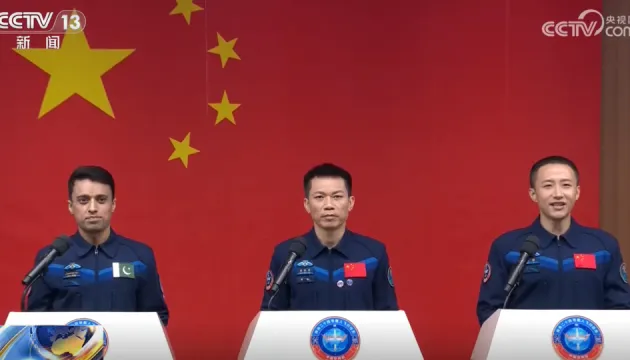
China plans to launch the Shenzhou-24 spacecraft to its Tiangong space station on November 25. For the first time in the history of China’s manned space program, the crew will include a foreign astronaut—Muhammad Zishan Ali, a citizen of Pakistan. He will spend about a week in orbit, while one of the Chinese astronauts will remain at the station for another six months to complete a year-long experiment on human spaceflight.
According to the China Manned Space Agency (CMSA), the launch of the carrier rocket carrying the “Shenzhou-24” spacecraft is scheduled for 8:18 a.m. Beijing time. In Kyiv time, this will be 2:18 a.m. on November 25.
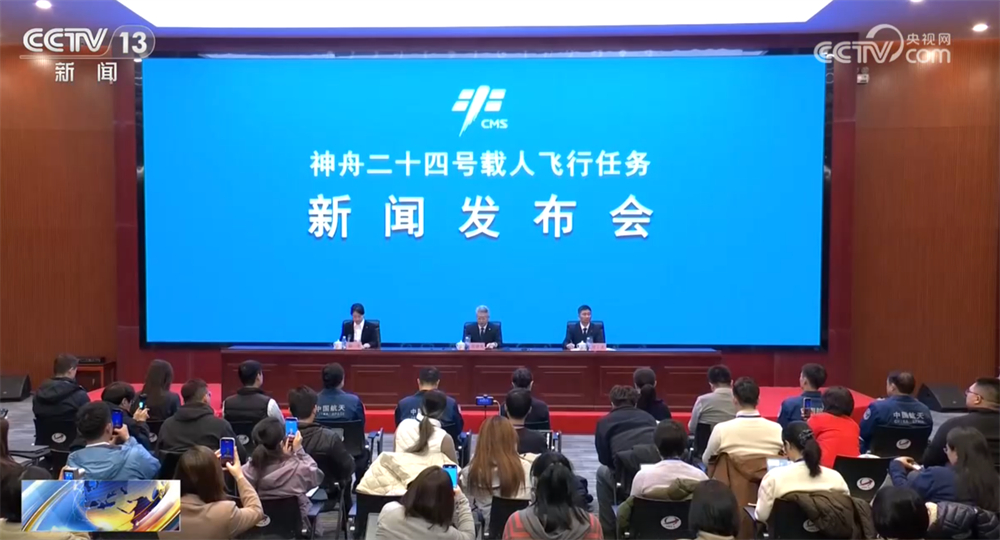
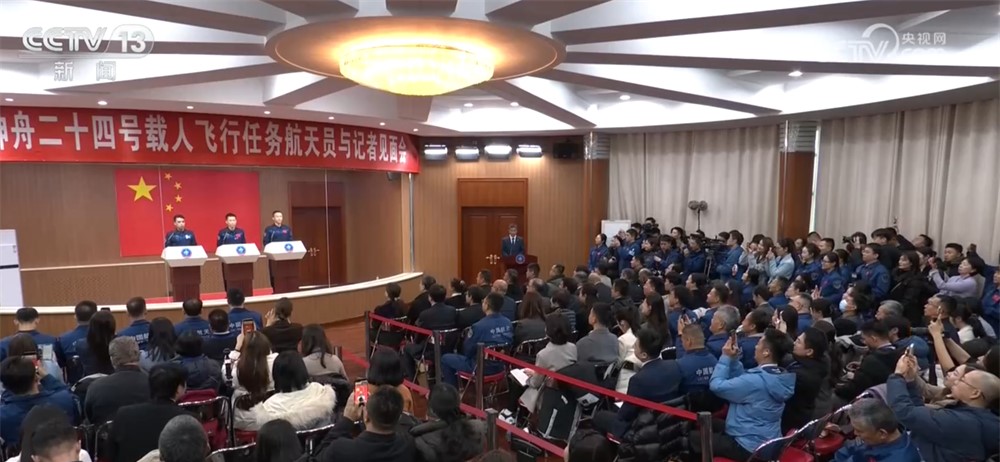
The rocket will be launched from the Jiuquan Space Center, located in the Gobi Desert in northwestern China. Prior to the launch, representatives of the space program introduced the crew and outlined the objectives of the upcoming mission.
Who Will Fly to the “Tiangong” Space Station
The Shenzhou-24 crew will consist of three astronauts. Tang Hongbo, who has already flown into space twice, has been appointed commander. Flying alongside him will be Wu Yi—this will be his first spaceflight. The third crew member will be Muhammad Zishan Ali from Pakistan. He will make history as the first foreign astronaut to visit China’s Tiangong space station. Ali will serve as the payload specialist, meaning he will be primarily responsible for scientific experiments and the equipment needed to conduct them.
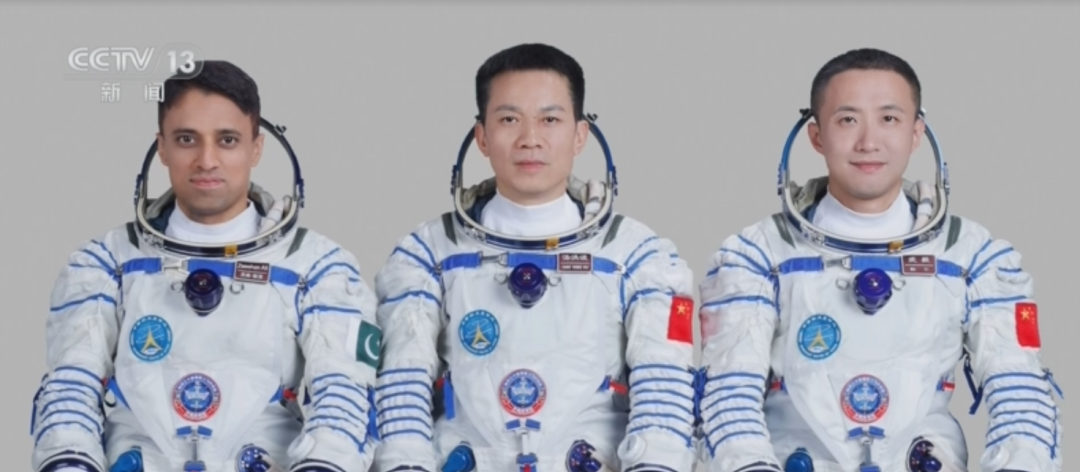
His participation was made possible by cooperation between China and Pakistan in the space sector. For both countries, this is their first joint mission as part of China’s manned space program. For Tang Hongbo, the upcoming mission will also be special. He has already participated in the “Shenzhou-12” and “Shenzhou-17” missions. After this new launch, he will become the first Chinese astronaut to have visited the Tiangong space station three times.
How long will the foreign astronaut spend in space?
Unlike the Chinese crew members, who will work at the station during a scheduled rotation, Muhammad Zishan Ali will embark on a short-term mission. According to the preliminary plan, he will remain in orbit for about a week. During this time, the Pakistani astronaut will join the crew’s work and conduct scientific experiments as part of a joint program between the two countries. After completing his tasks, he will return to Earth aboard the “Shenzhou-23” spacecraft.
Two astronauts from the previous mission—Zhang Zhiyuan and Li Jiajing—will return home with him. They are currently at the station as part of the previous crew rotation. Meanwhile, the third member of the previous mission, Zhu Yangzhu, will remain on “Tiangong.” He has already spent about six months in orbit and is scheduled to stay there for another six months. Thus, the astronaut will complete an experiment involving a one-year human stay in space.
Why Does China Need a Year-Long Mission in Orbit?
According to CMSA spokesperson Zhang Jingbo, Zhu Yangzhu’s extended stay at the station will help better understand how the human body reacts to life in space over the course of a year. During this experiment, researchers will be able to assess the impact of prolonged weightlessness on the astronaut’s health and physical condition. They will also test technologies that may be needed for future long-duration flights.
This research is crucial for planning missions beyond Earth’s orbit. The longer a person stays in space, the more questions arise regarding their health, nutrition, physical activity, and safety. The findings should help prepare for more complex expeditions in the future.
What research will be conducted during the Shenzhou-24 mission?
In addition to crew rotation, the astronauts will have a packed scientific program. According to the Chinese space agency, approximately 90 scientific experiments and technological tests are planned for the mission. The research will cover several areas:
- The science of life in space. Scientists will study the processes that occur in living organisms under spaceflight conditions.
- Space materials science. Researchers will investigate the properties of materials and how they behave in microgravity.
- Fluid dynamics and combustion. The experiments will help scientists understand how these processes occur in the absence of Earth’s gravitational pull.
- Fundamental physics. Scientists will test physical phenomena and patterns in space.
- Space medicine. Research will focus on human health and the effects of prolonged stays in orbit.
- New space technologies. Specialists will test equipment and solutions that may be needed for future missions.
Special attention will be given to experiments conducted as part of the China-Pakistan collaboration. Ali, in particular, will be responsible for working with scientific samples and equipment on board the station.
The Shenzhou-24 mission is set to be an important milestone not only for the Chinese space program but also for international cooperation in space. For the first time, a foreign astronaut will join the crew on the Chinese space station, while China will continue the research necessary for long-duration human spaceflight beyond Earth. China Central Television (CCTV) reported on preparations for the launch.
In China, Pakistani astronaut Muhammad Zishan Ali will join the crew of the Shenzhou-24 mission, which is set to travel to the Tiangong space station. He is set to become the first foreign astronaut on the Chinese space station and a participant in the first joint flight of Chinese and foreign astronauts in China’s manned space program.
On the Chinese “Tiangong” space station, researchers cooled a cloud of 20,000 rubidium atoms to a temperature of 10 picokelvins—nearly absolute zero. This is the lowest temperature ever achieved for atoms, according to Live Science.




