
China proposes breaks for platform workers — Channel NewsAsia
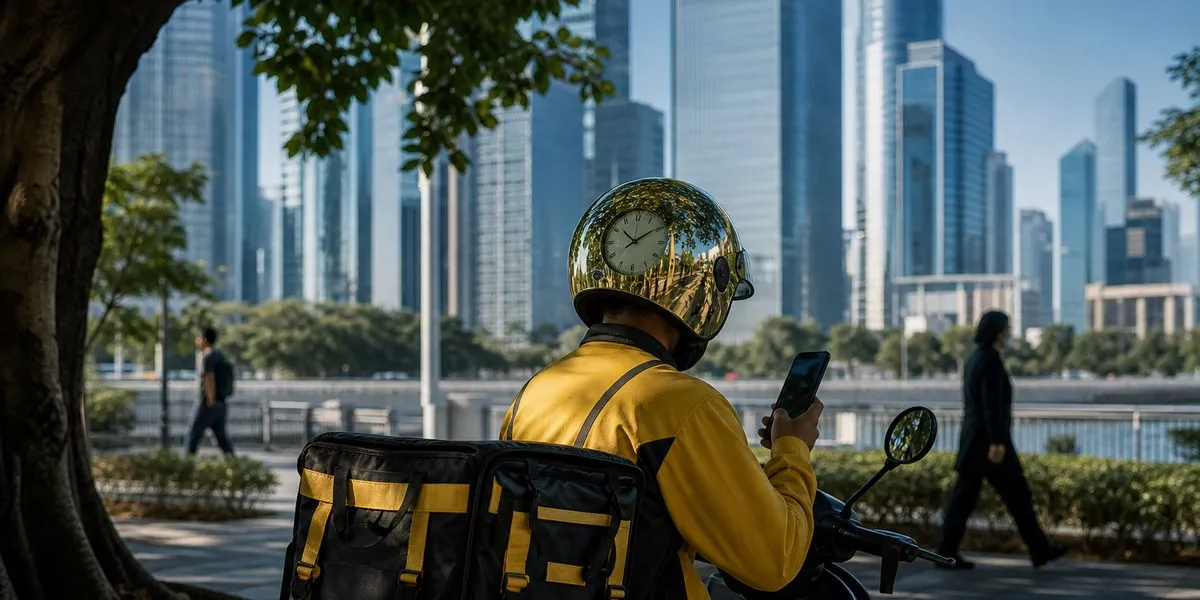
China published draft rules on October 8 for ride-hailing drivers, couriers and other platform workers. The document provides for breaks after four hours of continuous work, payment of remuneration at least once a month, and higher rates for work on official public holidays, Channel NewsAsia reports.
The workers covered by the draft are part of approximately 84 million people employed in what Beijing calls “new forms of employment.” According to the document, companies will also have to take workers’ costs, including those for vehicles, charging and insurance, into account when calculating pay.
Algorithm oversight
The draft proposes stronger oversight of algorithms that allocate orders, set delivery deadlines and assess couriers’ performance. Decisions to stop assigning orders or block an account must undergo human review rather than be made solely by an automated system.
Ou Lin, a lecturer in labour law at Lancaster University, said the draft does not create entirely new labour rights, but is intended to turn some existing protective requirements into more legally binding rules. Chinese authorities had already issued recommendations on protecting platform workers in 2021 and 2024.
More current news is available on the UA.News Telegram channel Telegram.
Different working conditions
Couriers who work through contractors and are tied to shifts at local delivery stations may have limited control over their rest days. A Meituan courier in Shenzhen said his station allows four days off per month but determines their dates itself. According to him, a customer complaint may result in a deduction of about 200 yuan, while lateness affects bonuses.
At the same time, couriers who independently select orders through several apps have more flexible schedules, but often do not receive pension and health insurance contributions. According to Meituan’s 2024–2025 report, such couriers accounted for 71.5% of the company’s monthly active couriers in 2024.
Public consultation on the draft will continue until November 8, while the date of its possible entry into force has not yet been announced. Analysts interviewed by the outlet point to difficulties in enforcing the proposed rules due to different employment models, workers’ financial dependence on daily earnings, and the division of responsibility between platforms and contractors.




