
Merz said that peace talks are impossible without Ukraine and Europe — Reuters
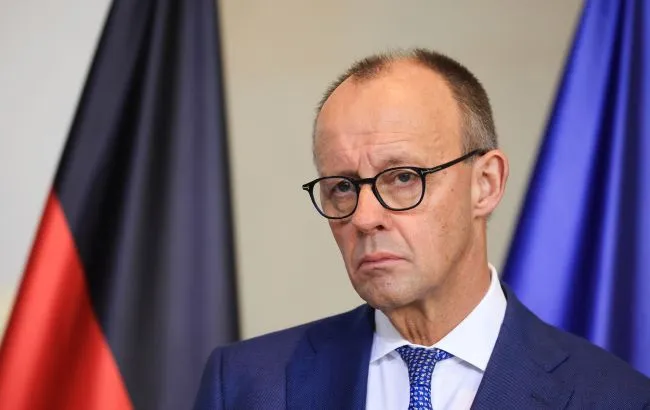
German Chancellor Friedrich Merz stated that the U.S. and Russia will not be able to reach an agreement to end the war without Ukraine’s participation. He emphasized that European countries must also be at the negotiating table, as the security of the entire continent will depend on the future agreement. Merz made these remarks on October 27 during a speech in Singapore.
During his speech at the Yusof Ishak Institute in Singapore, Friedrich Merz discussed diplomatic efforts aimed at finding a format for negotiations with Russia. According to him, any attempts by Washington and Moscow to reach an agreement to end the war will be fruitless if Ukraine does not participate in them.
The German chancellor also emphasized the need to involve European countries in the negotiations. He explained this by noting that Ukraine is part of Europe, and decisions regarding the end of the war will directly affect the region’s security. Therefore, according to Merz, agreements cannot be reached solely between major powers without the participation of those directly affected. “They can talk and negotiate among themselves, but without Ukraine, they will never be able to find a solution,” Merz said, commenting on possible contacts between Russia and the U.S.
He noted that representatives from Russia, Ukraine, the United States, and European countries must be at the negotiating table. Such a format, he said, must take into account Ukraine’s interests and Europe’s role in ensuring future security.
Merz Linked the End of the War to Putin’s Decision
Separately, the German chancellor stated that the further course of the war depends to a large extent on the position of Russian President Vladimir Putin. According to Merz, as long as the Kremlin leader is not ready to cease hostilities, Germany and its European partners will continue to support Ukraine. “As long as he does not want to end this war, we will support Ukraine,” the chancellor said.
Merz also explained that for Germany and other European countries, supporting Kyiv means more than just helping to defend Ukrainian territory. He noted that it is also about preserving the political order that took shape in Europe after World War II. “We are defending not only Ukraine’s territorial integrity, but also the entire political order of the European continent,” he emphasized.
In this way, Merz made it clear that the issue of ending the war concerns more than just relations between Kyiv and Moscow. It is also linked to future security guarantees, the stability of European states, and how relations between Russia and the West will develop in the future.
Why Europe Insists on Participating in the Negotiations
European countries are interested in influencing the negotiation process, as any agreements reached could shape the security landscape on the continent for years to come. In particular, this concerns security guarantees for Ukraine following a ceasefire or the conclusion of a peace agreement. If European states are to participate in the creation and implementation of such guarantees, they must be involved in discussing their terms.
Merz cautioned against a scenario in which Ukraine’s fate would be decided without its representatives. He cited a possible scenario in which Russia, China, and the United States would negotiate an end to the war, leaving Ukraine out of the negotiation process.
In his view, such an approach would not allow for a sustainable solution. After all, any agreement must take into account the position of the Ukrainian side, which is defending its territory against Russian invasion. The participation of European countries, in turn, is important because of their role in supporting Ukraine and potentially ensuring security after the end of hostilities.
Germany Is Seeking a Format for Negotiations with Russia
Merz stated that Germany, together with other European countries, is working to find a format that would allow for negotiations with the Russian authorities. At the same time, he did not announce that a specific agreement on such a format had been reached. The chancellor specifically highlighted the role of Norway and Finland. According to him, these countries are playing a “very constructive role” in diplomatic efforts. Their participation is part of broader attempts by European nations to find opportunities for dialogue with Moscow.
However, the mere fact of diplomatic contacts does not yet mean that the parties are any closer to a peace agreement. To achieve this, they must coordinate their positions on a ceasefire, future security guarantees, and other key issues. Mertz’s public statement primarily outlines Berlin’s position: negotiations must take place with the participation of Ukraine and Europe, rather than through agreements among major powers behind their backs. Reuters reported on the German chancellor’s statement.
As a reminder, Putin has no intention of giving up his occupation of Donbas, according to Reuters.
Donald Tusk assessed the results of the talks between the leaders of Norway and Finland and Putin.




