
NATO Has Developed a Victory Plan in Case of a Russian Attack — WSJ
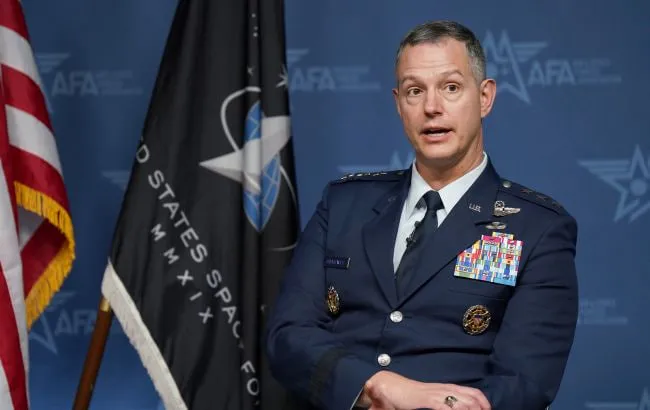
NATO has developed a so-called “theory of victory” in the event of a possible Russian attack. According to The Wall Street Journal (WSJ), the strategy calls for thwarting the initial attack, halting any subsequent advance, and weakening the enemy’s combat capabilities.
According to the publication, strikes on St. Petersburg and Kaliningrad are being considered among the possible measures in the event of a Russian attack.
Grynkevych Presented NATO’s “Theory of Victory”
Hrynkevych said that a classified version of this plan was finalized three months ago. It calls for investing in “affordable swarms”—relatively inexpensive drones—to supplement the Alliance’s arsenal of more sophisticated weapons.
Ukraine’s combat experience influenced this decision, the publication reports.
If Russia attacks, the Alliance’s first objective will be to block the initial offensive and prevent any further advance should it continue, says Hrynkevych
“Enemy formations will be cut off from reinforcements. Enemy commanders will be unable to control their forces. Enemy forces and support assets will be reduced and destroyed,” the top commander asserts.
In implementing this strategy, the NATO commander noted that the Alliance will not seek to defeat Russia or topple its government. Rather, it aims to stop any attack by Russia.
However, Grinkevich did not provide a timeline for the strengthening of NATO’s defenses, which is taking place against the backdrop of an ammunition shortage caused by the war in Iran.
What is known about this strategy
NATO’s “Theory of Victory” is based on the efforts of retired General Chris Donahue, former commander of the U.S. Army in Europe and head of the Alliance’s Land Command.
He was forced to step down from his post in July when Defense Minister Pete Hagseth demoted him.
This approach is designed to thwart Russian actions. Russia’s geographical advantages and massive defense industry could enable it to attack the Baltic states, Poland, and other NATO allies before the Alliance can mount a powerful response.
According to Donahue’s strategy, a vast “autonomous zone” will be established so that drones and ground robots can suppress a Russian attack without significant losses to the allies.
At the same time, long-range missiles would strike Russian command posts and air defense systems in:
the Kaliningrad exclave,
near St. Petersburg,
in Belarus.
This will undermine Russia’s efforts to control the skies and allow the U.S. Army’s V Corps and other NATO ground forces to counterattack, the publication reports.
NATO air forces will move quickly to strike Russian reinforcements heading to the battlefield and attack other targets in the rear.
NATO’s attacks will be supported by a “data highway.” This is a system for the instantaneous exchange of classified target data via the cloud among allied forces. Elements of this network were tested in the Middle East during the U.S. war with Iran.
This approach has been dubbed the “Eastern Flank Deterrence Initiative.” Its goal, according to U.S. military officials, is to force Putin to abandon a potential attack on NATO.
This was reported with reference to a speech by General Aleksus Grinkevich, Supreme Allied Commander Europe, at the Warsaw Security Forum, according to the Wall Street Journal.
The U.S. has assured Europe of its support despite reducing its military presence — Euronews.
Kallas responded to Trump’s call for elections in Ukraine.
The Kremlin stated that Ukrainian President Volodymyr Zelenskyy must make “very responsible and very difficult decisions” to end the war. This is how Dmitry Peskov, the Russian dictator’s spokesperson, explained U.S. President Donald Trump’s call for a change in Ukraine’s head of state.
The EU approved sanctions against more than 1,600 individuals and entities from Russia—RMF24




