
NATO tests layered drone defense in Latvia — Jerusalem Post
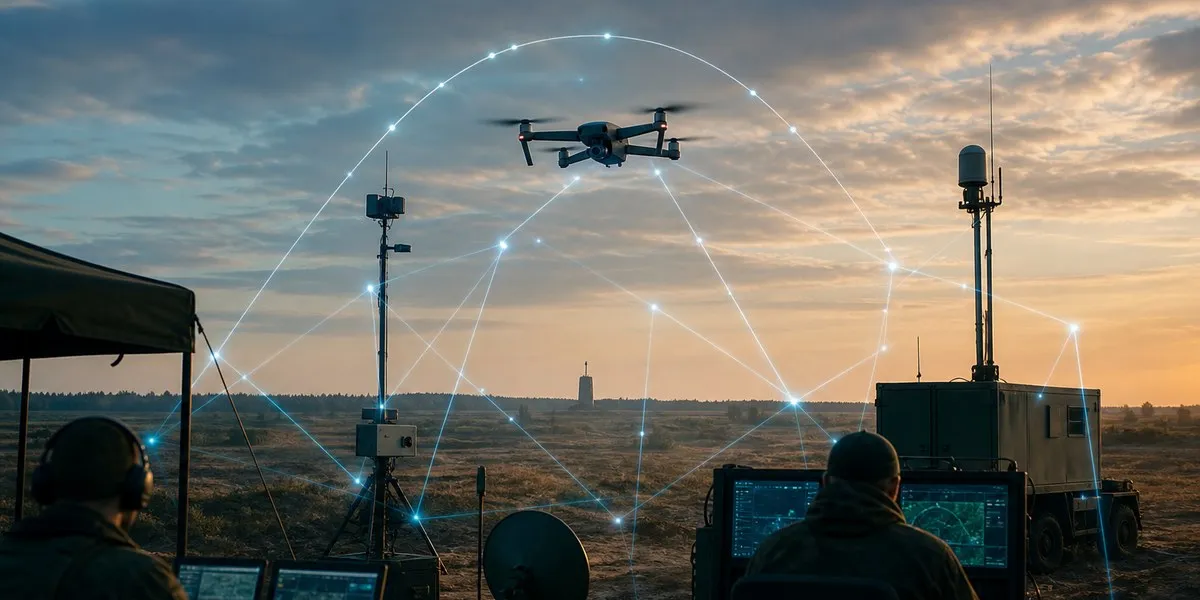
On October 29–30, NATO held the NATO FUSE event in Latvia, where it tested approaches to countering drones, exchanging data among allies and accelerating targeting processes. The event, organized by NATO Allied Command Transformation, brought together three initiatives: Digital Backbone eXperimentation (DiBaX), the Layered Counter-UAS Initiative (LCI-X) and Next Generation Targeting (NGT), the Jerusalem Post reports.
Testing involving military personnel and companies
According to Major General Arnoud Stallmann, NATO’s assistant chief of staff for multi-domain capabilities, more than 30 countries and over 100 companies took part in the exercises in Latvia. The event was not a procurement procedure: military personnel, operators and industry representatives tested technological solutions in conditions close to real ones and collected data on their effectiveness.
Stallmann linked the need for faster technology deployment to repeated incidents of drones appearing in the airspace of countries on the Alliance’s eastern flank and to the experience of modern conflicts. He noted that NATO is seeking more affordable ways to intercept small drones so as not to rely solely on expensive fighter jets and interceptor missiles designed to counter larger threats.
More current news is available on the UA.News Telegram channel Telegram.
Drone countermeasure network and AI for targeting
The LCI-X initiative provides for the phased testing of counter-drone capabilities, from individual systems to interconnected counter-UAS units integrated with NATO command-and-control systems. Over the year, relevant events were held in Finland and Latvia. Their goal is to combine sensors, means of engagement and control systems, as well as provide manufacturers with feedback from operators.
Within DiBaX, NATO also tested the resilience of command-and-control systems, maintaining communications in the event of network disruptions, and processing sensor data using artificial intelligence. The Alliance views the digital backbone as a set of software, networks and infrastructure that will enable forces from different countries to exchange data and act jointly.
The NGT program is intended to create a federated system that will combine national data using modular AI and data-management tools. One of its stated objectives is to reduce the time from receiving information to making a decision by more than 50%, while the final decision on the use of force must remain with a human. Stallmann stressed that the Alliance needs to shorten the cycles for introducing new capabilities from decades to months and years.




