
Scientists find signs of two magma reservoirs beneath Masaya — ScienceDaily
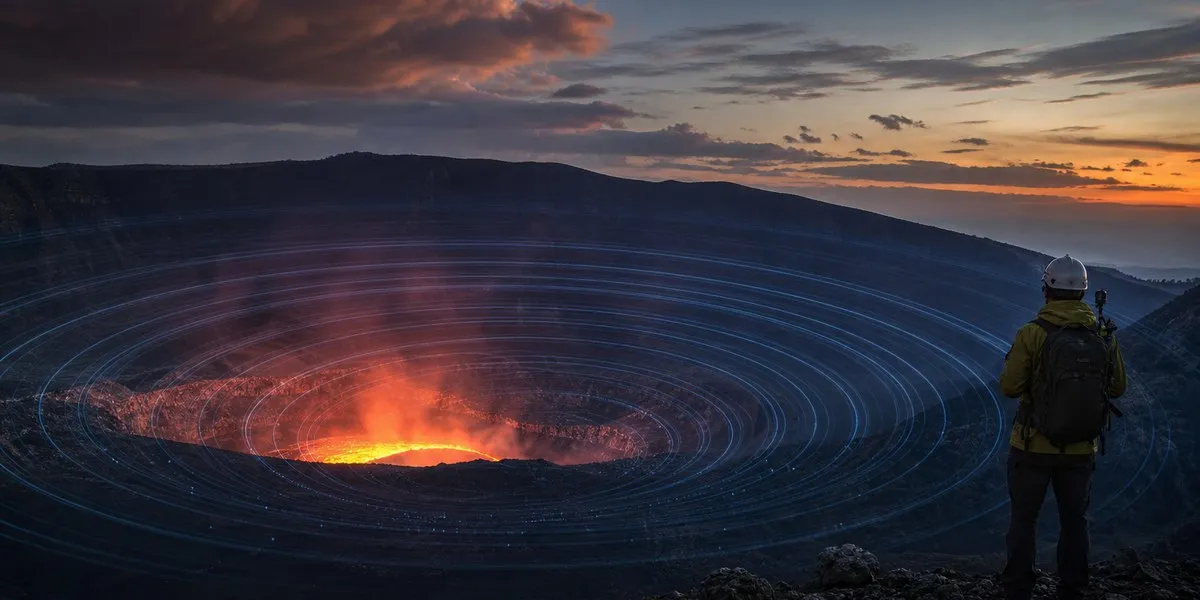
Scientists at Pennsylvania State University have found signs of at least two separate magma reservoirs beneath the active Masaya volcano in Nicaragua. An analysis of satellite observations from 2018 to 2024 showed that different parts of the volcano changed in elevation differently, ScienceDaily reports.
Masaya is located near Nicaragua’s capital, Managua. About 2 million people live within 13 miles of the volcano, and its caldera is a national park and a popular tourist destination. The volcano has the active Santiago crater with a lava lake; its continuous degassing can create hazardous concentrations of sulfur dioxide even without a major eruption.
Different surface changes
The researchers used data from the Sentinel-1 satellite, which observes the volcano approximately once every 12 days. Using interferometric synthetic aperture radar, they recorded slight changes in the distance between the satellite and the Earth’s surface. The method makes it possible to obtain measurements through clouds, which is especially important for tropical regions.
More current news is available on the UA.News Telegram channel Telegram.
At the beginning of the observation period, an area within the caldera was gradually subsiding, but later began to rise. Scientists believe this change may be linked to changes in the amount of magma underground: an influx of additional magma into a reservoir can increase pressure and cause the surface to rise. At the same time, the area around the active Santiago crater subsided throughout the entire six-year period.
A more complex magma system
Lead author Lizzie Johnson explained that the independent subsidence of the surface near Santiago may indicate a decrease in the amount of magma in another, shallower reservoir. According to the researchers’ estimate, a deeper source may supply magma to the main reservoir, while a reservoir closer to the crater may be losing it.
The results were published in the journal Geophysical Research Letters. The researchers do not report an immediate danger to residents near Masaya, but believe that long-term satellite observations and modeling will help better monitor the volcano’s activity and identify possible signs of increasing danger.




