
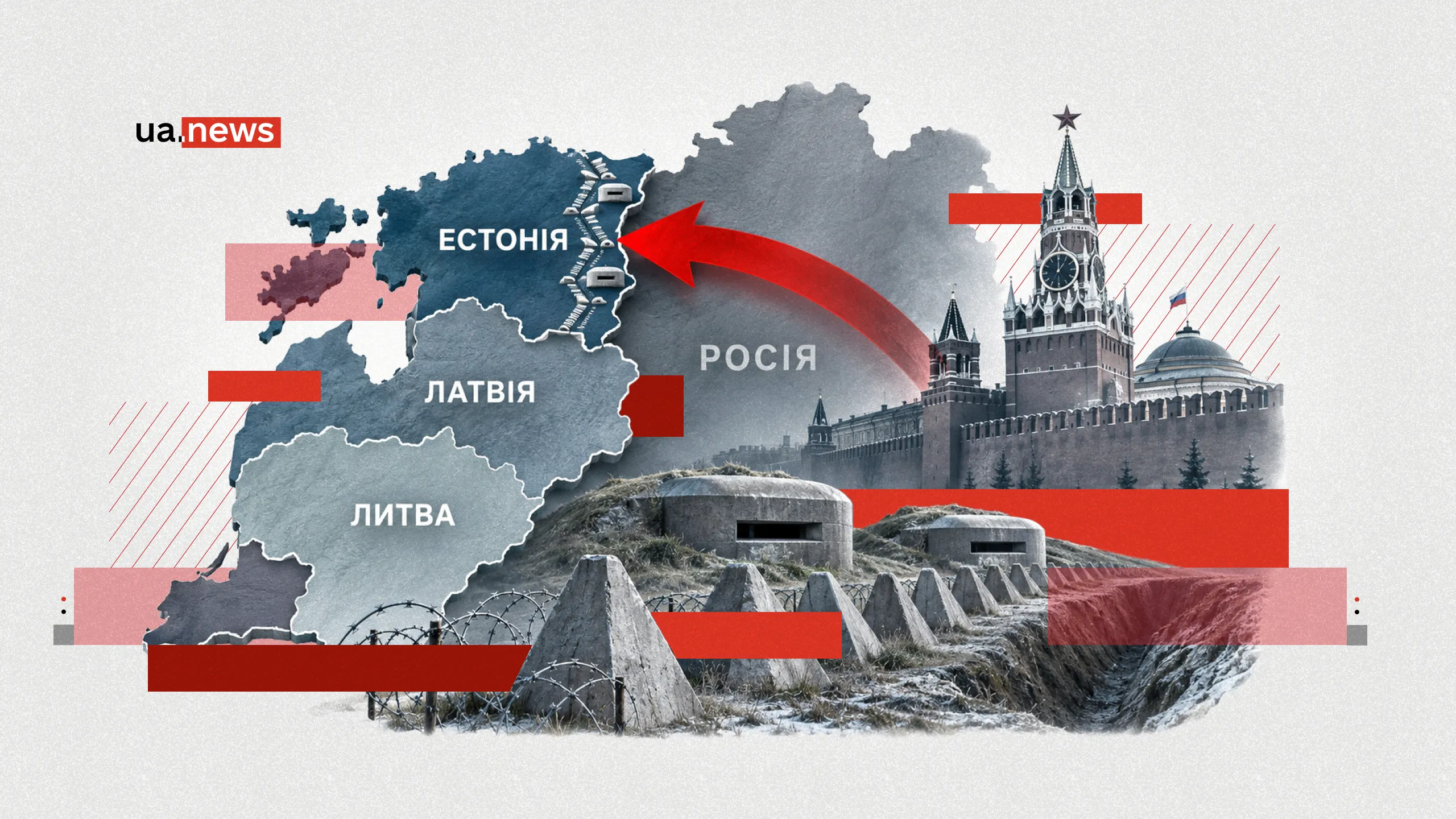
The Baltic states appear to have begun preparing for the worst-case scenario—direct military action by Russia. Following sabotage attacks on defense facilities, threats from the Kremlin, and an increase in hybrid provocations, Estonia, Latvia, and Lithuania are radically revising their defense strategies: building fortifications along their borders, strengthening their military presence, and developing contingency plans in case of an invasion.
Estonia, which is the most vulnerable to an attack by Russia, is closing all border crossings with Russia starting December 1 due to an incident involving an attempted sabotage at a defense facility. The country has also prepared a plan to evacuate the population and government data to safeguard them in the event of an occupation.
UA.News explains how the Baltic states are preparing for a possible military escalation by Russia, whether the Kremlin will pursue a “Crimea-2” scenario, and what Ukrainian experts on international relations have to say about it.
The Kremlin is stepping up pressure on the Baltic states
The Kremlin is raising the stakes in the war and attempting to intimidate countries that actively support Ukraine by creating a pretext for provocations and accusing neighboring states of allegedly hostile actions. At the same time, Moscow is testing NATO’s readiness to respond to threats on its eastern flank.
“If Russia faces a direct attack on Kaliningrad, it will inevitably consider using all types of weapons from our arsenal,” Russian dictator Putin said on October 1, issuing such threats. This came a few days after Russia warned that it was prepared to use nuclear weapons if NATO attempted to isolate the Kaliningrad region of the Russian Federation, where its navy and missile systems are based.
In a diplomatic note, Moscow accused the Alliance of pursuing a “dangerous and reckless course” that poses “a high risk of a direct armed conflict.” It also threatened the possibility of “Russian strikes against decision-making centers in Alliance member states from the very outset.”
The Kremlin has also intensified its rhetoric against the Baltic states amid demands for a new security architecture and the withdrawal of NATO forces from Eastern Europe. Russia is promoting these positions under the guise of peace negotiations in Ukraine. According to analysts, the very tone of Moscow’s statements is reminiscent of the Cold War era or even the period preceding the full-scale invasion of Ukraine by the occupying army. As justification, Russian officials cite alleged threats to the Russian-speaking population and the deployment of Ukrainian military units in the region to launch attacks against Russia.
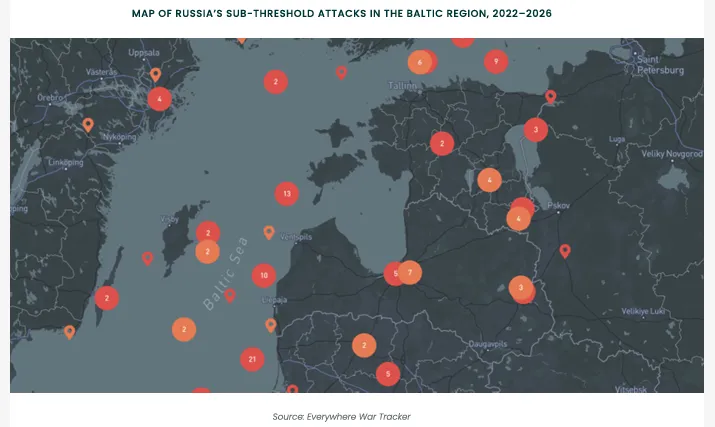
Increasingly, informational and political pressure on the Baltic states is escalating into acts of subversion, sabotage, cyberattacks, and military pressure. Based on data from an OSINT tracker, Ukrainian analysts have documented over 100 hostile incidents in the Baltic region. The study shows the evolution of Moscow’s aggressive actions: while in 2022–2023 these took the form of political signals, in 2024 Russia moved on to sabotage, and during 2025–2026—to outright military pressure, airspace violations, and large-scale jamming of GPS signals.
In the fall, a series of sabotage attacks targeted defense enterprises in the region. In September, Estonian Foreign Minister Margus Tsahkna reported that the country’s internal security service had established the involvement of Russian intelligence agencies in the arson attack on the Milrem Robotics facility. This plant manufactures military robotic systems. The attack was part of a broad sabotage campaign in Europe aimed at intimidating countries that support Ukraine.
A similar incident occurred in November. This time, a group of agents attempted to set fire to the facilities of the defense contractor Threod Systems. According to the Estonian Internal Security Service, the sabotage was organized on the orders of Russian military intelligence (GRU).
To prevent further incidents, the Estonian Ministry of Foreign Affairs announced that, starting December 1, it will close all land border crossings with Russia to vehicles and pedestrians.
The Region’s
New Defense Doctrine
Estonia, Latvia, and Lithuania, according to military analysts, have very limited strategic capabilities due to their dependence on the Suwalki Corridor—a 65-kilometer stretch of territory between Kaliningrad and Belarus that connects Poland and Lithuania. It is through this stretch of land that ground military reinforcements would theoretically arrive in the event of an attack by an aggressor.
However, the return of territory in the event of an occupation is unlikely for the Baltic states. Due to a lack of strategic depth, these states have been forced to completely overhaul their defense doctrine. They no longer count on NATO forces to liberate them months after an attack, but are instead creating the conditions to repel an invasion directly at the border.
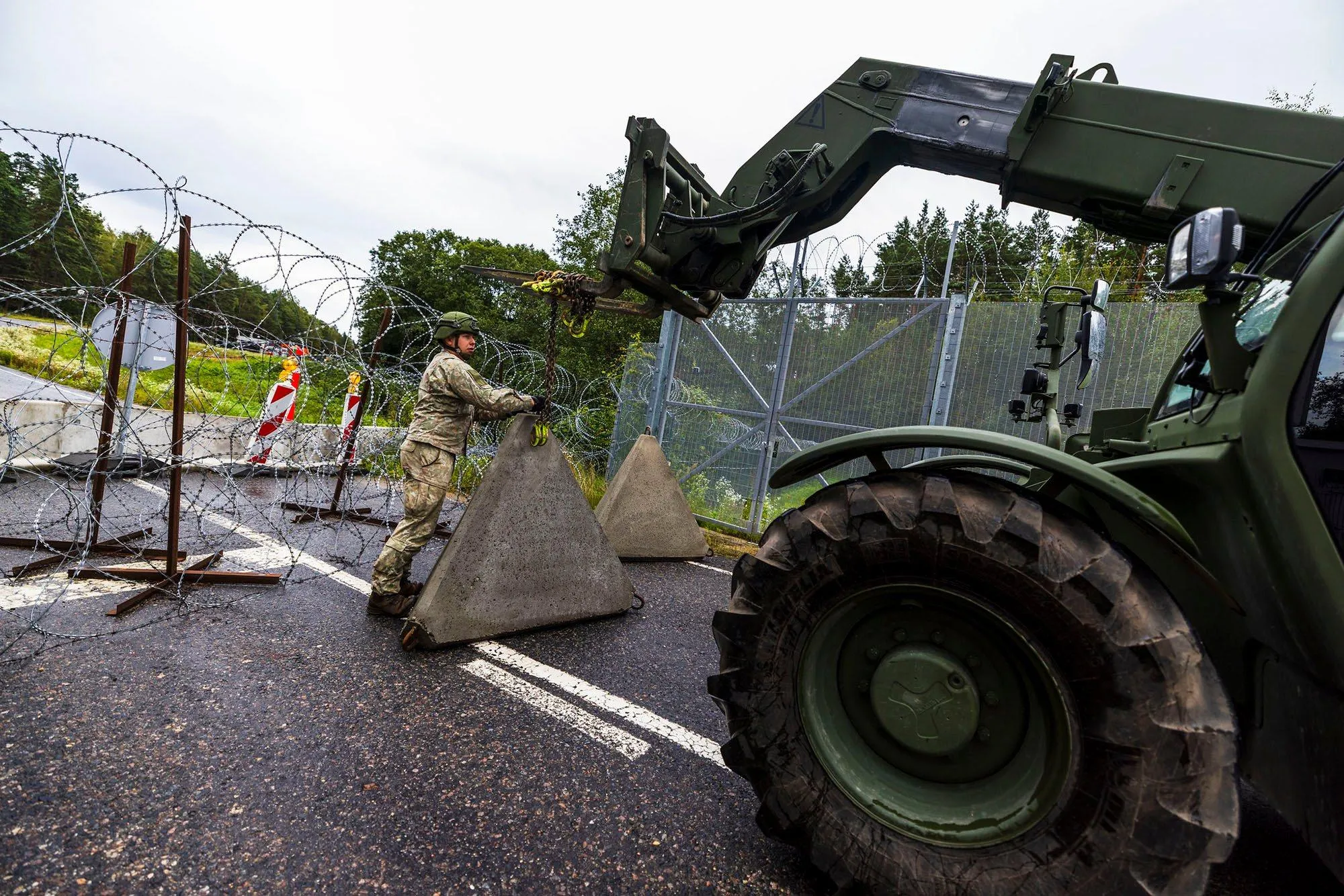
A Baltic defense line is being built along the eastern border, consisting of bunkers, anti-tank barriers, and other defensive structures. In particular, Estonia plans to build hundreds of bunkers. Starting in 2027, a German armored brigade will be stationed in Lithuania, and Finland is hosting NATO’s forward-deployed ground forces on its territory. In addition, countries bordering Russia in Eastern Europe—from Norway to Poland—are building a “drone wall” to protect against Russian attacks.
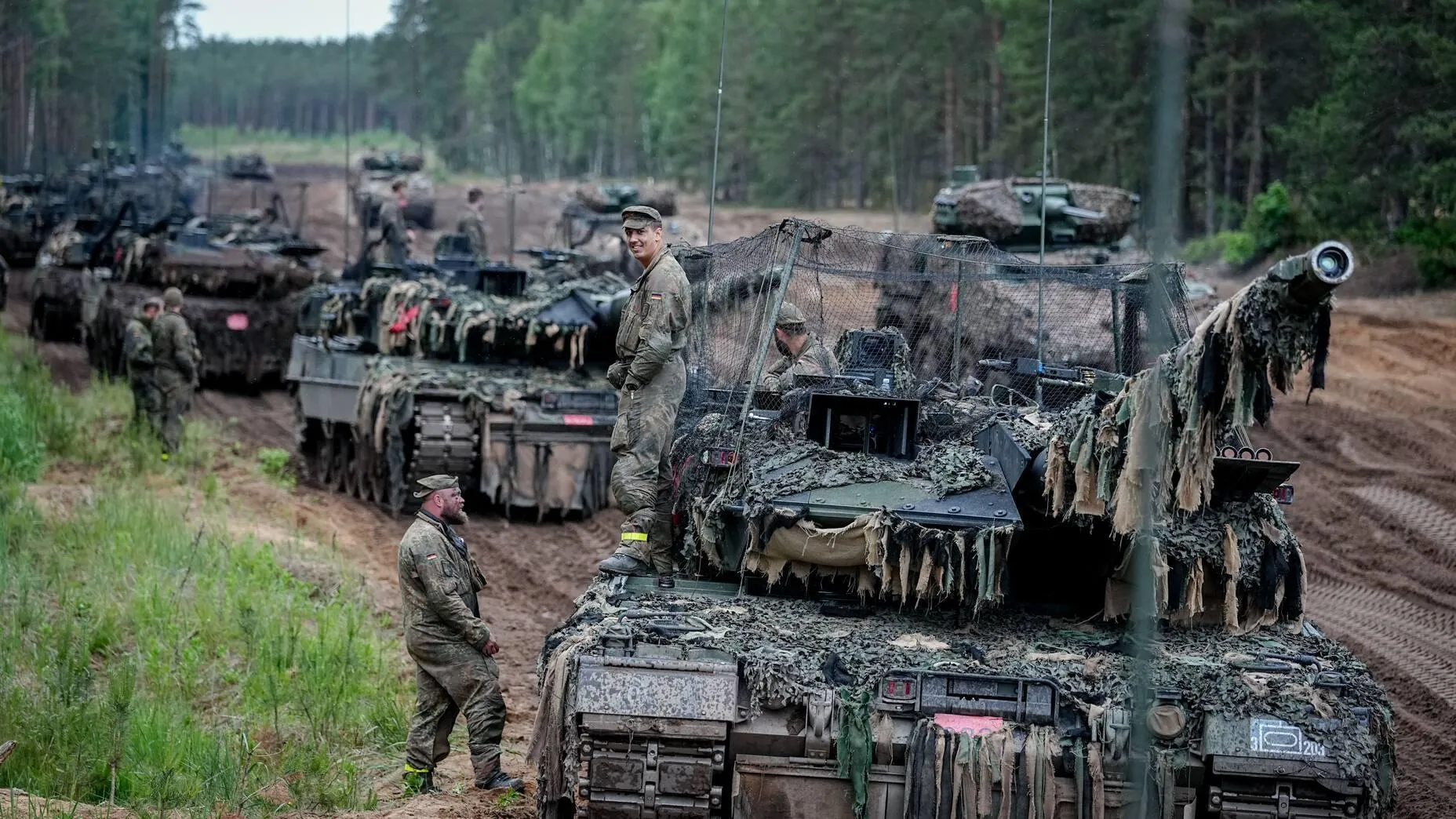
In recent years, defense spending in the region has exceeded NATO’s 2 percent target. For example, military spending in Estonia is expected to reach nearly 5.5 percent. For Tallinn, the question is no longer whether Russia poses a potential threat, but how quickly Moscow might move from political pressure and hybrid operations to open military aggression.
Drawing on the lessons of the war in Ukraine, Estonia, Latvia, and Lithuania have accelerated the preparation of their critical infrastructure. Since February 2025, all three countries have disconnected their power grids from the Russian and Belarusian grids, gradually synchronizing them with the continental power grid. Meanwhile, NATO has strengthened the protection of undersea infrastructure in the Baltic Sea following cable damage and various incidents of suspected sabotage.
Escalation on Russia’s part has also forced Estonia to develop several evacuation plans for the population and government institutions. The country has already created a backup copy of government data at its “digital embassy” in Luxembourg. This involves duplicating important government data, including citizen and land registries, as well as the country’s legal code. In the event of a military scenario, the Estonian government will be able to continue governing the country from abroad.
Lithuania, Latvia, and Estonia discussed preparations for mass evacuation plans in the event of a Russian invasion as early as last October. As reported by Reuters, the initial evacuation could affect approximately 1.2 million of the Baltic countries’ roughly 6.2 million citizens.
Specifically, Latvia estimates that in the event of a Russian invasion, one-third of the country’s nearly two million residents might have to leave their homes, while Estonia’s plans call for the relocation of one-tenth of its population. Specifically, out of 1.4 million, 140,000 citizens could be moved to temporary shelters.
Expert commentary: Russia seeks to intimidate Ukraine’s
steadfast allies
Unlike many European countries, the Baltic states have their own negative experience with Soviet occupation. And this experience largely shapes their behavior, explains Yevhen Magda, director of the Institute of World Policy.
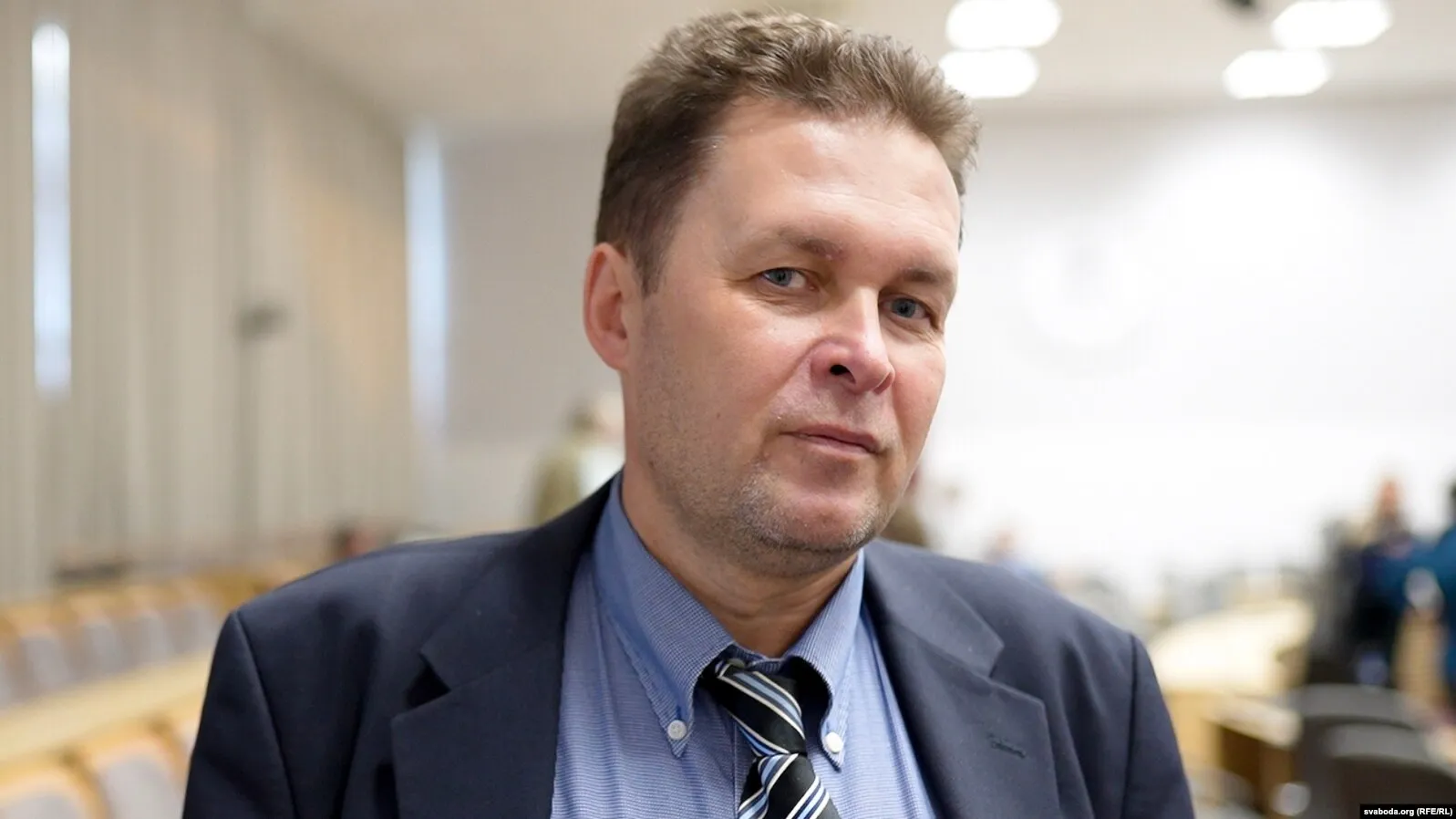
“They are steadfast and invest heavily in supporting Ukraine. At least two of the three countries have relevant legislation that provides for funding to support Ukraine’s defense capabilities. And this, in my opinion, is no small achievement.
But a few weeks ago, an interesting incident occurred: unknown saboteurs infiltrated Latvian territory from Belarus and stole some border equipment there. “This is a very deliberate provocation, which is a telling example of Russia’s hybrid influence on the situation,” notes Yevhen Magda.
The expert also considers Estonia’s decision to close its borders with Russia in response to a possible sabotage attempt at a defense facility to be entirely justified.
“Estonia is a country with its own success story, having prevented excessive assimilation following the Soviet occupation of the Baltic states in 1940. That is why the Estonians are taking very active measures and, in response to an attempt to set fire to a drone manufacturing plant, are closing the border with Russia starting December 1.
This is especially true since the Narva River, which flows between Russia and Estonia, is not very deep and cannot serve as a natural border. Incidentally, there is a bridge between Narva and Ivangorod, and the Estonian side has previously sought to strengthen its defensive capabilities through engineering fortifications.
In addition, the Baltic states are counting not only on each other’s support but also on the support of those who will be ready to come to their aid. I think these are the Scandinavian countries.
In this context, it is clear why Russia wants Finland to leave NATO. This is because Finland has a system of intensive training for reservists and many similar defense measures. In other words, the Baltic states operate on the principle of strengthening defense—not through sheer numbers, but through the quality of training.
That is why the Russian leadership views these very countries as a potential hotbed of resistance that must be crushed as brutally and as quickly as possible. And all actions aimed at preventing this are, in my opinion, entirely justified,” states the director of the Institute of World Politics.

The
current aggressive rhetoric against the Baltic states marks yet another escalation by Russia, which is warning of the possible implementation of its threats. Moreover, carrying out a “Crimea-2”-style scenario is relatively inexpensive and advantageous for Russia, according to Oleksandr Kraiev, an international affairs expert at the “Ukrainian Prism” Foreign Policy Council.
“It’s good that our Baltic partners understand all these issues and are preparing. I would very much like to see our American partners support them as well. But, unfortunately, we see that the U.S. will not be fully prepared to defend the Baltics. For some reason, U.S. President Donald Trump cannot do this.
It’s worth adding that Russia’s attacks against the United Kingdom can also be partly interpreted as a weakening of the Baltic front. Let me remind you that it is the UK that is responsible for the Joint Expeditionary Forces and, in essence, for the Baltic region within NATO. It is the cornerstone of the entire regional defense, including the navy,” notes Kraev.
At the same time, according to the international affairs expert, the Kremlin’s statements should not be viewed as a full-scale attack. This is a hybrid threat that Russia has been building against the entire region since 2022 and continues to use as a threat.
“Against the backdrop of internal divisions within NATO—which Russia has been exacerbating and doing everything possible to bring about—the ‘Crimea-2’ scenario is becoming more likely. And not just within the Baltic states, but throughout Northern Europe. Let’s not forget about the Svalbard Archipelago, also known as Spitsbergen, where such a scenario could indeed be carried out. After all, this island could easily be cut off from Norway, surrounded, and used as a Russian military base. In other words, no matter how you look at it, this risk is very real, and it’s only growing. Unfortunately, the North Atlantic Alliance must be prepared to somehow counter this risk. “If this readiness is lacking, if our best partners continue to sit idly by—literally from the Baltic Sea—we can’t count on any positive outcome,” admits Oleksandr Kraev.




