
Road collapse in Nepal forces Kathmandu airport to extend operations — Kathmandu Post
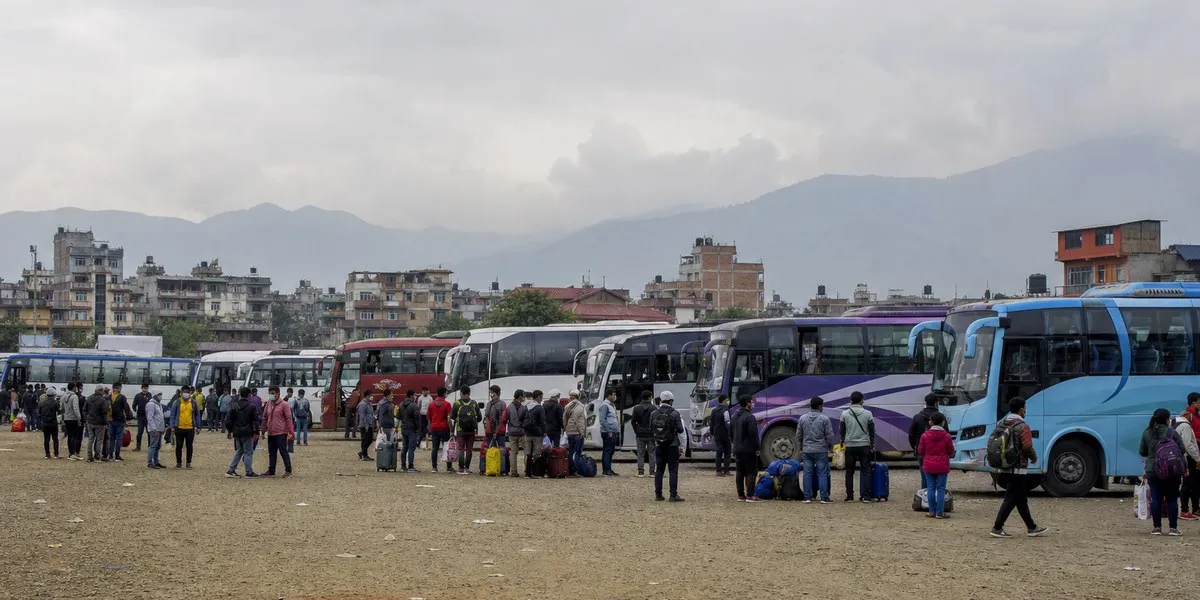
In Nepal, the collapse of a section of the Prithvi Highway ahead of the Hindu festival Dashain disrupted the departure of passengers from the Kathmandu Valley. Due to road damage, Tribhuvan International Airport in Kathmandu is preparing to operate domestic flights until late at night, The Kathmandu Post reports.
More than one million people are expected to leave the Kathmandu Valley by road, while another 30,000 to 35,000 will travel by air. Traffic stopped on Friday evening after cracks appeared along an almost 100-meter section of the Prithvi Highway near Galaudi, and a 20-meter stretch collapsed.
Bus traffic and ticket bookings
The damage near Gajuri disrupted advance ticket sales and stranded hundreds of intercity vehicles. On Saturday, advance booking counters temporarily suspended operations, while several overnight intercity buses did not depart as scheduled. Affected passengers were refunded for their tickets.
Bijaya Jaishi, director general of the Department of Roads, said the collapse was caused by severe riverbank erosion by the Trishuli River after flooding in late August. According to him, road services are cutting away part of the slope to restore traffic. Authorities expected to open one traffic lane by late Saturday evening.
More current news is available on the UA.News Telegram channel Telegram.
The Prithvi Highway normally carries more than 15,000 vehicles a day, and this figure triples during Dashain. To overcome the transport crisis, the Department of Transport Management has opened route permits nationwide for medium- and long-distance buses and plans to deploy additional vehicles if necessary.
Airport prepares for increased load
Tribhuvan Airport spokesperson Sanjay Kumar said domestic air traffic has risen sharply due to the poor condition of the roads. The airport plans late flights to regional hubs, including Biratnagar, Chandragadhi in Jhapa District, and Janakpur in Dhanusha District.
Under normal conditions, Kathmandu airport handles 28 flights per hour—20 domestic and eight international. This figure has now risen to 32 flights per hour. Kumar named runway capacity, safe intervals between aircraft, and possible weather-related delays as the main challenges.




