
South Korea plans to relocate airbase for chip factories — The Japan Times
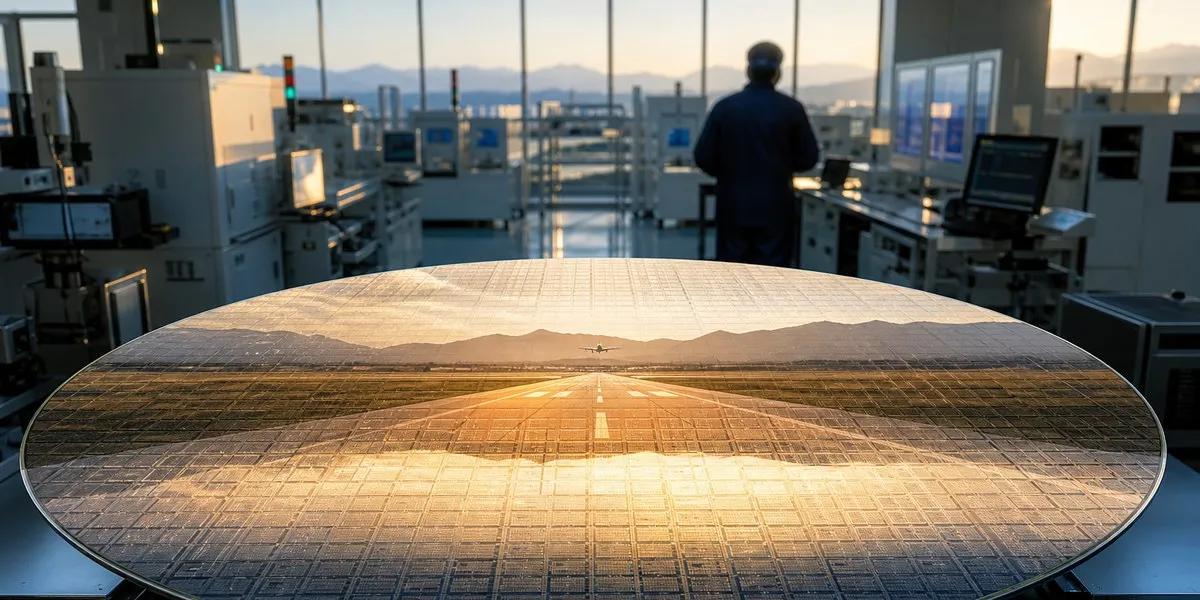
South Korea plans to relocate a military airfield in Gwangju, where it intends to develop a major semiconductor cluster. The freed-up area of 8.2 square kilometers is to become the central element of 800 trillion won in investment in four chip manufacturing plants by Samsung Electronics and SK Hynix, The Japan Times reports.
The project is part of President Lee Jae Myung's large-scale program, which provides for investments of 1,350 trillion won, or about $1 trillion, in semiconductors, physical artificial intelligence and data centers. The authorities aim to turn the southwestern Honam region into a technology hub. Last year, its economy contracted by 0.9%, while the country's economy grew by 1.1%.
Relocation of the airfield
The military facility in Gwangju is located about 266 kilometers from Seoul. Part of the territory is reserved for use by the U.S. military in the event of an emergency, so the relocation requires coordination with the United States. About 28,000 U.S. military personnel are stationed in South Korea, and Seoul has not said whether Washington has approved the relocation of the relevant facilities.
More current news is available on the UA.News Telegram channel Telegram.
Previously, the government planned to relocate or temporarily disperse military facilities by mid-2028. The president instructed officials to consider the possibility of accelerating this process. Under the government's plan, the first of the four factories is to begin mass production by 2030.
U.S. pressure and infrastructure challenges
The plan could become another source of tension in relations with Washington. U.S. Commerce Secretary Howard Lutnick told Bloomberg Television that South Korea's expansion of its artificial intelligence sector should take place more in the United States and warned of the possibility of new tariffs.
After construction, the factories will need about 650,000 tonnes of water per day. The government expects to use water from nearby reservoirs and treated wastewater, although the region recently experienced a severe drought. The cluster is also expected to require new power transmission lines and about 23,000 workers. South Jeolla Province produces about twice as much electricity as it consumes, but the construction of new energy infrastructure has already sparked protests in rural communities.




