
More than 1,000 drone flights over critical facilities have been recorded in Germany
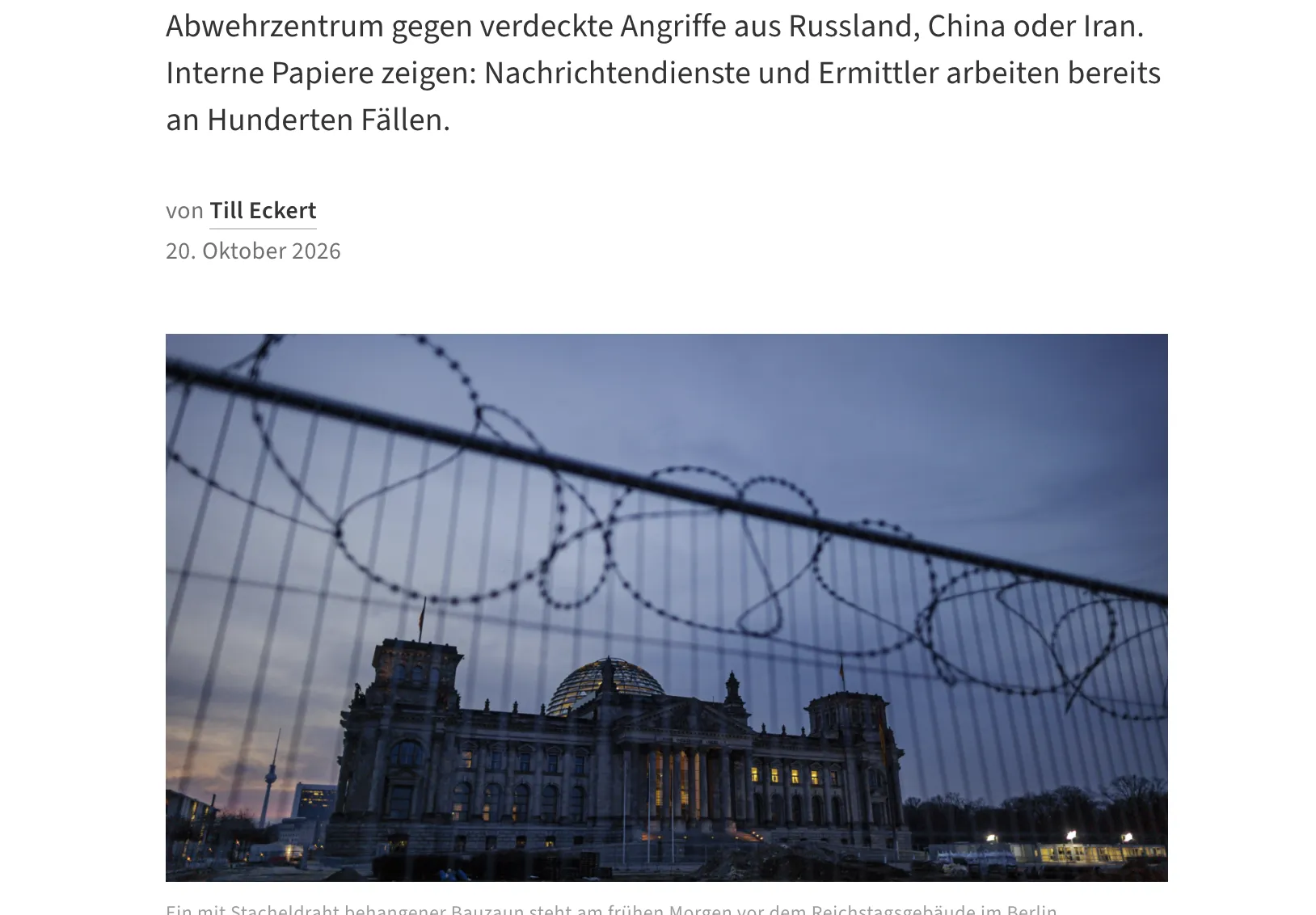
In Germany, from the beginning of 2026 through August 19, 1,034 incidents of drones flying over critical infrastructure, military facilities, and defense industry enterprises were recorded.
This is reported in a CORRECTIV article citing internal documents from the Joint Center for Countering Hybrid Threats (GAZ Hybrid).
A report by the German Federal Criminal Police Office (BKA), prepared for GAZ Hybrid, notes that the level of hybrid threats in the country remains high and is becoming increasingly complex.
“The level of hybrid threats in Germany has remained consistently high for a long time and is becoming increasingly complex,” the BKA report states.
Lower Saxony recorded the highest number of drone overflights of sensitive sites between May and August. Important military facilities, including naval bases, are located there.
The documents also mention 163 suspected acts of sabotage. These targeted railway infrastructure, Bundeswehr facilities, electrical substations, energy facilities, communication towers, and administrative buildings.
As of August 19, German law enforcement agencies had launched investigations into 25 cases of suspected espionage. Of these, 13 involved cyberespionage. In another 39 cases, the Federal Criminal Police Office conducted preliminary investigations.
The German Customs Criminal Investigation Service also recorded 12 cases of the illegal acquisition of technology and specialized knowledge for the development of weapons of mass destruction on behalf of foreign states. In seven cases, the destination country was Russia; in three, Iran; and one case each involved Belarus and Iraq.
Separately, German intelligence agencies are tracking cases of transnational repression—surveillance, intimidation, and persecution of individuals by foreign states on German territory.
From June 17 to August 19, 20 such cases were recorded. Nine of them are linked to Iran, three to Russia, and one to China.
According to CORRECTIV, internal documents from GAZ Hybrid provide the first opportunity to assess the scale of specific types of hybrid activities in Germany. These include, in particular, espionage, the illegal acquisition of technologies for the development of weapons of mass destruction, and the persecution of individuals by foreign states.
Earlier, the EU extended sanctions against Russians for hybrid attacks until October 2027.
At the same time, Russia and Iran are intensifying their hybrid campaigns against the United Kingdom.
Meanwhile, Moscow was angered by Belgium’s statements regarding Russian hybrid attacks.




