
President Lai urges Taiwan to develop a chain of industries — Taipei Times
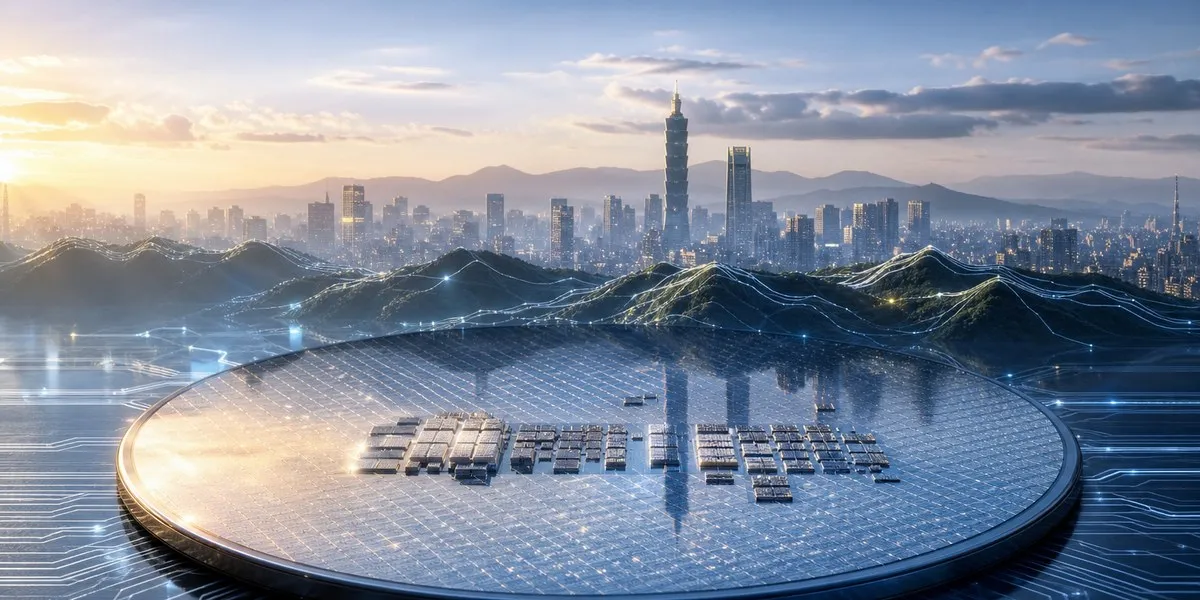
Taiwanese President William Lai said in a National Day speech in Taipei that the country needs to develop many sectors of the economy that together will form a “mountain-protection chain” and broaden the foundation of the state’s economic strength. As Taipei Times reports, he also called on leading companies expanding their operations abroad to help more deeply anchor their supply chains in Taiwan.
Lai stressed that Taiwan cannot rely on just one key industry. His remarks likely referred to Taiwan Semiconductor Manufacturing Co, the world’s largest contract chipmaker and one of the main pillars of Taiwan’s economy. The United States, Japan and other countries have encouraged the company to build plants abroad to strengthen supply security and reduce dependence on Taiwan.
Strategic technologies
According to the president, the Executive Yuan is accelerating the development of strategic industries and new technologies. He included semiconductors, artificial intelligence, defense, security and surveillance systems, as well as next-generation communications among the government’s five trusted sectors. The three key technologies within 10 new initiatives to build AI infrastructure are silicon photonics, quantum computing and robotics.
Lai added that technological development must also benefit traditional industries. Among other areas, he named critical minerals, biotechnology and healthcare, the creation of an Asian asset management hub, public infrastructure and urban renewal, creative industries, and the development of tourism into a sector worth NT$1 trillion.
More current news is available on the UA.News Telegram channel Telegram.
Business support and social plans
Lai announced a program worth NT$100 billion, or about US$3.14 billion, for micro, small and medium-sized enterprises. It is intended to support financing, worker training, digital transformation, upgrades to achieve net-zero emissions and access to international sales channels.
The president also said that the authorities intend to keep Taiwanese workers as the core workforce, supplementing them with foreign workers. Amendments to the Act for the Recruitment and Employment of Foreign Professionals are intended to expand opportunities for their arrival and residence in Taiwan, as well as for foreign students to remain in the country after completing their studies.
In energy, the government plans to ensure a stable electricity supply, energy security and a transition to net-zero emissions through renewable generation, energy storage, energy conservation and grid modernization. Starting next year, the authorities also plan to pay NT$5,000 per month for every child from birth to age 18.




