
Diverse forests withstand heat and drought better — Mongabay
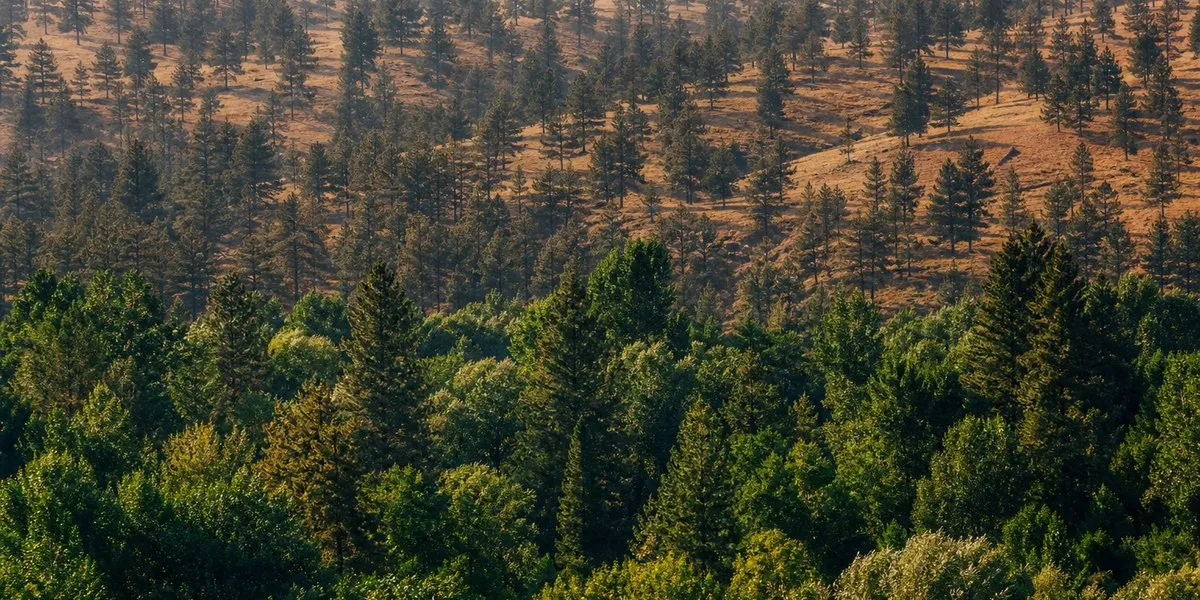
A study of forests in the United States has shown that greater tree species diversity helps ecosystems better withstand challenging climate extremes, including simultaneous heat and drought, and recover from them more effectively. Mongabay reports, citing research published in Nature Communications.
Analysis of more than 88,000 sites
Scientists selected 88,116 forest sites in the continental United States where no human intervention, fires, or other disturbances had been recorded. They used data from the Forest Inventory and Analysis program, which has measured tree parameters and recorded species composition in U.S. forests since 1990.
Forest conditions during extreme weather events were assessed using satellite data on the “greenness” of vegetation cover. This indicator makes it possible to approximately determine the intensity of photosynthesis: under stress, trees may slow down or stop this process.
The researchers compared forest resistance during an extreme event with a normal year, and recovery with the level of photosynthesis in the following year. They found that combined climate events affect forests more strongly than the sum of the effects of individual events.
More current news is available on the UA.News Telegram channel Telegram.
Heat and drought proved to be the most difficult combination
The most exhausting combination for forests was the simultaneous occurrence of high temperatures and drought. It had a stronger effect on both the resistance of forest stands and their ability to recover than heat combined with excessive precipitation.
At the same time, forests with a greater number of tree species better withstood both individual extreme events and their combinations, and also recovered more quickly. The protective effect of species diversity was more noticeable under heat and drought conditions, although diverse forests also better withstood heat combined with excess precipitation.
Diversity is not the only factor
The authors emphasize that forest resistance is determined not only by species composition. Soil properties, elevation, tree age, and average annual temperature also influenced the results. According to the researchers’ assessment, average annual temperature may have a greater impact on forest resistance than the diversity of its trees.
The scientists believe the findings may serve as a starting point for forest management: already diverse stands can be monitored, or the joint planting of different species can be tested and their response to climate stress assessed. At the same time, they plan to investigate how forests respond to repeated extreme events that may occur before full recovery from a previous one.




